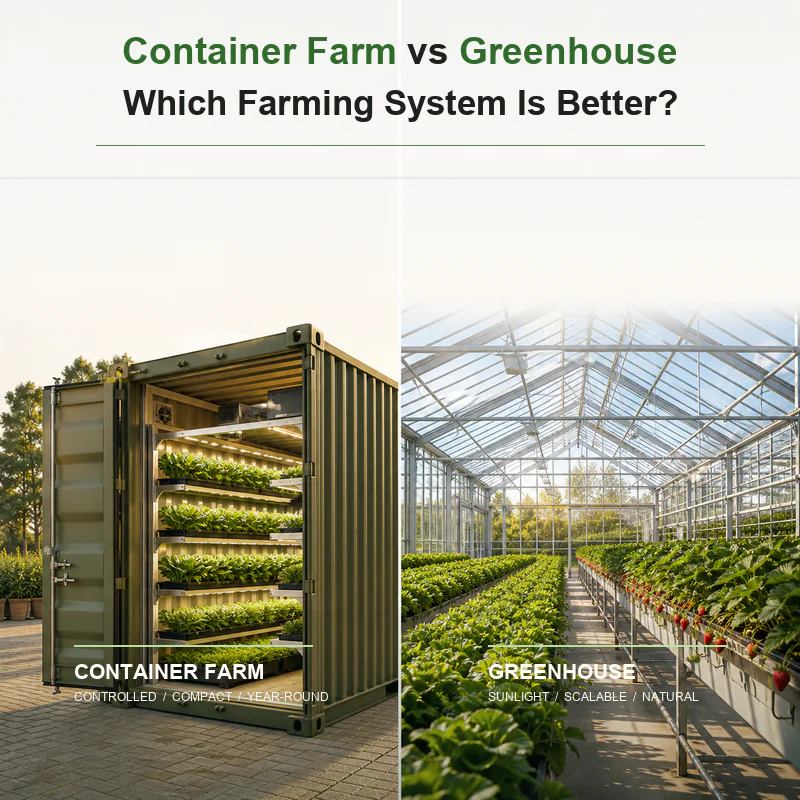







Modern agriculture is moving toward more efficient production methods as growers face challenges such as limited farmland, unstable weather conditions, and increasing demand for fresh local food.
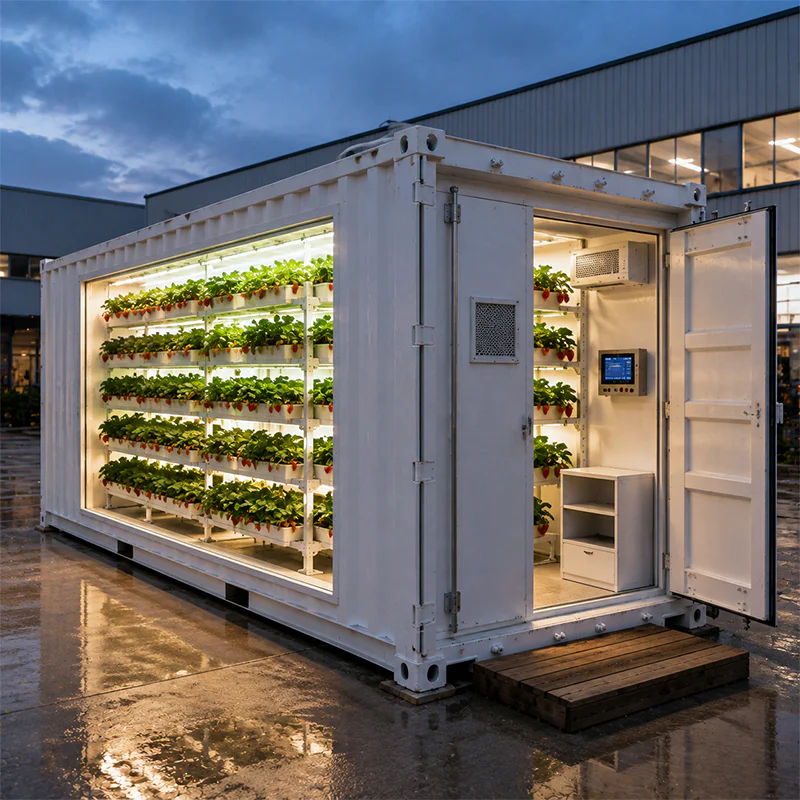
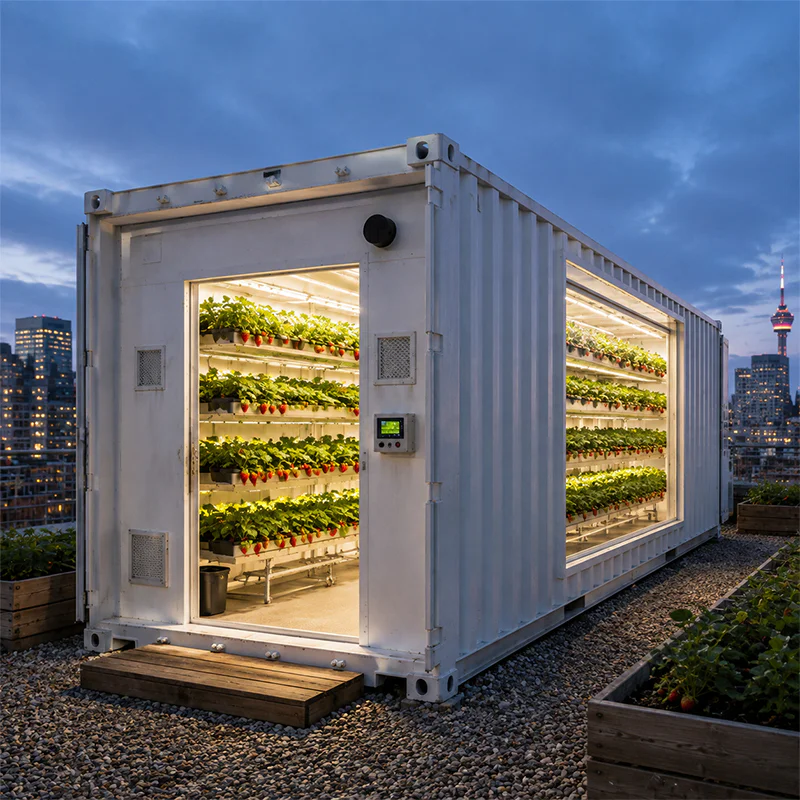
A vertical hydroponic container farm combines indoor farming technology with vertical cultivation methods to maximize production efficiency within a compact space.
Unlike traditional farming methods, this system does not depend on soil or outdoor climate conditions. Instead, it creates a controlled growing environment using hydroponics, artificial lighting, and automated management systems.
For commercial growers, understanding how each component works is important before investing in an indoor farming project.
This article explains the structure, technology, advantages, and applications of vertical hydroponic container farming systems.

What Is a Vertical Hydroponic Container Farm?
A vertical hydroponic container farm is an indoor cultivation system installed inside a modified container structure.
It combines:
- Vertical growing racks
- Hydroponic cultivation technology
- LED grow lights
- Climate control equipment
- Water circulation systems
- Intelligent monitoring systems
The main purpose is to increase crop production within limited space while maintaining stable growing conditions.
Compared with open-field farming, this system provides greater control over:
- Nutrient delivery
- جداول الإضاءة
- درجة الحرارة
- الرطوبة
- Water usage
This makes it suitable for locations where traditional agriculture faces limitations.
How the Vertical Growing System Works
Vertical Growing Racks
The vertical rack system is the core structure of indoor container farming.
Instead of placing plants on a single horizontal surface, multiple growing layers are installed vertically.
This design helps:
- Increase planting density
- Improve space utilization
- Expand production capacity
The number of layers depends on:
- نوع المحصول
- Plant height
- Lighting arrangement
- Operation requirements
Leafy vegetables usually perform well with multi-layer growing designs because they have compact growth characteristics.
Hydroponic Cultivation Technology
Hydroponics replaces traditional soil cultivation with a nutrient solution system.
Plants receive:
- Water
- Oxygen
- Mineral nutrients
The system continuously delivers the required nutrients while reducing water waste.
Common hydroponic methods used in container farming include:
- NFT systems
- Deep water culture
- Other customized hydroponic designs
Among these options, NFT technology is widely used for leafy vegetables because it provides efficient nutrient circulation and supports high-density planting.
NFT Hydroponic System Inside Container Farms
أن NFT hydroponic container farm system uses a thin layer of nutrient solution flowing through growing channels.
The roots receive:
- Nutrients
- Water
- Oxygen
The advantages include:
- Efficient water usage
- Clean production environment
- Easy harvesting management
- Suitable for fast-growing crops
NFT systems are commonly applied to crops such as:
- الخس
- باسل
- الأعشاب
- الخضروات الورقية
LED Lighting System
Since container farms are indoor environments, artificial lighting replaces natural sunlight.
LED systems provide controlled light conditions according to crop requirements.
Important lighting factors include:
- Light intensity
- Lighting duration
- Spectrum selection
- كفاءة الطاقة
A well-designed lighting system helps maintain consistent plant growth throughout the year.
Compared with traditional lighting technologies, modern LED systems provide better efficiency and longer service life.
Climate Control System
Maintaining suitable environmental conditions is essential for indoor farming success.
A vertical hydroponic container farm usually integrates climate management equipment including:
- Air conditioning systems
- أنظمة التهوية
- Humidity control
- Temperature monitoring
The system helps maintain stable conditions regardless of external weather changes.
This is especially valuable in:
- Hot climates
- Cold regions
- البيئات الحضرية
- Remote locations
Water and Nutrient Management
Water management directly affects crop quality and production stability.
A professional system usually includes:
- Water tanks
- Pumps
- Filtration equipment
- Nutrient mixing systems
- Monitoring devices
Compared with traditional agriculture, hydroponic systems can significantly reduce water consumption because water is circulated within the growing system.
Proper nutrient management also improves:
- Growth consistency
- جودة المحصول
- Production efficiency
Automation and Smart Monitoring
Modern indoor farming systems increasingly use automation technology.
Common monitoring functions include:
- Temperature monitoring
- Humidity detection
- Lighting control
- Water circulation management
Automation reduces manual operation requirements and helps growers maintain stable production conditions.
For commercial projects, smart management systems can improve:
- Operational efficiency
- Production reliability
- Data-based decision making
Suitable Crops for Vertical Hydroponic Container Farms
Not every crop is suitable for indoor vertical cultivation.
The most suitable crops usually have:
- دورات نمو قصيرة
- Compact structures
- High market demand
Common examples include:
الخضراوات الورقية
Such as:
- الخس
- Spinach
- اللفت
الأعشاب
Including:
- باسل
- النعناع
- Coriander
المحاصيل المتخصصة
Some premium crops can also be considered depending on market demand and system configuration.
Advantages of Vertical Hydroponic Container Farming
Maximum Space Efficiency
Vertical cultivation allows more plants to be grown within a limited footprint.
This is especially valuable in:
- Cities
- Small farms
- High-value land areas
الإنتاج على مدار العام
Because environmental conditions are controlled, production is less affected by:
- Seasons
- Weather changes
- Extreme temperatures
Reduced Water Consumption
Hydroponic circulation systems recycle water and reduce unnecessary waste.
Cleaner Production Environment
Indoor cultivation reduces exposure to:
- Soil diseases
- Outdoor pests
- Uncontrolled environmental factors
Commercial Applications
Urban Farming Projects
Container farming allows fresh food production close to consumers.
This reduces transportation distance and improves supply efficiency.
Restaurant and Retail Supply
Restaurants and retailers can use indoor farming systems to secure consistent fresh vegetable supply.
Remote Agriculture Projects
In areas with limited farmland or challenging climates, container farms provide an alternative production solution.
Factors to Consider Before Choosing a System
اختيار المحاصيل
Different crops require different:
- Growing spaces
- Lighting conditions
- Nutrient requirements
Production Target
Investors should define:
- الناتج المتوقع
- Harvest frequency
- Market demand
Energy Availability
Electricity supply is important because indoor systems depend on:
- الإضاءة
- Climate control
- Pumps
Technical Support
Reliable installation and after-sales support help ensure long-term operation.
Vertical Hydroponic Container Farm vs Traditional Farming
Traditional farming depends heavily on:
- Climate
- Soil quality
- Seasonal conditions
Vertical container farming focuses on:
- Environmental control
- Production consistency
- Space optimization
Both systems have advantages, and the best choice depends on project objectives.
الخاتمة
A vertical hydroponic container farm combines advanced indoor agriculture technology with efficient space utilization.
Through vertical growing racks, hydroponic systems, LED lighting, and climate control, growers can produce crops in a more predictable and controlled environment.
For commercial agriculture projects, selecting the right system design is essential for achieving stable production and long-term business value.
With proper planning, vertical hydroponic container farming can provide an effective solution for modern food production challenges.
الأسئلة الشائعة
What is a vertical hydroponic container farm?
It is an indoor farming system that combines container structures, vertical growing racks, and hydroponic technology to produce crops in a controlled environment.
How does NFT hydroponic container farming work?
NFT systems circulate a thin nutrient solution through growing channels, allowing plant roots to receive water, nutrients, and oxygen.
What crops can grow in a vertical container farm?
Leafy vegetables, herbs, and other compact crops are commonly suitable for vertical hydroponic systems.
Does a container farm use soil?
No. Most container farming systems use hydroponic cultivation methods instead of traditional soil.
Is vertical container farming suitable for commercial production?
Yes. With proper system design, it can support commercial vegetable production and controlled environment agriculture projects.