




Modern agriculture is changing rapidly as growers look for more reliable ways to produce crops with limited land, changing weather conditions, and increasing resource costs.
Two popular controlled environment agriculture solutions are container farms and greenhouses.
Both systems aim to improve crop production efficiency, but they work in very different ways.
A container farm creates a fully controlled indoor growing environment inside an insulated structure, while a greenhouse uses a protected structure that combines natural sunlight with environmental management equipment.
Choosing between these two systems depends on several factors, including climate, crop type, investment goals, available land, and production strategy.
This article compares container farms and greenhouses from multiple perspectives to help commercial growers select the most suitable farming solution.
What Is a Container Farm?
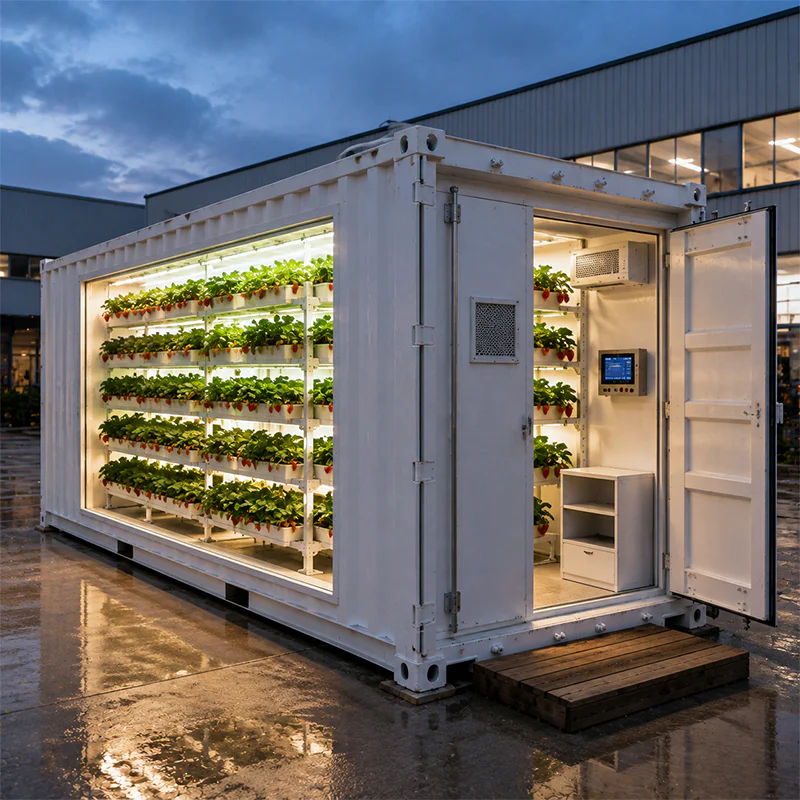
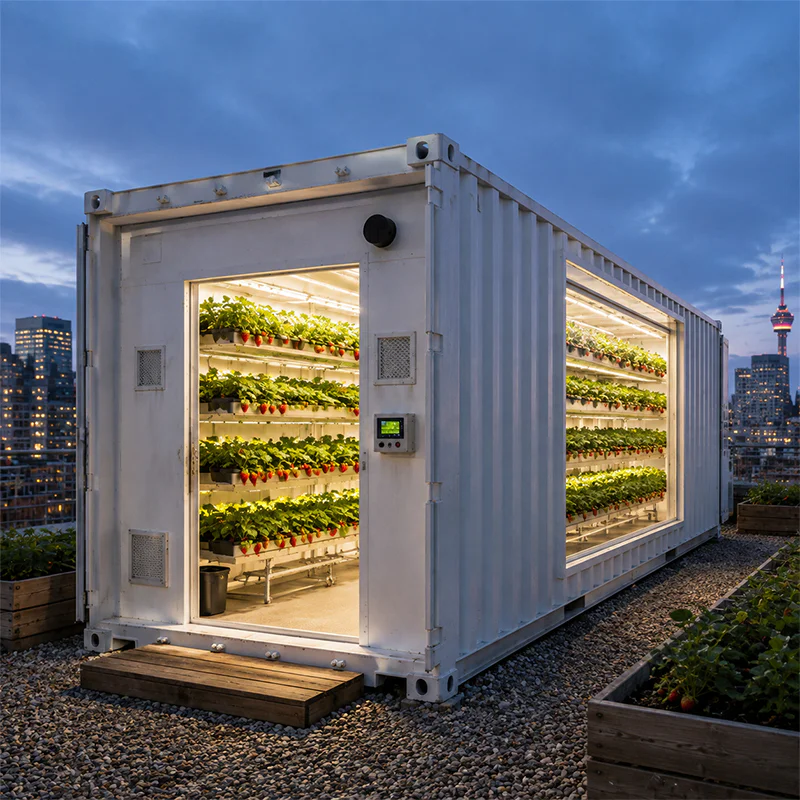
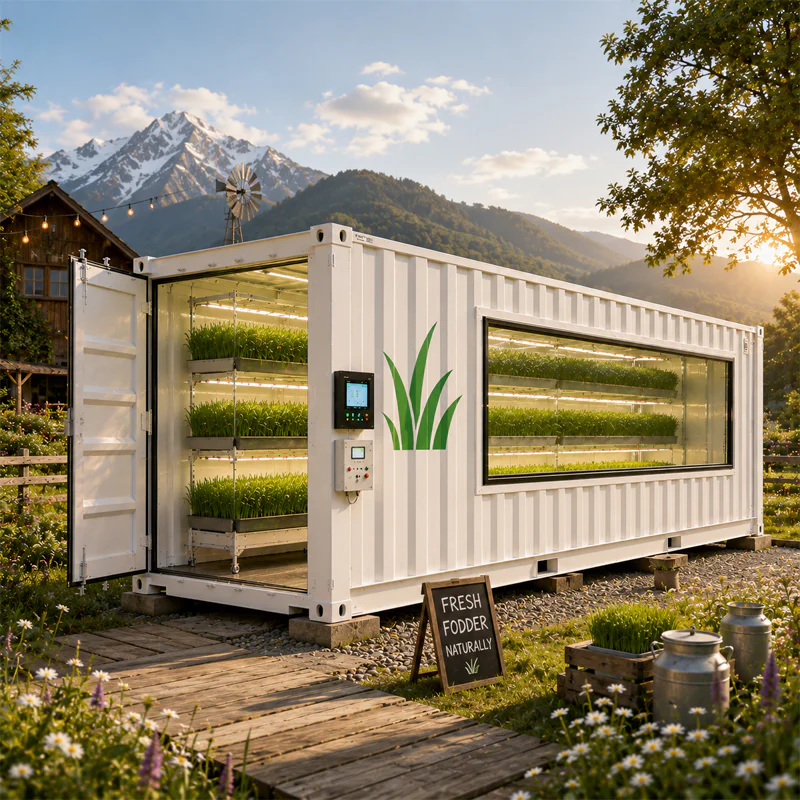
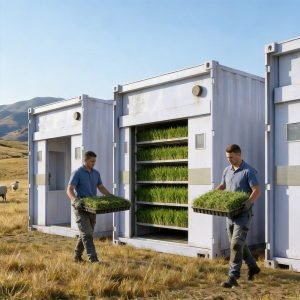
A container farm is an indoor agricultural system built inside a modified shipping container.
It integrates multiple technologies, including:
- Hydroponic cultivation
- Vertical growing racks
- LED lighting
- Climate control systems
- Automated monitoring
Unlike traditional agriculture, container farming does not rely on natural sunlight or outdoor climate conditions.
The entire growing environment can be managed indoors, allowing growers to control:
- তাপমাত্রা
- Humidity
- Light cycles
- Nutrient delivery
- Air circulation
This makes container farms suitable for locations where traditional farming conditions are limited.
What Is a Greenhouse?
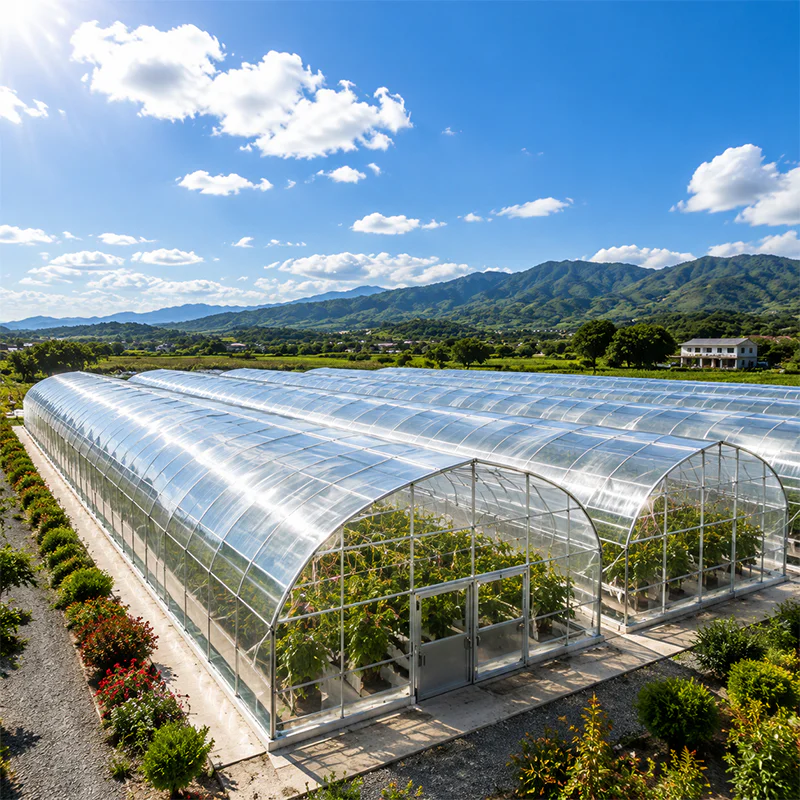
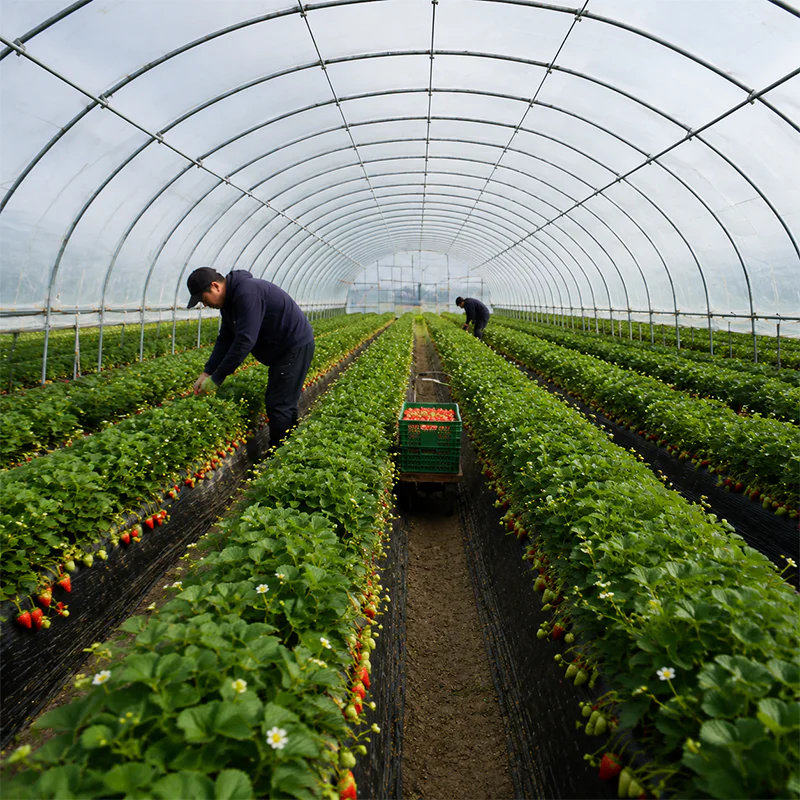
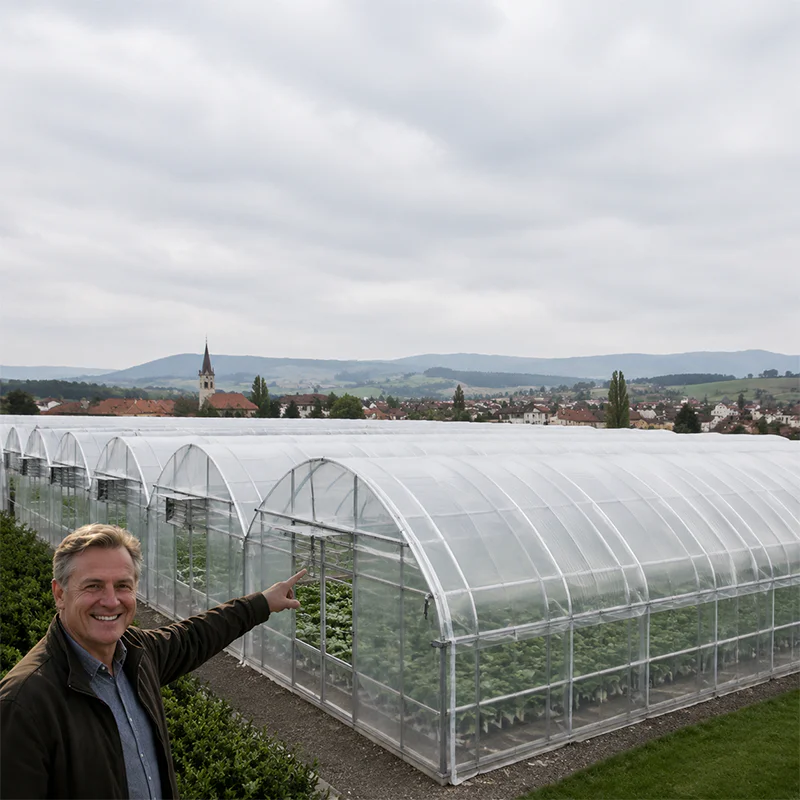
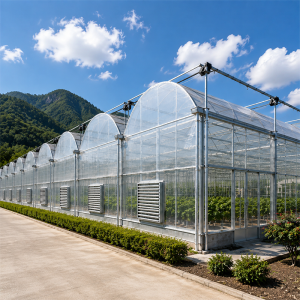
A greenhouse is a protected agricultural structure designed to create a more suitable growing environment than open-field farming.
Modern greenhouse systems may include:
- Film or glass covering materials
- Ventilation systems
- Shading systems
- Irrigation systems
- Climate control equipment
Greenhouses allow plants to use natural sunlight while reducing the impact of unfavorable weather.
For commercial agriculture, growers often select different greenhouse designs depending on climate conditions and crop requirements.
A properly designed greenhouse can support large-scale vegetable production, fruit cultivation, and specialty crops.
Container Farm vs Greenhouse: Key Differences
1. Growing Environment Control
The biggest difference between container farms and greenhouses is the level of environmental control.
A container farm provides a fully enclosed environment.
Growers can precisely manage:
- আলোকসজ্জা
- তাপমাত্রা
- Humidity
- Nutrient supply
A greenhouse provides environmental protection but still interacts with outdoor conditions.
External factors such as:
- Weather
- Solar radiation
- Seasonal changes
continue to influence production.
For growers who need maximum control, container farming provides a higher level of environmental independence.
2. Land Requirements
Space availability is an important factor when selecting a farming system.
Container farms have a compact footprint and can be installed in:
- শহুরে এলাকা
- Industrial locations
- Small agricultural sites
- Remote regions
Because crops grow vertically, production capacity is increased through multiple growing layers.
Greenhouses usually require larger land areas because crops are mainly grown horizontally.
However, greenhouses are highly suitable for commercial farms with sufficient land availability.
3. Production Capacity
Production capacity depends on system design and crop selection.
Container farms achieve high production density through:
- Vertical growing systems
- Controlled lighting
- Optimized planting layouts
They are commonly used for:
- Lettuce
- ঔষধি উদ্ভিদ
- Leafy vegetables
Greenhouses usually provide larger cultivation areas.
They are widely used for:
- Tomatoes
- Cucumbers
- Peppers
- স্ট্রবেরি
- ফুল
The better option depends on production goals.
A smaller footprint does not always mean lower production, while larger space does not always guarantee higher efficiency.
4. Initial Investment Cost
Investment cost is one of the most important considerations.
Container farms usually require higher technology investment because they include:
- LED lighting
- Indoor climate systems
- Automated controls
Greenhouses often have lower technology requirements, especially basic structures.
However, advanced greenhouse projects may also require:
- Heating systems
- Cooling systems
- স্বয়ংক্রিয়করণ
- Irrigation control
Therefore, the total investment depends on the required production level rather than only the structure type.
5. Operating Costs
Operating costs are another important factor.
Container Farm Operating Costs
Main expenses include:
- বিদ্যুৎ
- LED lighting
- Climate control
- Nutrient management
Energy consumption is a key factor because artificial lighting is required.
Greenhouse Operating Costs
Main expenses include:
- Irrigation
- বায়ুচলাচল
- Heating or cooling
- শ্রম
Greenhouses can benefit from natural sunlight, reducing dependence on artificial lighting.
6. Climate Adaptability
Climate conditions strongly influence system selection.
Container farms can operate in challenging environments because they are isolated from outdoor conditions.
They are suitable for:
- Extreme climates
- শহুরে পরিবেশ
- Areas with limited farmland
Greenhouses perform especially well in regions with:
- Good sunlight availability
- Suitable temperatures
- Larger farming areas
For regions with favorable outdoor conditions, greenhouse systems can provide excellent production efficiency.
Advantages of Container Farms
সারাবছর উৎপাদন
Because growing conditions are controlled, container farms can operate throughout the year.
Production is less affected by:
- Seasons
- ভারী বৃষ্টিপাত
- Temperature fluctuations
High Space Efficiency
Vertical farming allows more plants to be produced in limited space.
This is valuable for areas where land costs are high.
Cleaner Production Environment
Indoor systems reduce exposure to:
- Outdoor pests
- Soil-related diseases
- Environmental contamination
Advantages of Greenhouses
Natural Light Utilization
Greenhouses use sunlight as the primary energy source.
This can reduce artificial lighting requirements.
Large-Scale Agricultural Production
Greenhouses are suitable for commercial farms requiring:
- Large cultivation areas
- Mechanized operations
- Multiple crop varieties
For growers requiring larger farming areas, commercial greenhouse systems for crop production remain one of the most widely used agricultural solutions.
Which System Is Better for Commercial Farming?
There is no universal answer.
The best choice depends on the project situation.
Choose a Container Farm When:
- Land is limited
- Year-round production is required
- High environmental control is important
- Urban farming is needed
- Climate conditions are challenging
Choose a Greenhouse When:
- Large land areas are available
- Natural sunlight is valuable
- Large-scale crop production is the goal
- Climate conditions are suitable
Can Container Farms and Greenhouses Work Together?
These two systems are not always competitors.
Many modern agricultural projects combine different technologies.
For example:
- Greenhouses for large-scale crop production
- Container farms for nursery production
- Container systems for specialty crops
A mixed farming strategy can improve flexibility and production stability.
বিনিয়োগ সিদ্ধান্তের কারণসমূহ
Before choosing between a container farm and greenhouse, investors should evaluate:
Crop Requirements
Different crops have different environmental needs.
Market Demand
Production should match:
- Local consumers
- Sales channels
- Expected pricing
Available Resources
Important factors include:
- Land
- বিদ্যুৎ
- জল
- Labor availability
Long-Term Expansion Plan
A farming system should support future business growth.
উপসংহার
Both container farms and greenhouses are valuable solutions for modern agriculture.
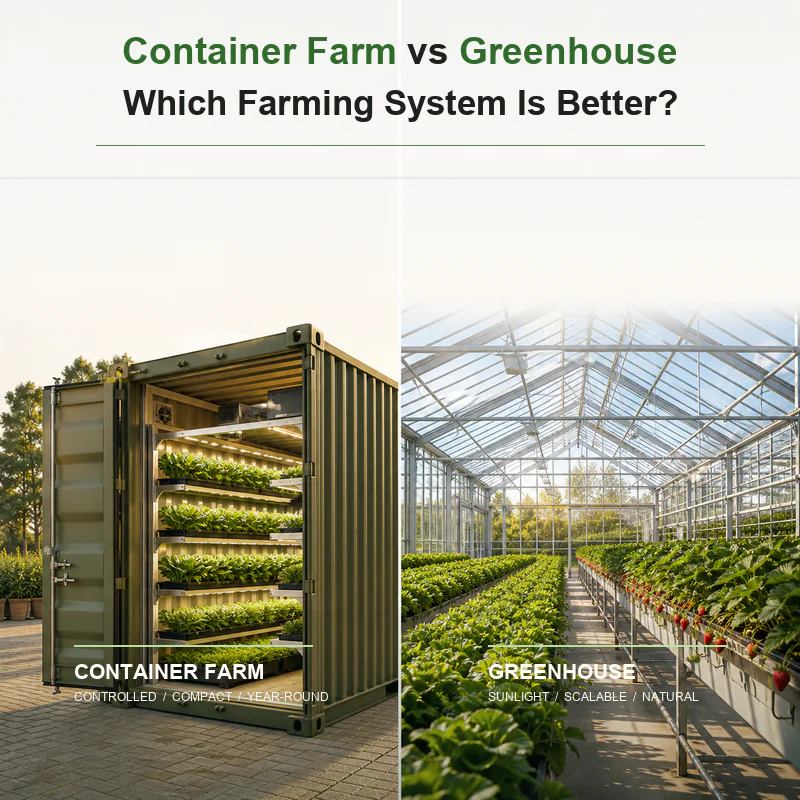
Container farms provide maximum environmental control, compact installation, and year-round indoor production.
Greenhouses provide larger growing areas, natural sunlight utilization, and flexible commercial farming possibilities.
The right choice depends on climate conditions, crop selection, investment budget, and production objectives.
For growers planning a commercial farming project, selecting the correct system at the beginning can significantly influence long-term productivity and profitability.
প্রায়শই জিজ্ঞাসিত প্রশ্নাবলী
Is a container farm better than a greenhouse?
Neither system is always better. The best choice depends on crop type, climate, land availability, and production goals.
Which system has lower operating costs?
Operating costs depend on local conditions. Greenhouses may benefit from natural sunlight, while container farms provide more precise control.
Can container farms produce more crops than greenhouses?
Container farms achieve high production density through vertical growing, while greenhouses provide larger cultivation areas.
Are container farms suitable for commercial agriculture?
Yes. They are suitable for commercial vegetable production, especially where land or climate conditions are challenging.
Which crops are better for container farms?
Leafy greens, herbs, and compact vegetables are commonly suitable because they grow well in controlled indoor environments.