




In modern protected agriculture, greenhouse design plays a decisive role in crop performance, operating costs, and long-term profitability. For growers operating in high-temperature regions, choosing the right structure is not just a technical decision — it’s a strategic investment. Among the many greenhouse designs available today, the Sawtooth Greenhouse stands out as one of the most efficient solutions for hot climates. Its unique ventilation-driven architecture allows growers to achieve better temperature control, lower energy costs, and more stable crop environments.
Whether you are planning a commercial farming project or upgrading an existing facility, understanding the value of a Sawtooth Greenhouse can help you make a smarter investment decision.
What exactly is a sawtooth greenhouse?
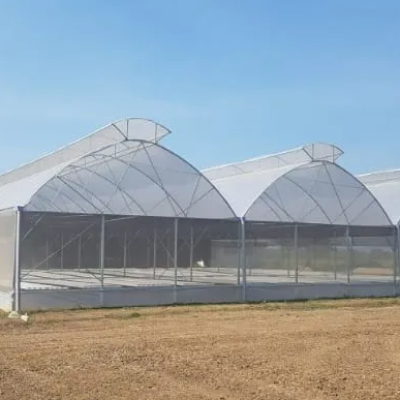
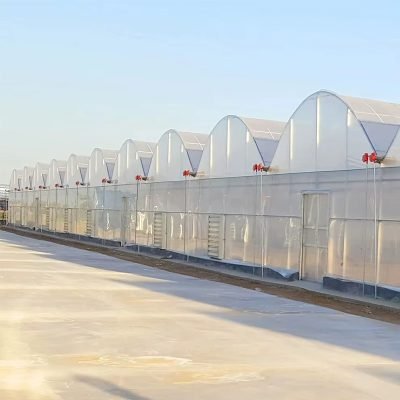
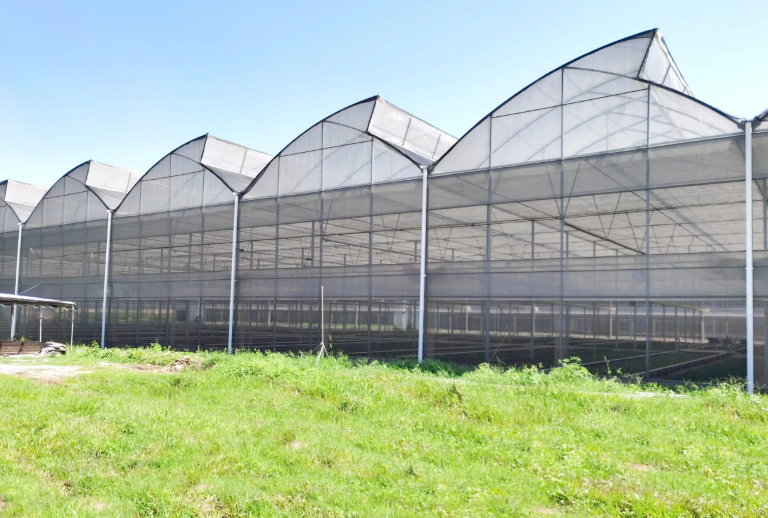
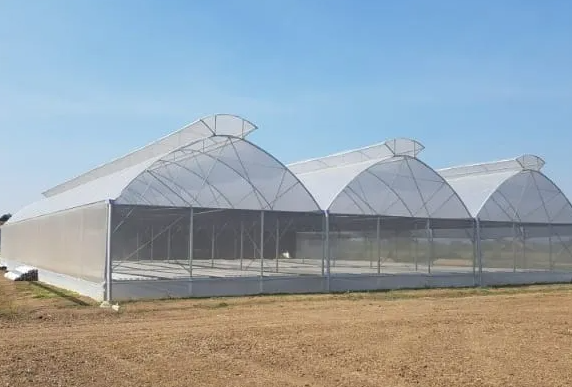
A Sawtooth Greenhouse is a specially engineered greenhouse structure recognized by its zigzag roof profile. This distinctive roof design consists of alternating high and low roof sections, forming a repeating “tooth-like” pattern. At the top of each peak, vertical or near-vertical ventilation windows are installed, which serve as the key functional component of the structure.
Originally inspired by industrial architecture, the sawtooth roof was first used in factories to improve daylight distribution and natural ventilation. Today, this concept has been adapted for agricultural use, resulting in one of the most effective greenhouse designs for passive climate control.
Depending on scale and application, growers can choose between a Single Span Sawtooth Greenhouse for smaller operations or a Multi Span Sawtooth Greenhouse for large-scale cultivation. In commercial agriculture, the Commercial Sawtooth Greenhouse has become increasingly popular due to its superior airflow and scalability.
Working Principle: Harnessing the Natural Force of the “Chimney Effect”
The core strength of a Sawtooth Greenhouse lies in its ability to leverage natural ventilation through the chimney effect, also known as the stack effect. This passive airflow mechanism allows growers to regulate internal climate conditions with minimal reliance on mechanical systems.
Here’s how it works:
When sunlight enters the greenhouse, it heats the air, plants, and soil inside. As the air warms, it becomes less dense and begins to rise toward the roof. The vertical vents located at the top of each sawtooth section act as exhaust outlets, allowing hot air to escape efficiently.
As warm air exits, cooler and denser external air is drawn into the greenhouse through lower side vents. This creates a continuous cycle of airflow, maintaining a stable and cooler internal environment. Unlike conventional greenhouses that rely heavily on fans and evaporative cooling, a Sawtooth Greenhouse can achieve effective ventilation using natural forces alone.
This design not only reduces electricity consumption but also improves humidity control, making it an ideal solution for regions with limited or unstable power supply.
Design Evolution: Three Core Types of Sawtooth Greenhouses
Over time, the Sawtooth Greenhouse has evolved into several structural variations to meet different climate challenges and engineering demands.
1. Triangular Sawtooth Greenhouse
The triangular design is the earliest and simplest form of the Sawtooth Greenhouse. It features sharp roof angles that promote effective rainwater drainage and airflow. This type is often considered an Economical Sawtooth Greenhouse, making it suitable for growers with limited budgets.
While structurally straightforward, triangular models are best suited for regions without extreme weather conditions. They offer reliable ventilation but may lack the structural strength needed for harsh climates.
2. Single Half-Arch Sawtooth Greenhouse
The Single Half-Arch Sawtooth Greenhouse represents a major improvement over triangular designs. In this structure, one side of the roof is curved, which enhances load distribution and structural durability.
This design offers a strong balance between performance and cost, making it a practical choice for mid-sized farms. Many growers consider it a High Quality Sawtooth Greenhouse option because it combines durability, effective airflow, and moderate investment requirements.
3. Double Half-Arch Sawtooth Greenhouse
The most advanced variation is the Double Half-Arch Sawtooth Greenhouse, widely used in large agricultural projects. This structure incorporates two curved roof sections with different radii, improving aerodynamics and wind resistance.
Because of its superior strength and engineering precision, this model is often referred to as a High Strength Sawtooth Greenhouse. It is commonly used in Multi Span Sawtooth Greenhouse installations and is ideal for large-scale commercial farming operations that demand long-term reliability and performance.
Significant Advantages of Sawtooth Greenhouses
The rising popularity of the Sawtooth Greenhouse is driven by a combination of operational and economic advantages.
First and foremost, the structure provides exceptional natural ventilation. The large vertical vent area maximizes airflow efficiency, enabling faster heat removal compared to conventional roof vents. This makes the greenhouse especially effective in tropical and subtropical climates.
Another major benefit is improved temperature stability. By continuously removing hot air, the Sawtooth Greenhouse reduces temperature spikes that can stress plants and reduce yield. Crops grown in these environments tend to develop more uniformly, improving both quality and market value.
Energy savings are another compelling advantage. Because ventilation relies primarily on passive airflow, growers can significantly reduce electricity consumption. Over time, these savings can offset the higher upfront construction cost, making the structure a strong long-term investment.
Humidity management is also improved. Better airflow reduces condensation and moisture buildup, which helps prevent fungal diseases. This leads to lower pesticide use and healthier crop cycles.
Finally, modern Commercial Sawtooth Greenhouse structures are built using galvanized steel frames and high-performance coverings, ensuring durability and long service life. For growers seeking a reliable and High Quality Sawtooth Greenhouse, this structural integrity is a major selling point.
Ideal Applications: Sawtooth Greenhouses’ Prime Stage
The Sawtooth Greenhouse performs best in environments where heat management is the primary challenge. It is particularly well-suited for tropical, subtropical, and arid regions where traditional greenhouses struggle to maintain optimal temperatures.
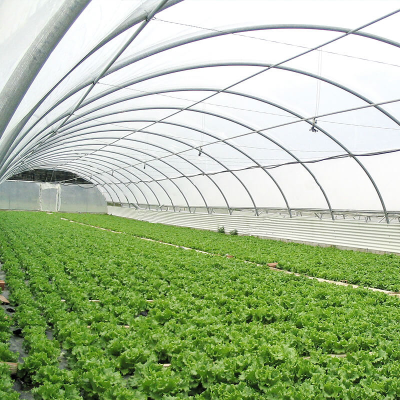
In these climates, growers often face extreme solar radiation and high humidity. A Commercial Sawtooth Greenhouse provides a stable internal environment that supports year-round production of high-value crops such as tomatoes, cucumbers, peppers, and leafy greens.
Flower growers also benefit from this structure, as consistent temperature and airflow are critical for ornamental plant quality. Additionally, hydroponic and soilless cultivation systems thrive in Multi Span Sawtooth Greenhouse installations due to their spacious interior and strong structural framework.
Even in regions with frequent rainfall, the vertical vents of a Sawtooth Greenhouse can remain operational, ensuring continuous ventilation when it is needed most.
Side-by-Side Comparison: Sawtooth Greenhouse vs. Other Mainstream Designs
To fully understand the value of a Sawtooth Greenhouse, it’s helpful to compare it with other widely used greenhouse types.
Sawtooth Greenhouse vs. A-Frame Greenhouse (Even-Span Greenhouse)
The primary difference between these two structures lies in ventilation and insulation performance. An A-frame greenhouse typically offers better heat retention due to its simpler and more sealed design. This makes it more suitable for colder climates.
However, when it comes to airflow efficiency, the Sawtooth Greenhouse has a clear advantage. Its vertical vents enable stronger natural ventilation, especially during rainy seasons when traditional roof vents may need to remain closed.
From an investment perspective, A-frame structures are generally more affordable upfront. However, in hot climates, the operational savings of a Sawtooth Greenhouse can deliver better long-term returns.
Sawtooth Greenhouse vs. Quonset/Hoop House
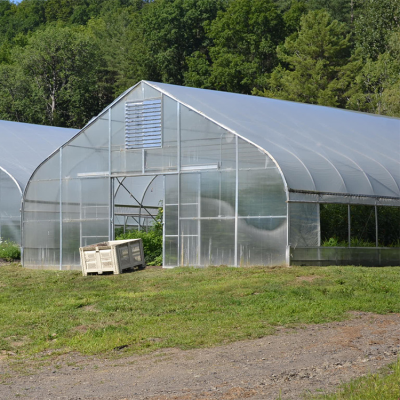
Hoop houses are often considered entry-level greenhouse solutions due to their low cost and simple construction. While they are highly accessible, they lack the structural strength and environmental control capabilities of a Sawtooth Greenhouse.
In terms of durability, hoop houses typically use lightweight materials that may not withstand extreme weather. By contrast, a High Strength Sawtooth Greenhouse offers superior resistance to wind and heavy rainfall.
Climate control is another key differentiator. Hoop houses provide basic protection but limited temperature regulation. A Sawtooth Greenhouse, on the other hand, delivers advanced passive cooling and better airflow management, making it more suitable for commercial farming operations.
Conclusion: Is a Sawtooth Greenhouse Right for Your Cultivation?
The Sawtooth Greenhouse is a specialized but highly effective solution for growers operating in hot climates. By harnessing natural ventilation through its innovative roof design, it provides superior cooling performance, improved crop quality, and significant energy savings.
While the initial investment may be higher compared to simpler structures, the long-term benefits often justify the cost — especially for commercial growers focused on productivity and efficiency. From Economical Sawtooth Greenhouse models for smaller farms to Multi Span Sawtooth Greenhouse systems for large agricultural enterprises, there is a configuration to suit nearly every operational scale.
If your farming operation is located in a high-temperature region and you are seeking a durable, efficient, and future-proof greenhouse solution, investing in a Sawtooth Greenhouse could be one of the smartest decisions you make. By aligning structural design with environmental demands, you position your cultivation system for higher yields, lower operating costs, and sustainable long-term growth.