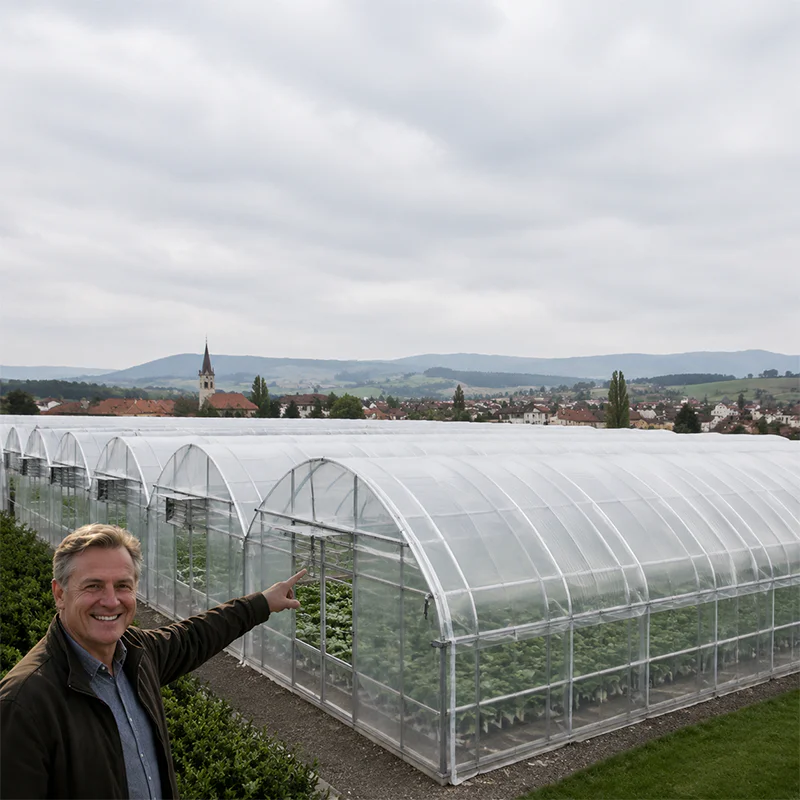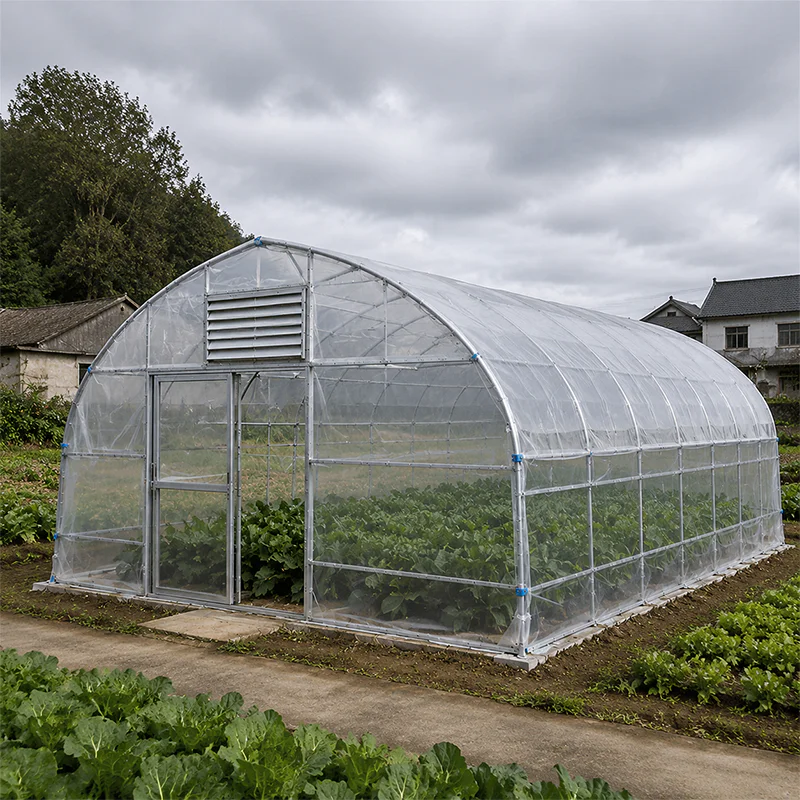







In modern controlled environment agriculture, blackout greenhouses are widely used for precision farming and photoperiod-sensitive crop production.
Among the most commonly used structures are film blackout greenhouses and polycarbonate blackout greenhouses. While both serve the same functional purpose—light control and environmental regulation—their performance characteristics differ significantly.
Understanding these differences is essential for selecting the right system for commercial agricultural production.

Overview of Film Blackout Greenhouses
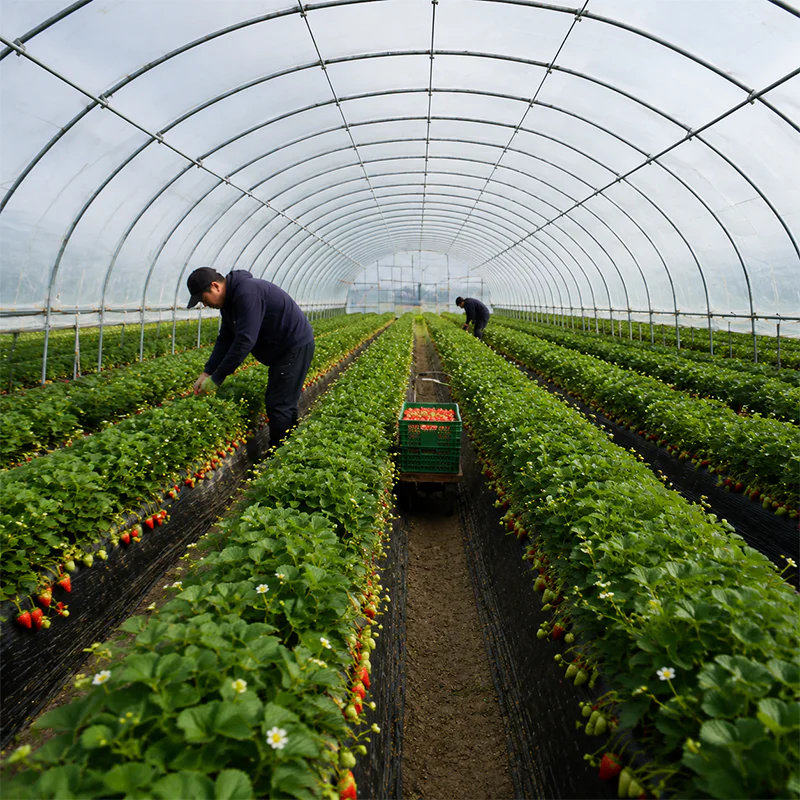
Film blackout greenhouses use flexible polyethylene or blackout film materials to control light exposure.
They are widely adopted due to:
- Lower initial investment cost
- Lightweight structure
- Easy installation and replacement
- Suitable for short-term agricultural projects
However, their insulation performance and durability are limited compared to rigid panel systems.
In large-scale farming environments, film structures are often combined with sistemas de invernaderos de múltiples tramos para la eficiencia de la producción agrícola industrial, enabling cost-effective expansion of cultivation areas.
Overview of Polycarbonate Blackout Greenhouses
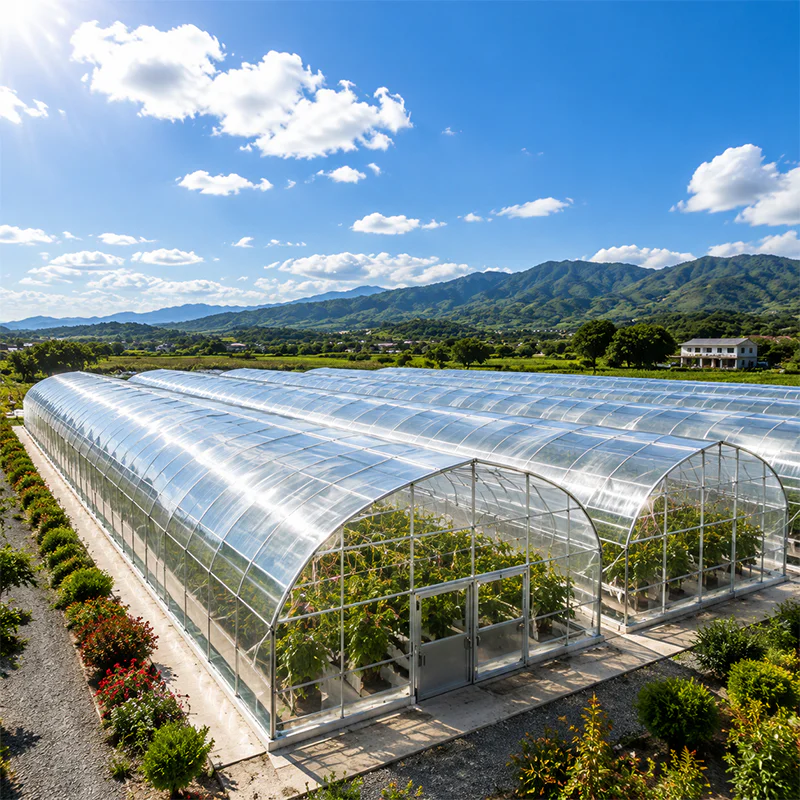
Polycarbonate blackout greenhouses use rigid polycarbonate panels combined with blackout systems to achieve superior insulation and durability.
Key advantages include:
- High structural strength
- Excellent thermal insulation
- Larga vida útil
- Better climate stability
These systems are more suitable for long-term commercial agriculture investments where stability and efficiency are critical.
Cost Comparison
Film greenhouse systems have lower upfront costs, making them attractive for budget-sensitive projects.
Polycarbonate systems, however, require higher initial investment due to material quality and structural complexity.
Despite this, long-term operational savings often compensate for the higher cost in polycarbonate systems.
Durability and Lifespan
Film materials typically require replacement every few years depending on environmental conditions.
Polycarbonate panels, on the other hand, offer significantly longer service life and better resistance to UV degradation and physical impact.
This makes polycarbonate systems more suitable for permanent agricultural infrastructure.
Insulation and Climate Control Performance
Polycarbonate structures provide superior insulation performance, helping maintain stable internal temperatures in both hot and cold climates.
Film systems are less efficient in temperature regulation but provide adequate ventilation flexibility.
For high-performance climate control, polycarbonate systems are generally preferred.
Commercial Application Scenarios
Film blackout greenhouses are commonly used for:
- Seasonal crop production
- Budget-conscious farming projects
- Rapid deployment agriculture systems
Polycarbonate blackout greenhouses are used for:
- Cultivos de alto valor
- Long-term commercial farming
- Controlled environment agriculture projects
In advanced setups, both systems can integrate with sistemas de cultivo hidropónico vertical para la eficiencia de la producción en entornos controlados, improving yield stability and resource utilization.

Operational Efficiency Comparison
Polycarbonate systems require less maintenance and offer more stable environmental conditions.
Film systems require more frequent replacement and environmental adjustments but offer flexibility and lower startup cost.
Advantages Summary
Film Blackout Greenhouse:
- Lower cost
- Instalación flexible
- Suitable for short-term use
Polycarbonate Blackout Greenhouse:
- Higher durability
- Better insulation
- Long-term ROI efficiency
Disadvantages Summary
Film:
- Short lifespan
- Lower insulation
- Higher maintenance frequency
Polycarbonate:
- Higher initial cost
- More complex installation
Conclusión
Both film and polycarbonate blackout greenhouses play important roles in modern controlled environment agriculture.
The choice depends on project budget, crop type, and long-term investment strategy.
For short-term and low-budget projects, film systems are suitable. For long-term commercial farming and high-value crop production, polycarbonate systems provide better performance and ROI.
PREGUNTAS FRECUENTES
What is the main difference between film and polycarbonate blackout greenhouses?
Film systems are cheaper and flexible, while polycarbonate systems offer higher durability and insulation.
Which greenhouse type is more cost-effective?
Film greenhouses have lower initial cost, but polycarbonate systems offer better long-term ROI.
Which system lasts longer?
Polycarbonate blackout greenhouses have a significantly longer lifespan than film systems.
Can both systems be used for hydroponics?
Yes, both can integrate with hydroponic farming systems.
Which is better for commercial farming?
Polycarbonate systems are generally better for long-term commercial agriculture.