






What Is Roof Ventilation in a Sawtooth Greenhouse?
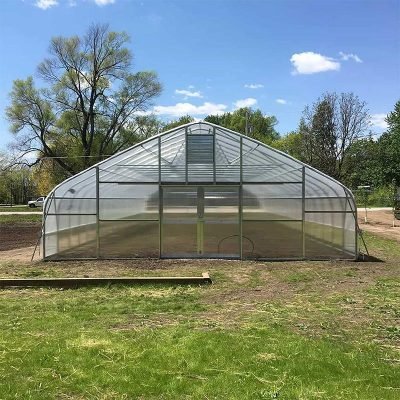
Roof ventilation is one of the most critical climate control methods in a Sawtooth Greenhouse. It refers to the natural process of removing hot, stale air from inside the greenhouse through specially designed roof openings while allowing cooler, fresh air to enter. Unlike mechanical cooling systems, roof ventilation relies primarily on natural airflow, making it energy-efficient and sustainable.
In modern greenhouse agriculture, especially in a Commercial Sawtooth Greenhouse or Agricultural Sawtooth Greenhouse, roof ventilation plays a central role in maintaining optimal growing conditions. The unique sawtooth roof design, with its alternating slopes and vertical openings, is specifically engineered to enhance this natural air exchange process.
Why Does Warm Air Rise to the Roof?
To understand roof ventilation, it is important to first understand basic air movement principles. Warm air naturally rises because it is less dense than cooler air. As sunlight enters a Sawtooth Greenhouse, it heats the plants, soil, and internal surfaces. This heat is transferred to the surrounding air, causing it to expand and become lighter.
As a result, the warm air moves upward toward the highest point of the greenhouse—the roof. In a Large Sawtooth Greenhouse, this effect is even more pronounced due to the greater volume of air and increased heat accumulation.
This natural upward movement of hot air creates the foundation for passive ventilation. By providing an escape route at the roof level, the greenhouse can continuously remove excess heat without relying heavily on mechanical systems.
How Does the Sawtooth Roof Design Improve Airflow?
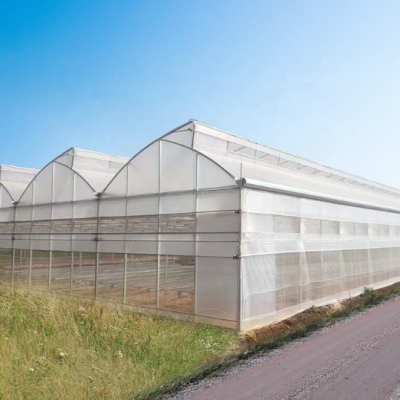
The sawtooth roof design is what makes a Sawtooth Greenhouse particularly effective for natural ventilation. Its structure is not only visually distinctive but also functionally optimized for airflow.
How Hot Air Escapes Through the Roof Opening
The vertical or near-vertical openings in the sawtooth roof act as exhaust vents. As hot air rises and reaches these openings, it naturally flows out of the greenhouse. This process is continuous, especially during sunny conditions when heat buildup is significant.
In a High Quality Sawtooth Greenhouse, these openings are carefully engineered to maximize efficiency. Adjustable vents allow growers to control the rate of air release, ensuring that the internal climate remains stable even under varying weather conditions.
How Fresh Air Enters and Supports Air Exchange
As hot air escapes through the roof, it creates a slight negative pressure inside the greenhouse. This pressure difference draws cooler, fresh air into the structure through side vents or lower openings.
This continuous cycle—hot air exiting from the top and cool air entering from the sides—creates a natural airflow loop. In a High Strength Sawtooth Greenhouse, the structural design ensures that this airflow remains consistent and effective even in challenging environmental conditions.
How the Roof Shape Helps Reduce Heat Build-Up
The sloped and staggered design of the sawtooth roof helps prevent heat from accumulating in one area. Instead of trapping hot air, the design channels it directly toward the vents.
This is especially beneficial in a Large Sawtooth Greenhouse, where managing heat distribution can be more complex. By promoting uniform airflow, the roof design reduces temperature gradients and prevents hotspots, creating a more balanced growing environment.

What Are the Main Benefits of Roof Ventilation in a Sawtooth Greenhouse?
Roof ventilation offers several important advantages that directly impact crop health and productivity.
Better Temperature Control
One of the primary benefits is effective temperature regulation. By continuously removing hot air, a Sawtooth Greenhouse can maintain a stable internal temperature even during peak sunlight hours.
This reduces the need for additional cooling systems, lowering energy costs and improving overall efficiency.
Improved Humidity Management
Humidity levels inside a greenhouse can rise quickly due to plant transpiration and evaporation. Roof ventilation helps remove moist air, preventing excessive humidity buildup.
In a Commercial Sawtooth Greenhouse, this is essential for maintaining optimal growing conditions and reducing the risk of fungal diseases.
Reduced Condensation Risk
Condensation occurs when warm, moist air comes into contact with cooler surfaces. By improving air circulation and removing excess moisture, roof ventilation minimizes condensation on plant leaves and greenhouse structures.
This is particularly important in a Agricultural Sawtooth Greenhouse, where large-scale crop production requires consistent environmental control.
Better Growing Conditions for Crops
Stable temperature, balanced humidity, and good air circulation all contribute to healthier plants. Crops grown in a well-ventilated Sawtooth Greenhouse tend to have stronger growth, higher yields, and better quality.

What Factors Affect Roof Ventilation Performance?
While the design of a Sawtooth Greenhouse is highly effective, several factors influence how well roof ventilation performs.
Greenhouse Height and Width
The size of the greenhouse plays a significant role. Taller structures allow hot air to rise further, improving ventilation efficiency. Wider greenhouses may require additional venting to ensure uniform airflow.
Roof Vent Size and Opening Design
The size and positioning of roof vents directly affect how much air can escape. Larger openings generally improve ventilation, but they must be balanced with structural stability and weather protection.
Wind Conditions and Greenhouse Orientation
External wind can enhance or hinder ventilation. Proper orientation of the greenhouse relative to prevailing winds can significantly improve airflow.
Crop Density and Internal Layout
Dense planting can restrict air movement within the greenhouse. Proper spacing and layout are essential to ensure that air can circulate freely around plants.
Side Ventilation and Other Supporting Systems
Roof ventilation works best when combined with side vents and other systems. Together, they create a complete airflow pathway that maximizes efficiency.
Is Roof Ventilation Alone Enough for Climate Control?
While roof ventilation is highly effective, it is not always sufficient on its own. In regions with extreme temperatures or high humidity, additional systems such as shading, evaporative cooling, or mechanical ventilation may be required.
However, in many cases, a well-designed Sawtooth Greenhouse can significantly reduce reliance on these systems, making it a cost-effective and sustainable solution.

Which Crops Benefit Most From Good Roof Ventilation?
Many crops thrive in environments with stable temperature and humidity. A Sawtooth Greenhouse is particularly suitable for:
Leafy greens such as lettuce and spinach
Fruit crops like tomatoes and strawberries
Vine crops including cucumbers and peppers
Seedlings and nursery plants
These crops are sensitive to heat stress and humidity fluctuations, making efficient ventilation essential for their growth.
How to Choose the Right Ventilation Design for a Sawtooth Greenhouse
Selecting the right ventilation design depends on several factors, including climate, crop type, and greenhouse size.
For a Commercial Sawtooth Greenhouse, it is important to consider scalability and automation. Adjustable vents, durable materials, and integration with control systems can enhance performance.
For smaller operations or an Agricultural Sawtooth Greenhouse, simplicity and cost-effectiveness may be the priority.
Working with experienced manufacturers can help ensure that the design meets specific requirements, whether it is a High Quality Sawtooth Greenhouse for premium crops or a High Strength Sawtooth Greenhouse for challenging environments.
Conclusion
Roof ventilation is a key feature that defines the efficiency and performance of a Sawtooth Greenhouse. By leveraging natural airflow principles, it provides an effective, energy-saving solution for temperature and humidity control.
From improving crop health to reducing operational costs, the benefits of roof ventilation are clear. Whether used in a Large Sawtooth Greenhouse or a smaller agricultural setup, this design continues to be a preferred choice for modern growers seeking sustainable and reliable greenhouse solutions.