




Sawtooth Greenhouse: Maximizing Natural Light in Tropical Zones
Can a greenhouse stay cool under intense tropical sun?
Many growers struggle with heat, humidity, and high cooling costs.
A Sawtooth Greenhouse offers a smart solution.
Its zigzag roof improves light, airflow, and temperature control.
In this post, you’ll learn how it works.
We’ll explore benefits, design tips, and who should use it.
What Is a Sawtooth Greenhouse?
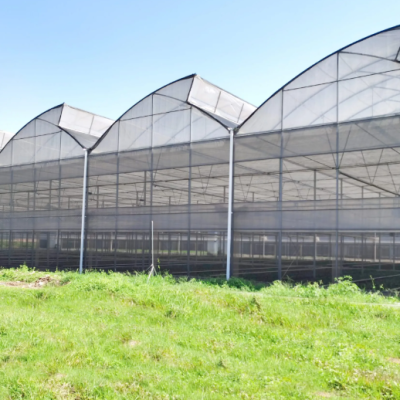
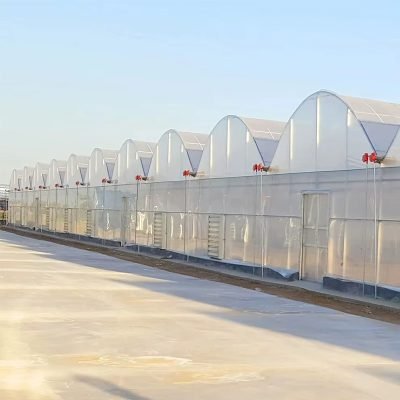
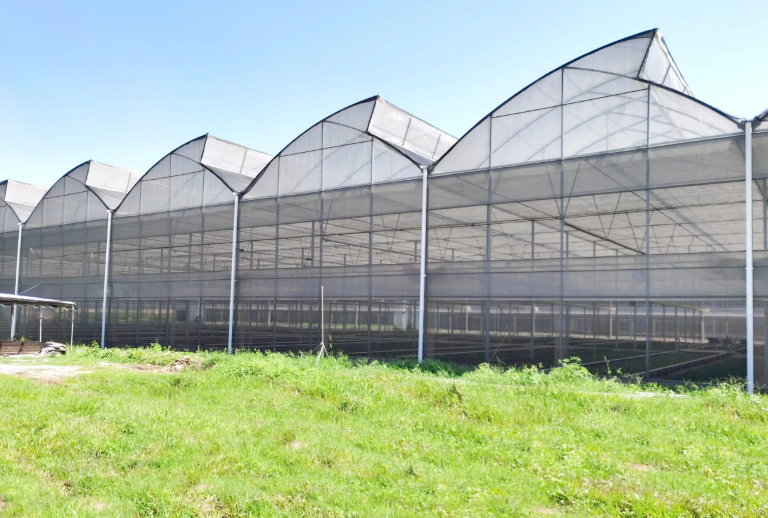
If you’ve ever driven past a large farm or commercial growing facility, you may have noticed a roof shaped like a row of shark fins. That’s exactly what we’re talking about here. It’s a unique greenhouse design — and it’s far more clever than it looks.
Definition of a Sawtooth Greenhouse
A sawtooth greenhouse is a structure featuring a roof made up of repeating asymmetrical peaks. Each peak has one sloped side and one near-vertical side. Together, they create a zigzag profile when viewed from the end.
The name comes from its appearance. It looks just like the blade of a saw. Each “tooth” of the roof serves a clear purpose — capturing light, releasing heat, and moving air. It’s not just a style choice. Every angle is there for a reason.
Quick Definition: A sawtooth greenhouse = a series of alternating sloped and vertical roof sections forming a zigzag shape, designed to manage light, heat, and airflow naturally.
This design is especially popular in tropical regions. Managing heat and humidity is a daily challenge there. The sawtooth structure handles both — without relying on a lot of mechanical equipment.
Key Structural Characteristics
What makes a sawtooth greenhouse different is easy to see from the outside. But the real magic happens in the details of how it’s built. Here are the key structural elements you need to know:
- Alternating roof panels — One angled slope faces downward. The next is nearly vertical. They repeat across the entire roof length.
- Vertical glazing sections — These are the “teeth” of the saw. They face away from direct sunlight. Light enters softly, not harshly.
- High sidewalls — They improve airflow and give the structure more interior height. Plants have more room to grow upward.
- Ridge vents or openings — Hot air rises and escapes through the highest points. This is the chimney effect in action.
- Modular frame design — Multiple units connect side by side. Growers can scale up without rebuilding from scratch.
How air and light move through the roof:
- Sunlight enters through the vertical glazing panels
- Light spreads evenly across the entire greenhouse floor
- Hot air rises naturally toward the roof peaks
- It escapes through the ridge vents at the top
- Cool air flows in from the sides to replace it
Each sloped section collects diffused light. Each vertical section releases heat and lets in indirect sunlight. They work as a team — and that teamwork is what makes this design so effective.
Sawtooth Greenhouse vs Traditional Greenhouse
A lot of people wonder whether a sawtooth greenhouse is really worth it. Let’s put it side by side with a traditional greenhouse design. The difference becomes pretty clear fast.
| Feature | Traditional Greenhouse | Sawtooth Greenhouse |
|---|---|---|
| Roof Shape | Single slope or arch | Zigzag / saw-like profile |
| Light Entry | Direct, from above | Indirect, through vertical panels |
| Heat Buildup | High — especially in tropics | Low — design reduces direct solar gain |
| Ventilation | Relies mostly on fans | Natural chimney effect built in |
| Energy Use | Higher — needs cooling systems | Lower — less mechanical equipment needed |
| Light Distribution | Uneven — corners stay dark | Even — spreads across the entire floor |
| Scalability | Limited by roof structure | Easy to connect multiple units |
| Best Climate | Temperate zones | Tropical and hot, humid regions ✅ |
A traditional greenhouse works fine in mild climates. But push it into a tropical zone and problems show up fast. Heat builds up quickly. Cooling costs skyrocket. Plants in the corners don’t get enough light.
The sawtooth greenhouse was essentially built for tropical conditions. It doesn’t fight the heat — it works around it. The vertical panels keep direct sun out. The chimney effect pushes hot air up and out. Cool air fills in from below automatically.
Key Difference: Traditional greenhouses trap heat. Sawtooth greenhouses release it — naturally, without electricity.
One more thing worth noting: traditional greenhouses often cast uneven shadows. Some plants get too much light. Others don’t get nearly enough. The sawtooth design scatters light across the floor far more evenly. Every plant gets a fair share — and that matters a lot when you’re growing at scale.
How a Sawtooth Greenhouse Maximizes Natural Light
Light is everything in a greenhouse. Too little and your plants struggle. Too much direct sun and they overheat. A sawtooth greenhouse hits that sweet spot — and it does it through smart structural design, not expensive technology.
The Science Behind Light Optimization
Here’s the thing about tropical sunlight — it’s intense. The sun sits almost directly overhead for most of the year. That means a flat or single-slope roof gets hammered by direct rays. Heat builds up fast. Plants stress out.
A sawtooth greenhouse handles this differently. Its vertical glazing panels are positioned to catch indirect and diffused light rather than direct rays. This is the key science behind it.
How the light capture process works:
- Sunlight hits the angled slope panels first
- It bounces and scatters inside the structure
- More light enters through the vertical glazing sections
- Diffused light spreads downward across the plant canopy
- Heat rises and exits through the ridge openings at the top
The vertical panels face away from the sun’s strongest angle. They let in ambient light — the kind plants actually love. It’s softer. It’s more consistent. And it doesn’t bake everything underneath it.
Quick Science Fact: Diffused light reaches more leaf surfaces than direct light. Plants absorb it more efficiently — which means better photosynthesis and faster growth.
Here’s a simple breakdown of how light types affect plants:
| Light Type | Source | Effect on Plants |
|---|---|---|
| Direct light | Straight from the sun | High intensity, causes heat stress |
| Diffused light | Scattered through panels | Soft, even — ideal for most crops ✅ |
| Reflected light | Bounces off roof slopes | Reaches lower canopy levels |
| Indirect light | Enters at an angle | Reduces shadows in corners |
The sawtooth design uses all four. No other roof shape does this as naturally or as efficiently.
Even Light Distribution for Better Growth
Uneven light is a real problem in traditional greenhouses. Plants near the walls get too much. Plants in the middle or corners get too little. The result? Patchy growth, inconsistent yields, and a lot of frustration.
The sawtooth greenhouse solves this beautifully. Its repeating zigzag peaks create multiple light entry points across the entire roof. Light doesn’t just pour in from one spot. It enters from several angles at once.
What this means for your plants:
- No more dark corners — every section of the floor receives consistent light
- Uniform growth patterns — plants at the back grow just as well as those at the front
- Better canopy coverage — light reaches lower leaves, not just the top layer
- Reduced need for grow lights — natural distribution does the job on its own
- Higher overall yield — consistent light equals consistent production
Think about it this way. Imagine holding a flashlight over a table from one spot. One area is bright. The rest stays dim. Now imagine spreading five smaller lights evenly across the ceiling. The whole table lights up equally. That’s exactly what the sawtooth roof does — but it uses the sun.
Light distribution comparison:
| Greenhouse Type | Light Entry Points | Coverage | Shadow Zones |
|---|---|---|---|
| Traditional arch roof | 1 (top center) | Uneven | Common in corners |
| Single-slope roof | 1 (one side) | Half the floor | Significant on far side |
| Sawtooth greenhouse | Multiple (each peak) | Full floor coverage ✅ | Minimal |
This even spread is especially valuable for growers managing large crops. Every plant in the row gets the same light exposure. They grow at the same rate. Harvesting becomes more predictable — and that saves both time and money.
Grower Tip: If you’re growing crops like lettuce, basil, or strawberries — where uniformity matters — even light distribution directly affects your profit margins.
Reducing Glare and Light Stress
Here’s something people don’t talk about enough: too much light is just as harmful as too little. In tropical zones, intense glare can scorch leaves, bleach colors, and shut down photosynthesis completely. Plants go into stress mode. They stop growing.
A sawtooth greenhouse is designed to prevent exactly this.
The vertical panels don’t face the sun directly. They’re positioned to deflect harsh rays before they hit the plants below. The result is a softer, more comfortable growing environment — for both plants and people working inside.
Signs of light stress in plants — and how sawtooth roofs help:
| Light Stress Symptom | Cause | How Sawtooth Design Helps |
|---|---|---|
| Leaf bleaching / yellowing | Too much direct UV | Vertical panels block harsh angles ✅ |
| Leaf curling or wilting | Heat from direct rays | Diffused light reduces surface temperature ✅ |
| Stunted growth | Photosynthesis shutdown | Softer light keeps the process running ✅ |
| Brown leaf tips | Intense concentrated light | Even distribution prevents hot spots ✅ |
| Reduced fruit quality | UV overexposure | UV-filtering panels protect crops ✅ |
The sloped sections of the roof also play a role. They act like natural light deflectors. Direct rays hit the slope and scatter. By the time light reaches plant level, it’s already been softened.
There’s another benefit worth mentioning — glare affects workers too. Inside a traditional greenhouse under tropical sun, it can get uncomfortably bright. It strains the eyes. It makes it hard to spot problems like pests or disease early. A sawtooth greenhouse reduces that glare significantly. The working environment becomes more comfortable — and more productive.
Remember: Light stress is one of the top reasons crops underperform in tropical greenhouses. Managing it well from the start — through smart roof design — is far easier than trying to fix it later.
The Chimney Effect: Natural Ventilation Explained
Heat is the number one enemy in a tropical greenhouse. It builds up fast. It stresses plants. It drives up energy costs. But a sawtooth greenhouse tackles this problem in the smartest way possible — without a single fan or air conditioning unit. The secret? The chimney effect.
What Is the Chimney Effect?
You’ve probably noticed how smoke rises up a chimney. It doesn’t float sideways. It goes straight up. That’s because hot air is lighter than cool air. It always moves upward — and it keeps moving until it finds an exit.
The chimney effect works on exactly this principle. Here’s the basic idea:
- Air inside a space heats up
- Warm air becomes lighter and rises toward the top
- It finds an opening near the highest point and escapes
- Cooler, denser air rushes in from below to replace it
- The cycle keeps repeating — continuously and automatically
This is a completely natural process. No electricity needed. No mechanical parts. It just happens on its own — as long as the structure is designed to let it.
Simple Definition: The chimney effect = warm air rises and exits through high openings, pulling cool air in from below. It’s nature doing the ventilation work for you.
This effect happens in regular buildings too — but in a sawtooth greenhouse, it’s been deliberately engineered into the roof design. Every peak, every vertical panel, every ridge opening is placed to make it work as efficiently as possible.
How Sawtooth Roofs Enhance Natural Ventilation
Most greenhouse roofs slow the chimney effect down. A sealed arch or flat roof traps hot air at the top. It has nowhere to go. Temperatures spike. Plants suffer.
A sawtooth greenhouse does the opposite. Its structure is built around letting hot air escape — quickly and constantly. Here’s how each part of the design contributes:
Key design features driving natural ventilation:
| Structural Feature | Role in Ventilation |
|---|---|
| Vertical glazing panels | Positioned at peak height — hot air exits directly through them |
| Alternating roof slopes | Create pressure differences that pull air upward |
| High sidewalls | Allow cool air to enter from a lower level |
| Multiple roof peaks | Provide several escape points for rising hot air |
| Ridge openings | Act as dedicated exhaust vents at the highest points |
The key is the height difference between where cool air enters and where hot air exits. The greater the gap, the stronger the airflow. Sawtooth roofs are designed to maximize this gap — naturally.
Think of it like a series of small chimneys running the entire length of the roof. Each “tooth” acts as its own ventilation unit. They all work together. Hot air doesn’t pile up in one spot — it escapes across the whole structure at once.
The airflow cycle inside a sawtooth greenhouse:
- Cool air enters through sidewall vents or lower openings
- It flows across the plant canopy at ground level
- It picks up heat as it passes over warm soil and plants
- Warm air rises through the interior space
- It exits through the vertical panels and ridge openings at each peak
- Fresh cool air gets pulled in again — the cycle continues
This constant movement keeps the interior temperature stable. It also prevents humidity from sitting still and building up — which is a huge deal in tropical climates.
Practical Note: The more peaks a sawtooth roof has, the stronger the ventilation effect. Wider greenhouses often use more teeth to maintain consistent airflow across the full width.
Benefits of Passive Ventilation
“Passive ventilation” just means ventilation that happens without machines. No fans. No pumps. No electricity. The sawtooth greenhouse achieves this through the chimney effect — and the benefits go far beyond just saving on power bills.
Here’s what passive ventilation actually does for your greenhouse:
- Regulates temperature automatically — hot air escapes before it can build to dangerous levels
- Controls humidity — moving air prevents moisture from sitting still and causing mold
- Reduces disease pressure — fungi and bacteria thrive in stagnant, humid air; airflow stops them
- Cuts energy costs — no fans or AC units running means lower monthly bills
- Less maintenance — fewer mechanical parts means fewer things to fix or replace
- More sustainable — zero energy use for ventilation means a smaller carbon footprint
- Fewer pest problems — good airflow makes it harder for certain insects to settle in
Let’s put the cost difference into perspective:
| Ventilation Type | Energy Required | Monthly Cost (Est.) | Maintenance Needs | Reliability |
|---|---|---|---|---|
| Mechanical fans | High | $$$ | Regular servicing | Depends on power supply |
| Air conditioning | Very high | $$$$ | Frequent servicing | Depends on power supply |
| Passive (chimney effect) | None | $0 ✅ | Minimal | Always working ✅ |
The difference is significant. Especially for large-scale operations — where running fans and cooling systems across hundreds of square meters adds up to serious money every single month.
There’s also something to be said about reliability. Mechanical systems break down. Power goes out. In a tropical storm, your electrical system might fail at the worst possible moment. Passive ventilation through the chimney effect never stops working. It doesn’t need a power source. As long as hot air rises — and it always does — the sawtooth greenhouse keeps breathing.
Worth Knowing: In regions where electricity is expensive or unreliable, passive ventilation isn’t just a nice feature — it’s a critical advantage that keeps crops alive during outages.
One more benefit that often gets overlooked: worker comfort. A well-ventilated greenhouse is a much more pleasant place to work in. Temperatures stay manageable. Air feels fresh. Workers can stay focused and productive — without heat exhaustion being a real concern.
Benefits of Sawtooth Greenhouses in Tropical Climates
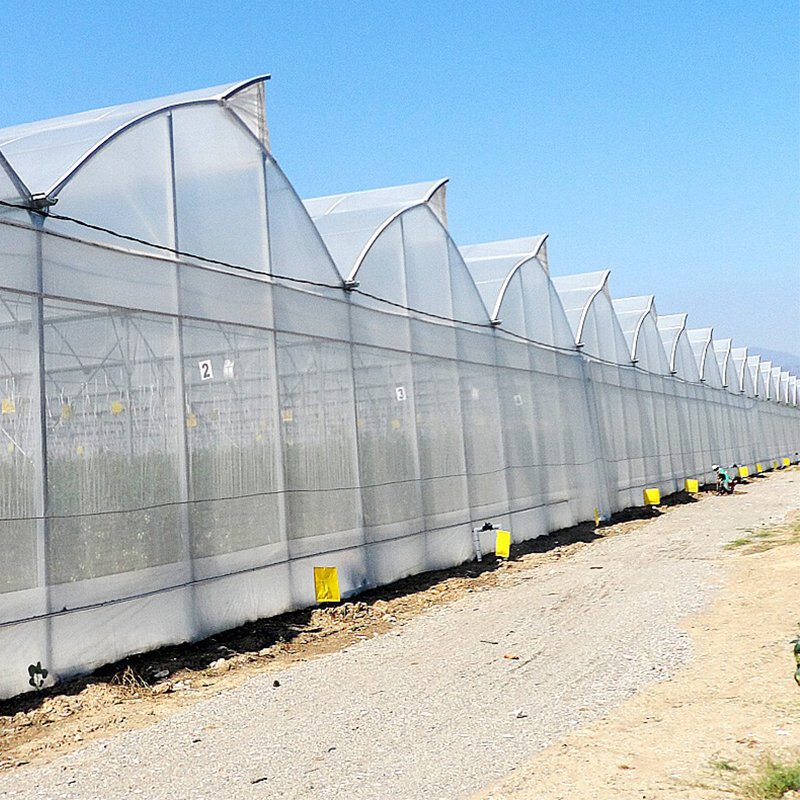
Growing plants in a tropical climate is rewarding — but it’s also tough. The heat is relentless. Humidity never really lets up. A sawtooth greenhouse changes that equation completely.
Superior Temperature Control
In the tropics, temperature is your biggest daily battle. A sawtooth greenhouse is built to handle it. The vertical glazing panels block direct solar radiation at peak angles. Passive ventilation — explained in detail in the Chimney Effect section — pushes hot air out continuously. Cool air replaces it from below automatically.
Tropical climates bring more than just heat. Heavy rainfall, strong seasonal winds, and intense overhead sun are daily realities. The sawtooth design handles all of them:
| Tropical Challenge | How Sawtooth Design Responds |
|---|---|
| Intense overhead sun | Vertical panels deflect direct rays — diffused light enters instead ✅ |
| High daily temperatures | Hot air exits through roof peaks continuously ✅ |
| Heavy rainfall | Sloped sections shed water fast — no pooling ✅ |
| Persistent humidity | Airflow keeps moisture moving — prevents stagnation ✅ |
| Strong seasonal winds | Modular frame provides lateral stability ✅ |
How temperature stays managed throughout the day:
| Time of Day | Outside Condition | Traditional Greenhouse | Sawtooth Greenhouse |
|---|---|---|---|
| Early morning | Mild | Comfortable | Comfortable |
| Midday | Intense heat | Dangerously hot 🔴 | Warm but manageable 🟡 |
| Afternoon peak | Extreme heat | Unbearable without AC 🔴 | Stable — airflow active ✅ |
| Evening | Cooling down | Slow to cool | Quickly equilibrates ✅ |
Plants spend more time in active growth mode — not stress mode. No temperature spikes at peak heat. Less pressure on any supplemental cooling equipment you do use.
Humidity Management
High humidity is the silent killer in tropical greenhouses. It sits in stagnant air. It coats leaves. It creates perfect conditions for mold, mildew, and fungal disease.
Moving air is the enemy of moisture buildup. When air circulates continuously, it carries excess moisture upward and out. Humidity levels drop — and stay down.
| Problem | Cause | Sawtooth Greenhouse Solution |
|---|---|---|
| Gray mold (Botrytis) | Stagnant, moist air | Continuous airflow disrupts growth conditions ✅ |
| Powdery mildew | High humidity on leaf surfaces | Moving air dries leaf surfaces faster ✅ |
| Root rot | Excess moisture | Better air circulation reduces buildup ✅ |
| Fungus gnats | Consistently wet medium | Improved conditions from lower humidity ✅ |
| Bacterial leaf spot | Moisture on foliage | Air movement removes water from leaves quickly ✅ |
Best humidity ranges for common tropical crops:
- Tomatoes: 60–70% relative humidity
- Cucumbers: 70–80% relative humidity
- Peppers: 60–70% relative humidity
- Leafy greens: 50–70% relative humidity
A sawtooth greenhouse helps you stay within these ranges naturally — without dehumidifiers running around the clock.
Energy Efficiency and Sustainability
Running a tropical greenhouse on traditional mechanical systems is expensive. Fans run all day. AC units run all night. A sawtooth greenhouse dramatically reduces dependence on all of these. Its passive design handles most of the work automatically.
| Operating Cost | Traditional Greenhouse | Sawtooth Greenhouse |
|---|---|---|
| Cooling energy | High — runs daily $$$ | Low — rarely needed $ |
| Ventilation fans | Required — multiple units $$ | Minimal — backup only $ |
| Dehumidifier use | Frequent $$ | Occasional $ |
| Equipment maintenance | Regular servicing $$ | Minimal mechanical parts $ |
| Long-term operating cost | High 🔴 | Significantly lower ✅ |
The sustainability benefits go further than just energy bills:
- Zero-energy ventilation — no electricity needed to run it
- Reduced water consumption — stable temperatures lower irrigation demand
- Lower chemical inputs — better airflow reduces disease and pest pressure
- Long structural lifespan — less frequent rebuilding needed
- Works during power outages — passive design never stops
In large tropical operations, cooling can account for 40–60% of total energy costs. Remove most of that need — and the financial and environmental impact drops significantly.
Sustainability Snapshot: A well-designed sawtooth greenhouse operates its entire ventilation system at zero energy cost — every single day of the year.
Improved Plant Health and Yield
Everything covered above — the light, the temperature, the humidity, the airflow — all comes down to one goal: healthier plants and better harvests.
| Growth Factor | Traditional Greenhouse | Sawtooth Greenhouse |
|---|---|---|
| Light coverage | Uneven — shaded areas common | Even across the full floor ✅ |
| Growth uniformity | Inconsistent between rows | Consistent — predictable yields ✅ |
| Disease incidence | Higher — humidity stagnates | Lower — airflow reduces risk ✅ |
| Heat stress events | Frequent during peak heat | Rare — managed passively ✅ |
| Photosynthesis rate | Disrupted by glare and heat | Stable — diffused light supports it ✅ |
Better airflow also means fewer pest infestations. Spider mites and whiteflies prefer hot, still air. Continuous movement makes it harder for them to establish.
Crops that benefit most in tropical zones:
- Tomatoes, peppers, cucumbers
- Leafy greens — lettuce, spinach, bok choy
- Cut flowers — orchids, anthuriums
- Strawberries and small fruits
- Herbs — basil, coriander, mint
Adaptability for Different Growers
One of the most underrated qualities of a sawtooth greenhouse is how flexible it is. It’s not just for large commercial farms. It scales up or down to fit almost any operation.
| Grower Type | Scale | Primary Crops | Key Benefit |
|---|---|---|---|
| Backyard / hobby | 20–100 m² | Vegetables, herbs | Low running costs |
| Small commercial | 500–2,000 m² | Tomatoes, peppers, greens | Consistent yields |
| Large commercial | 5,000 m²+ | High-value fruits, flowers | Scalability |
| Research facilities | Variable | Specialty crops | Controlled environment |
| Export-focused | Very large | Orchids, premium produce | Year-round output |
The modular design supports phased expansion. Start with one unit. Add more when you’re ready. Nothing needs to be redesigned.
- Phase 1 — Build one unit, establish your crop system
- Phase 2 — Add adjacent units as demand grows
- Phase 3 — Connect multiple units into a full commercial complex
It also works across a wide range of crop heights:
- Low crops (under 50cm) — lettuce, herbs, strawberries
- Medium crops (50–150cm) — peppers, eggplant, dwarf tomatoes
- Tall crops (150cm+) — indeterminate tomatoes, cucumbers, trellised beans
- Specialty crops — orchids, tropical flowers, medicinal herbs
Design Considerations for a Sawtooth Greenhouse
Orientation, Layout and Roof Angle
Getting the orientation right is one of the most important decisions you’ll make. It affects everything — light distribution, airflow, and how well the structure performs year-round.
In tropical zones, the sun moves close to directly overhead. Because of this, a north-south ridge orientation works best for most locations. The vertical glazing panels face east or west. They catch morning and afternoon light. They avoid the brutal midday sun coming straight down.
Here’s a simple breakdown of how orientation affects performance:
| Orientation | Light Entry | Ventilation | Best For |
|---|---|---|---|
| North-South ridge | Even throughout the day | Strong cross-ventilation | Most tropical locations |
| East-West ridge | Concentrated morning/afternoon | Moderate airflow | Higher latitude tropics |
Wind direction matters too. Position the open vents so they face the prevailing wind direction. It pulls fresh air through the structure naturally. No fans needed.
For roof angle, tropical climates have specific needs:
- Glazed vertical panels — kept at 85–90° for maximum diffused light capture
- Solid sloped panels — pitched at 20–30° to shed heavy tropical rainfall fast
- Ridge height — taller peaks improve the chimney effect significantly
A common mistake is going too shallow on the solid slope. It looks fine on paper. But when a tropical downpour hits, water sits on it. Over time, that causes leaks and structural stress.
Choosing the Right Materials
Tropical environments are tough on materials. Heat, humidity, heavy rain, and UV exposure work together. They break things down faster than in temperate climates. Choosing the right materials from the start saves a lot of money later.
Here’s what works — and what doesn’t:
Frame Materials
| Material | Performance in Tropics | Notes |
|---|---|---|
| Hot-dip galvanized steel | ✅ Excellent | Best corrosion resistance, long lifespan |
| Aluminum | ✅ Good | Lightweight, rust-proof, costs more |
| Standard mild steel | ❌ Poor | Rusts quickly in humid conditions |
| Wood | ❌ Not recommended | Warps, rots, and attracts pests |
Galvanized steel is the go-to choice. It handles humidity without corroding. It’s strong enough to take heavy rainfall loads.
Covering Materials
- Twin-wall polycarbonate panels — diffuse light well, good insulation, UV-resistant coating is essential
- Single-layer polycarbonate — cheaper but less effective at diffusing light and managing heat
- Glass — excellent clarity but heavy, fragile in storms, not ideal for most tropical builds
- UV-stabilized polyethylene film — budget-friendly option for low-cost builds, needs replacement every 3–5 years
For vertical glazing panels specifically, diffused twin-wall polycarbonate is the top pick. It scatters light evenly across crops. It cuts out the harsh direct rays. Plants respond better to it.
One more thing — anti-drip coating on interior panels matters more than people think. Tropical humidity causes condensation to form on the inside. Without it, water drips directly onto crops. It damages leaves and encourages disease.
Integrating Ventilation and Irrigation Systems
A well-designed sawtooth greenhouse already has passive ventilation built into its structure. But integrating the right systems takes it further. It gives growers real control — especially during unusually hot or still days.
Ventilation Setup
The sawtooth roof already creates natural airflow through the chimney effect — covered in detail earlier. To make the most of it in practice:
- Ridge vents — placed at each roof peak for hot air escape
- Roll-up sidewalls — allow large volumes of cool air in at ground level
- Exhaust fans — installed as backup for unusually still or hot days
- Shade cloth systems — reduce heat load during peak afternoon hours
Aim for at least one full air exchange per minute inside a tropical greenhouse. Passive design gets you most of the way there. Exhaust fans cover the rest.
| Ventilation Method | Energy Use | Effectiveness | Cost |
|---|---|---|---|
| Ridge vents (passive) | Zero | High in most conditions | Low |
| Roll-up sidewalls | Zero | Very high for airflow volume | Low–Medium |
| Exhaust fans (active) | Moderate | Reliable in all conditions | Medium |
| Evaporative cooling pads | Low | Excellent in dry-heat periods | Medium–High |
Irrigation Integration
The stable environment inside a sawtooth greenhouse actually changes how irrigation works. Temperatures are more consistent. Humidity is managed. Plants don’t dry out as fast as they would in an unventilated space.
Two systems work especially well here:
- Drip irrigation — delivers water directly to the root zone, minimizes leaf wetness, reduces fungal risk
- Misting systems — useful for humidity-sensitive crops, also helps cool the air slightly during extreme heat
For anyone looking to scale up or reduce labor, automated irrigation controllers are worth considering. They connect to soil moisture sensors. They water only when plants actually need it. It cuts water usage significantly — and takes the guesswork out of daily management.
The key when integrating both systems is to plan the layout before construction begins. Running irrigation lines after the frame is built is a headache. It’s much easier to route everything through the structure from day one.
Cost of Building a Sawtooth Greenhouse
Initial Construction Costs
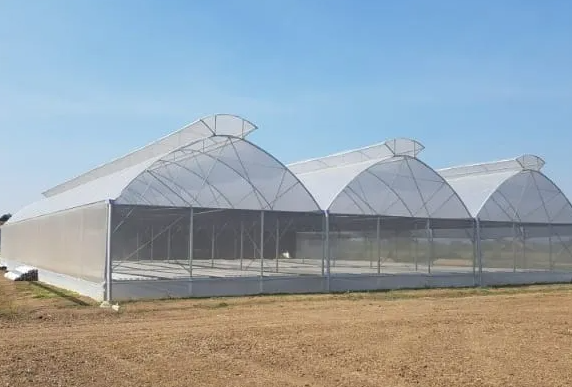
Let’s talk numbers. One of the first questions growers ask is — how much does it actually cost to build one? The honest answer is: it depends on several factors. Size, materials, location, and labor rates all play a role.
That said, here’s a realistic breakdown of what to expect:
| Cost Component | Budget Build | Mid-Range Build | Premium Build |
|---|---|---|---|
| Steel frame | $8–12/m² | $15–20/m² | $25–35/m² |
| Covering materials | $5–8/m² | $12–18/m² | $20–30/m² |
| Foundation | $6–10/m² | $12–15/m² | $18–25/m² |
| Ventilation system | $3–5/m² | $8–12/m² | $15–20/m² |
| Irrigation system | $4–6/m² | $10–15/m² | $20–30/m² |
| Total estimate | $26–41/m² | $57–80/m² | $98–140/m² |
A small 500 m² structure can start around $15,000–$20,000 for a basic build. A mid-range commercial setup at 2,000 m² typically runs $115,000–$160,000. Premium builds with full automation cost significantly more.
A few things drive costs up faster than others:
- Polycarbonate quality — diffused twin-wall panels cost more upfront but last longer
- Foundation type — concrete perimeter foundations add cost but improve stability in wet tropical soils
- Automation level — smart sensors, automated vents, and irrigation controllers are optional but add to the initial price
- Location and access — remote sites increase labor and transport costs considerably
One thing worth knowing: sawtooth greenhouses do cost 10–20% more upfront compared to a basic single-span greenhouse of the same size. The extra cost comes from the more complex roof structure. But that investment pays back — and we’ll get into exactly how.
Long-Term Cost Benefits
The upfront cost is only half the picture. Where a sawtooth greenhouse really stands out is in what you don’t have to spend after it’s built.
In tropical climates, cooling is the biggest operational expense for most greenhouse growers. Mechanical cooling systems — fans, air conditioning units, evaporative coolers — run constantly. They consume enormous amounts of electricity. They break down. They need replacing.
A sawtooth greenhouse reduces or eliminates most of that.
| Expense Category | Traditional Greenhouse | Sawtooth Greenhouse | Estimated Annual Saving |
|---|---|---|---|
| Cooling energy | High — runs daily | Minimal — passive system | $3,000–$15,000+ |
| Equipment maintenance | Frequent fan/AC servicing | Minimal mechanical parts | $1,500–$5,000 |
| Pesticide/fungicide use | Higher — humidity breeds disease | Lower — better airflow | $1,000–$4,000 |
| Water usage | Higher — heat stress increases demand | Lower — stable temps reduce need | $500–$2,000 |
| Crop loss from heat stress | More frequent | Significantly reduced | Variable |
Over a 10-year period, operational savings can easily exceed the additional upfront construction cost — sometimes by a wide margin.
Here’s a simple way to think about it:
- Year 1–2 — Higher initial investment, savings begin to accumulate
- Year 3–5 — Energy and maintenance savings offset the cost difference
- Year 6–10 — Net positive returns compound annually
The structure itself also lasts longer. A well-built galvanized steel sawtooth greenhouse in a tropical environment can last 20–30 years with proper maintenance. Cheaper alternatives often need significant repairs or full replacement within 10 years.
Who Should Consider a Sawtooth Greenhouse?
Not every grower needs one. It depends on what you’re growing, where you are, and what your goals look like.
Here’s a straightforward profile of who gets the most value out of it:
It makes the most sense for:
- Tropical commercial farmers — anyone growing year-round crops in hot, humid conditions will see immediate benefits from passive cooling and light optimization
- High-value crop producers — tomatoes, peppers, cucumbers, orchids, and premium flowers justify the investment easily
- Greenhouse investors and developers — the long operational lifespan and low running costs make it a strong ROI case
- Research institutions and agricultural universities — the controlled environment is excellent for consistent research conditions
- Sustainable farming projects — NGOs and eco-focused operations benefit from the low carbon footprint and reduced chemical inputs
It may not be the best fit if:
- You’re in a mild or temperate climate — the passive cooling advantage isn’t as critical there
- Your budget is very tight and you need the cheapest possible structure right now
- You’re building something temporary — the sawtooth design is optimized for permanent, long-term use
| Grower Profile | Recommended Scale | Estimated Budget Range |
|---|---|---|
| Backyard / hobby grower | 50–200 m² | $2,000–$10,000 |
| Small commercial farm | 500–1,500 m² | $30,000–$120,000 |
| Large commercial operation | 2,000 m²+ | $150,000+ |
| Research facility | Varies | Custom quote |
The bottom line is simple. If you’re growing in the tropics and you want a structure built to handle the climate — not fight it — a sawtooth greenhouse is one of the most cost-effective long-term choices you can make.
Sawtooth Greenhouse vs Other Greenhouse Types
Before committing to any greenhouse design, it helps to see how it stacks up against the alternatives. Two types come up most often in the comparison: the gable roof greenhouse and the Venlo greenhouse. Both are widely used. Both have real strengths. But neither was built with tropical climates in mind.
Here’s an honest look at how they compare.
Sawtooth vs Gable Roof Greenhouses
The gable roof greenhouse is probably the most familiar design out there. It’s the classic shape — two slopes meeting at a central ridge, like a typical house roof. It’s simple to build. It’s affordable. And it works reasonably well in cooler climates.
In the tropics, though, it runs into problems quickly.
| Feature | Gable Roof Greenhouse | Sawtooth Greenhouse |
|---|---|---|
| Roof design | Single central ridge, two slopes | Multi-peak zigzag profile |
| Natural light entry | Direct — causes heat and glare | Diffused — gentler and more even |
| Ventilation | Limited — relies heavily on end vents | Strong — chimney effect runs full length |
| Temperature control | Poor in high heat | Naturally cooler interior |
| Rain shedding | Decent on steeper pitches | Excellent — multiple slopes shed fast |
| Energy dependency | High — needs mechanical cooling | Low — passive design does the work |
| Scalability | Moderate | High — modular units connect easily |
| Construction cost | Lower upfront | 10–20% higher upfront |
The core issue with a gable roof greenhouse in a tropical zone is light. It lets direct sunlight straight in. During peak hours, interior temperatures can climb dangerously fast. Plants experience heat stress. Cooling systems kick in and run non-stop.
A sawtooth greenhouse solves this at the structural level. It doesn’t let direct sunlight in. The vertical glazing captures and diffuses it before it reaches the crops. The temperature difference inside can be significant — sometimes 8–12°C cooler at peak afternoon heat compared to a gable roof structure of the same size.
Where gable roof still makes sense:
- Temperate or cooler climates
- Very tight construction budgets
- Short-term or temporary growing structures
- Small hobby setups not exposed to extreme heat
Sawtooth vs Venlo Greenhouses
The Venlo greenhouse is a different story. It’s a high-performance commercial design — originally developed in the Netherlands and widely adopted across Europe. It uses a modular multi-span system, large glass panels, and is built for precision growing. Many large-scale operations around the world use it.
On paper, it sounds like strong competition. In tropical climates, the picture changes.
| Feature | Venlo Greenhouse | Sawtooth Greenhouse |
|---|---|---|
| Light transmission | Very high — glass panels, direct entry | Optimized — diffused, controlled entry |
| Ventilation | Roof vents, but limited passive flow | Strong passive chimney effect |
| Thermal performance | Excellent in cold climates | Excellent in hot climates |
| Construction cost | High — glass, precision engineering | Moderate — simpler structure |
| Maintenance | Higher — glass breakage, seal maintenance | Lower — polycarbonate is more forgiving |
| Climate suitability | Designed for cool/temperate zones | Designed to handle tropical heat |
| Energy use in tropics | Very high — needs heavy cooling | Low — passive design manages heat |
| Storm resistance | Moderate — glass is vulnerable | High — polycarbonate takes impact better |
The Venlo greenhouse is genuinely impressive in the right environment. In the Netherlands, it performs brilliantly. It maximizes every bit of weak northern European sunlight. It holds heat in during cold months. It was engineered for those exact conditions.
Flip it to a tropical setting and those same strengths become weaknesses. Too much light comes in. It gets too hot too fast. The cooling systems have to work overtime. Operating costs climb.
Here’s a quick real-world comparison:
A commercial Venlo greenhouse in Southeast Asia running full mechanical cooling can spend $40,000–$80,000 per year on energy alone for a 5,000 m² operation. A sawtooth greenhouse of the same size, relying on passive ventilation, can cut that figure by 50–70%.
Where Venlo still wins:
- Temperate and northern European climates
- Operations requiring maximum light transmission for low-light crops
- High-tech precision growing environments
- Locations where heating — not cooling — is the primary climate challenge
Where sawtooth wins:
- Tropical and subtropical zones
- High-heat, high-humidity growing conditions
- Operations where energy costs and sustainability matter
- Growers who want strong performance without heavy mechanical infrastructure
The choice between them isn’t really about which design is better overall. It’s about which one fits the climate you’re actually building in.
Frequently Asked Questions
Q: What Crops Grow Best in a Sawtooth Greenhouse?
A: Tomatoes, peppers, cucumbers, leafy greens, herbs, and orchids all thrive in it. The diffused light and stable temperatures suit a wide range of crops.
Q: Are Sawtooth Greenhouses Suitable for Small Farms?
A: Yes. A single unit can start as small as 50 m². It delivers the same passive ventilation and light benefits regardless of size.
Q: How Long Does a Sawtooth Greenhouse Last?
A: A galvanized steel frame lasts 25–35 years. Polycarbonate panels typically need replacing after 10–15 years.
Q: Can It Be Combined with Hydroponics?
A: Absolutely. The stable temperature and diffused light make it one of the better structures for hydroponic systems.
Conclusion
A sawtooth greenhouse is built for the tropics. It handles heat, light, and humidity naturally.
Diffused light, passive ventilation, and low energy use make it a smart long-term investment.
Growers who build one spend less and grow more — year after year.
As sustainable farming grows, this design will only become more relevant.
Ready to explore your options? Contact us today to get started.