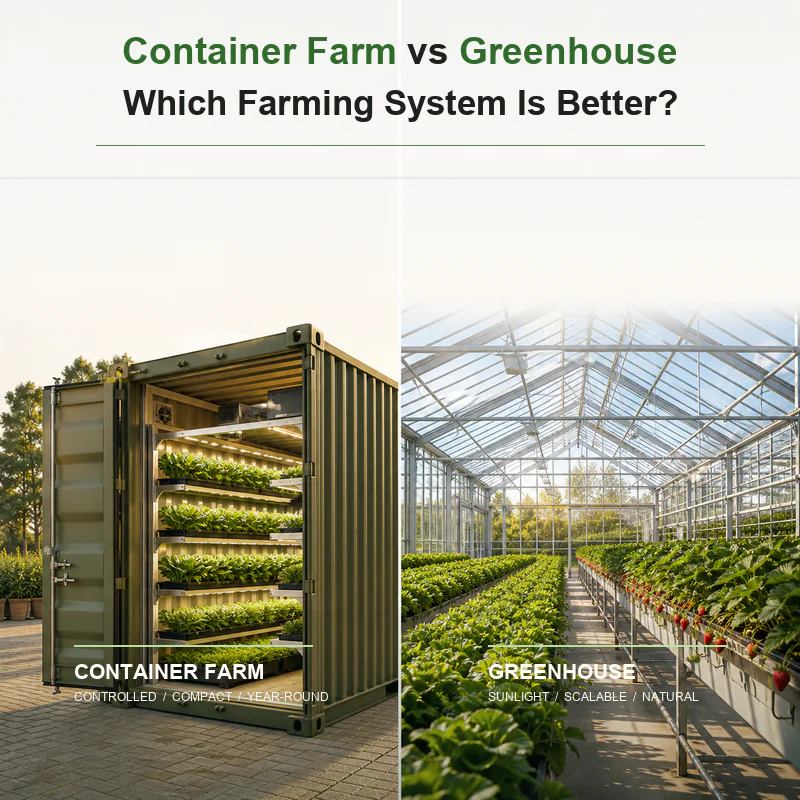




当园艺家和种植者问玻璃温室是否比塑料温室好时,他们往往在寻找一个唯一的明确答案。实际上,这种比较要细微得多。玻璃温室和塑料大棚结构之间的区别不在于优劣,而在于是否适合不同的情况。每种材料在特定条件下、对于特定用户和特定种植目标都能发挥最佳效果。.
This article explores those adaptation differences across real-world scenarios—without framing either option as having “disadvantages.” Instead, we focus on how each greenhouse type fits different environments, budgets, and usage patterns, helping you choose what works best for your situation.
Plastic vs Glass Greenhouse
Plastic and glass greenhouses represent two distinct approaches to controlled growing. Plastic greenhouses are commonly associated with flexibility and short- to medium-term use, while glass structures are often chosen for permanence, clarity, and long-term planning.
A glass greenhouse is typically built as a lasting structure, integrated into a garden, home, or professional growing facility. Plastic greenhouses, by contrast, are frequently selected for adaptable setups that can evolve or be replaced as needs change. Understanding these foundational differences sets the stage for more detailed, scenario-based comparisons.

Glass vs Plastic for Greenhouses: Which Is Better?
Rather than asking which material is “better,” a more useful question is: which material is better suited to your growing scenario? Climate, plant type, time horizon, and aesthetic goals all influence the answer.
Below, we explore how glass and plastic greenhouses adapt differently across key functional areas.
Light Transmission & Plant Growth
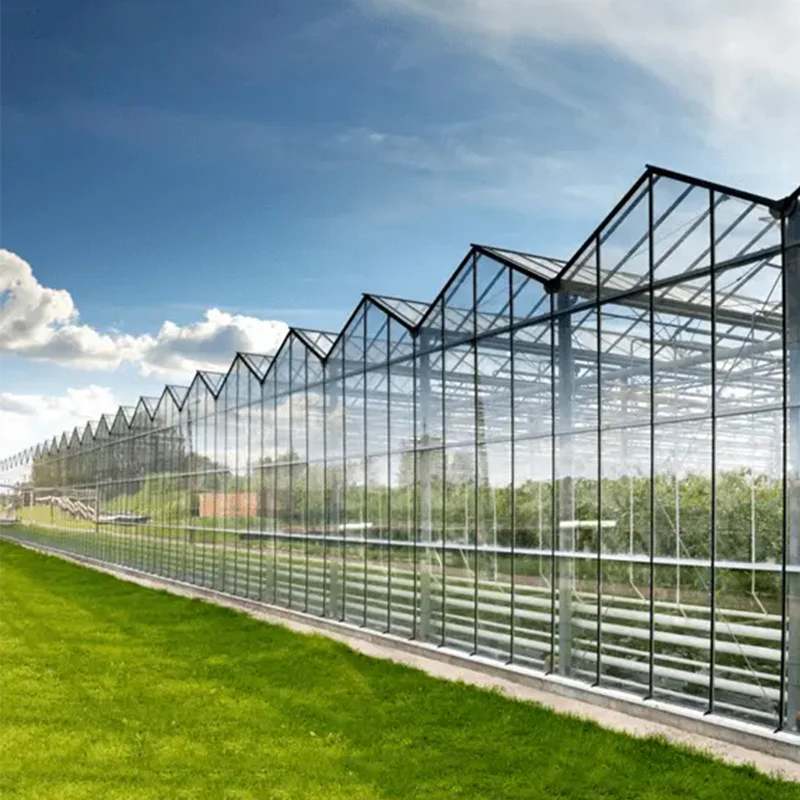
In scenarios where natural light quality and consistency are top priorities, glass structures are often selected. Clear glass allows high levels of direct sunlight to enter, closely replicating outdoor conditions. This makes a glass greenhouse particularly well suited for seed starting, fruiting crops, and ornamental plants that rely on strong, stable light exposure.
This light behavior is especially valuable in:
A glass greenhouse indoor space that doubles as a sun-filled plant room
Long-term growing setups where consistent light levels matter year after year
Environments with limited daylight hours
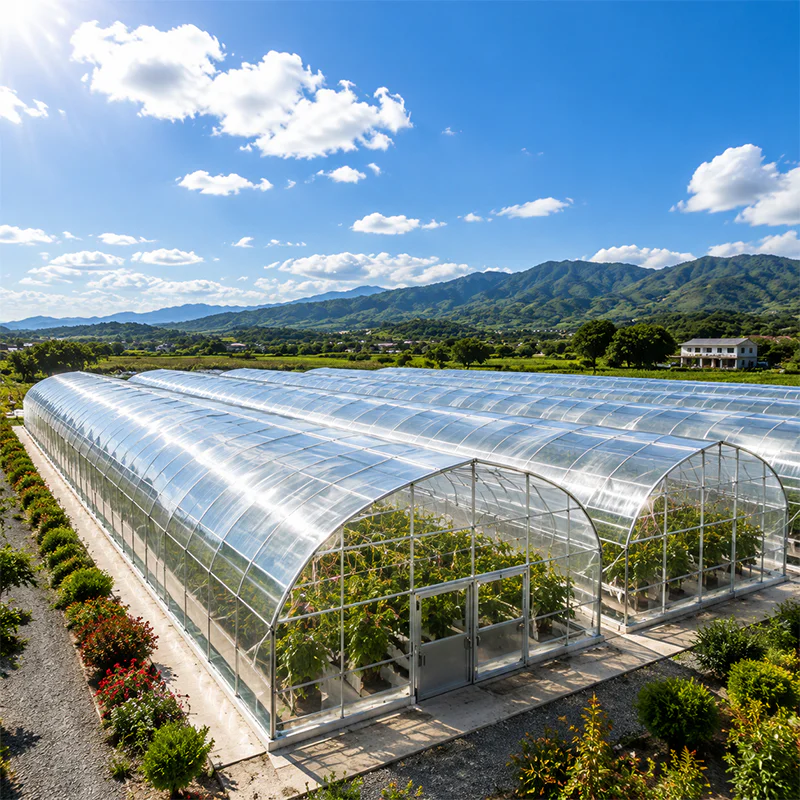
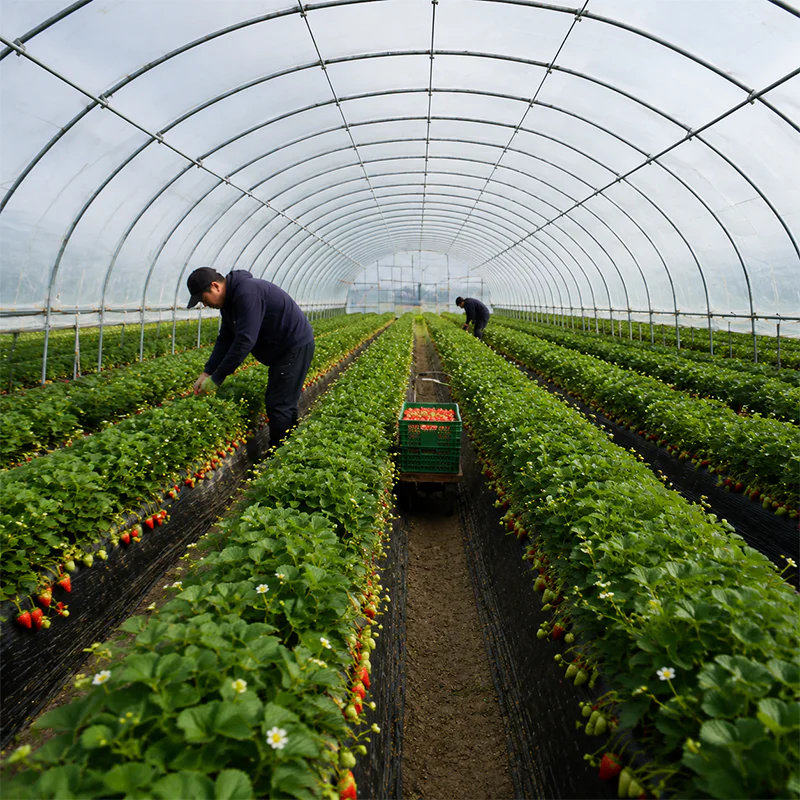
Plastic greenhouse coverings are often chosen in scenarios where light diffusion is preferred. Diffused light can help create an even growing environment for leafy greens or shade-tolerant plants, especially in regions with intense sun.

Heat Retention & Insulation
Temperature management is another area where adaptation differences become clear.
Plastic greenhouses are frequently selected in scenarios where insulation efficiency is a primary concern. Multi-layer plastic panels trap air effectively, making them suitable for seasonal growing or regions with cold nights and large temperature swings.
A glass greenhouse is commonly chosen in situations where:
Heating systems are already planned
Temperature control is managed with ventilation and design
The greenhouse is intended for long-term, year-round use
For example, a large glass greenhouse designed for continuous production often integrates thermal mass, climate controls, and strategic orientation to maintain a balanced internal environment.
Durability & Weather Resistance
Durability requirements vary widely depending on location and purpose.
Plastic greenhouses are often used in scenarios where flexibility and impact tolerance are beneficial. Their lightweight nature makes them adaptable for temporary installations, mobile setups, or areas where seasonal changes may require frequent adjustments.
A glass greenhouse is typically chosen for scenarios that prioritize:
Structural permanence
Long service life
Resistance to long-term UV exposure
This is why a commercial glass greenhouse is commonly used in professional horticulture, research facilities, and institutional growing environments, where consistent performance over decades is part of the operational plan.
Cost & Affordability
Cost considerations depend heavily on timeframe and scale.
Plastic greenhouses are well matched to scenarios such as:
Entry-level gardening
Trial growing projects
Short- to mid-term cultivation plans
They allow growers to start quickly and adapt as experience grows.
A glass greenhouse is typically selected when the structure is viewed as a long-term investment. Whether it’s a mini glass greenhouse for personal enjoyment or a larger installation for serious cultivation, the upfront cost aligns with extended use and reduced need for frequent replacement.

Aesthetics & Visual Appeal
Visual integration plays an important role in many settings.
A glass greenhouse is often chosen in scenarios
where:
The structure is part of landscape design
Transparency and openness are valued
The greenhouse serves both functional and leisure purposes
This is especially relevant for residential gardens, conservatory-style spaces, and glass greenhouse indoor applications where plants and people share the same environment.
Plastic greenhouses are commonly selected in purely functional contexts—such as utility gardens or agricultural zones—where visual impact is secondary to productivity and adaptability.
Installation & Maintenance
Installation preferences also reflect different use cases.
Plastic greenhouses are frequently used when:
Fast setup is required
DIY installation is preferred
The structure may be relocated or resized
A glass greenhouse is more often chosen in scenarios involving:
Permanent foundations
Structured framing
Long-term property integration
Maintenance approaches differ accordingly. For example, small greenhouse glass panels can be replaced individually, supporting long-term upkeep, while plastic coverings are often refreshed according to growing cycles or seasonal plans.
Should You Choose Plastic or Glass for Your Greenhouse?
The right choice depends on how your greenhouse fits into your broader goals.
Plastic greenhouses adapt well to flexible, budget-conscious, or experimental growing scenarios.
A glass greenhouse fits best where longevity, light quality, and visual harmony are priorities.
Different scenarios naturally align with different formats:
A mini glass greenhouse suits compact spaces and hobby gardeners
A large glass greenhouse supports year-round cultivation and expansion
A commercial glass greenhouse meets the needs of professional-scale production
结论
So, are glass greenhouses better than plastic? The most accurate answer is that each material excels in different scenarios. A glass greenhouse adapts best to long-term, light-focused, and design-oriented applications, while plastic structures suit flexible, seasonal, and rapidly changing growing needs.
By choosing based on scenario rather than comparison alone, growers can create environments that support healthier plants, smoother operations, and more satisfying results over time.