




Introduction
Growers eventually hit a critical inflection point. Scaling operations forces a difficult choice. You must choose between the low initial cost of temporary structures and the heavy capital expenditure of permanent facilities. This decision stretches far beyond merely protecting crops from unexpected frost. Today, farm operators must calculate unit economics carefully. You need to ensure supply chain reliability constantly. Mitigating volatile climate risks is also absolutely essential. Clinging to outdated setups can easily cripple long-term growth. Conversely, overbuilding your infrastructure prematurely can drain cash reserves fast.
This guide strips away confusing marketing hype entirely. We deliver a rigorous, math-driven comparison for commercial operators. We explore CAPEX and OPEX realities to give you maximum clarity. You will learn how to align structural choices directly against your crop biology. We provide real-world insights to guide your expansion. You can finally make a structurally and financially sound decision.

Key Takeaways
- Core Difference: Traditional setups are highly weather-dependent and seasonal, whereas an industrial greenhouse functions as a fully controlled manufacturing engine for year-round yield.
- Financial Reality: While modern commercial setups require significantly higher upfront CAPEX, their optimized OPEX (via precision climate control and automated dosing) often yields a faster long-term ROI for high-value crops.
- Compliance Matters: Upgrading to a large greenhouse triggers complex zoning laws, building permits, and different agricultural subsidy eligibilities compared to temporary high tunnels.
- The Hybrid Advantage: The most profitable commercial greenhouse operations combine the free solar energy of traditional farming with the precision of indoor controlled environment agriculture (CEA).
Defining the Baseline: Industrial vs. Traditional Structures
You must clearly categorize both solutions first. This establishes baseline terminology. We remove bias immediately. We can then compare the physical realities properly.
Traditional Greenhouses (The Semi-Permanent Baseline)
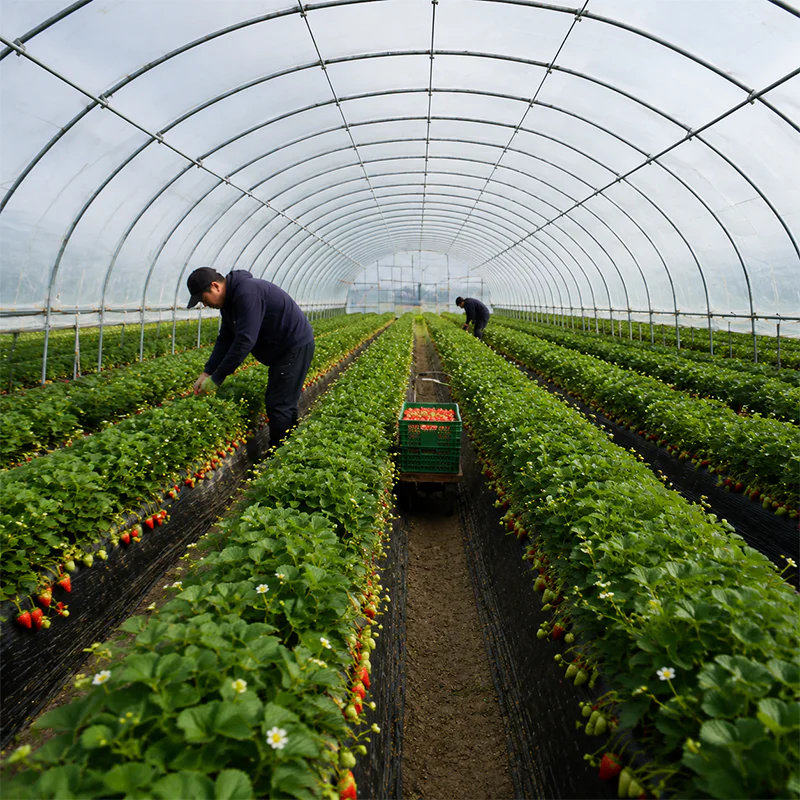
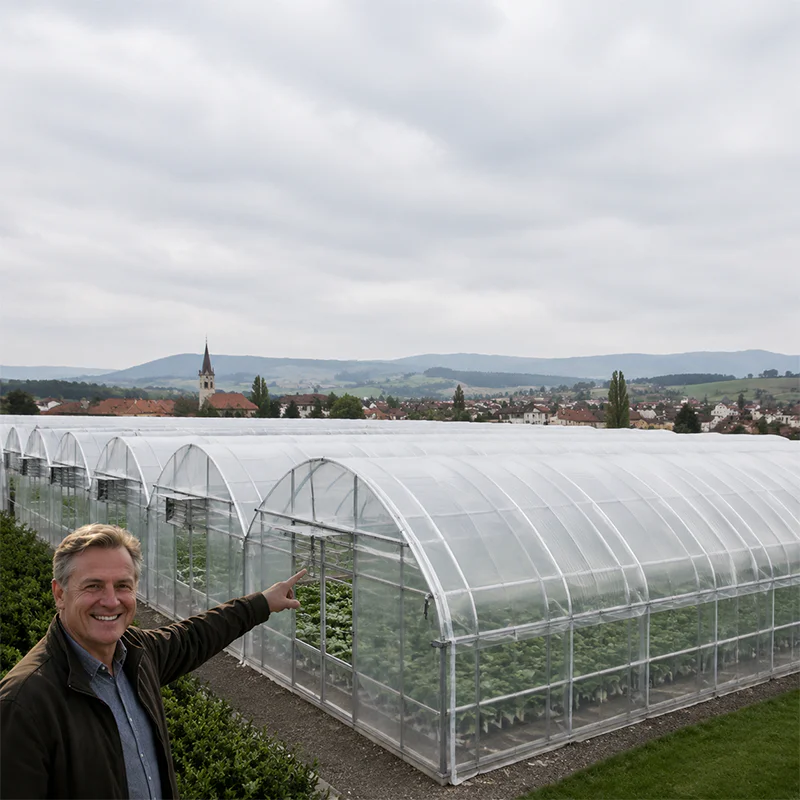
Many people call these structures high tunnels or hoop houses. They use lightweight aluminum or PVC pipes. Single-layer polyethylene film covers the frame. They rely heavily on passive cooling. Roll-up sides let ambient air circulate. Crops usually grow directly in natural soil. They lack advanced environmental controls entirely.
- Materials: Lightweight metal or plastic tubing covered by thin plastic sheets.
- Cooling: Passive ventilation relying purely on wind and ambient temperature.
- Primary Use Case: They extend the natural growing season. Local farmers use them for simple crop protection. They suit seasonal rotations and local hobbyist scaling perfectly.
Industrial Greenhouses (The Permanent Production Engine)
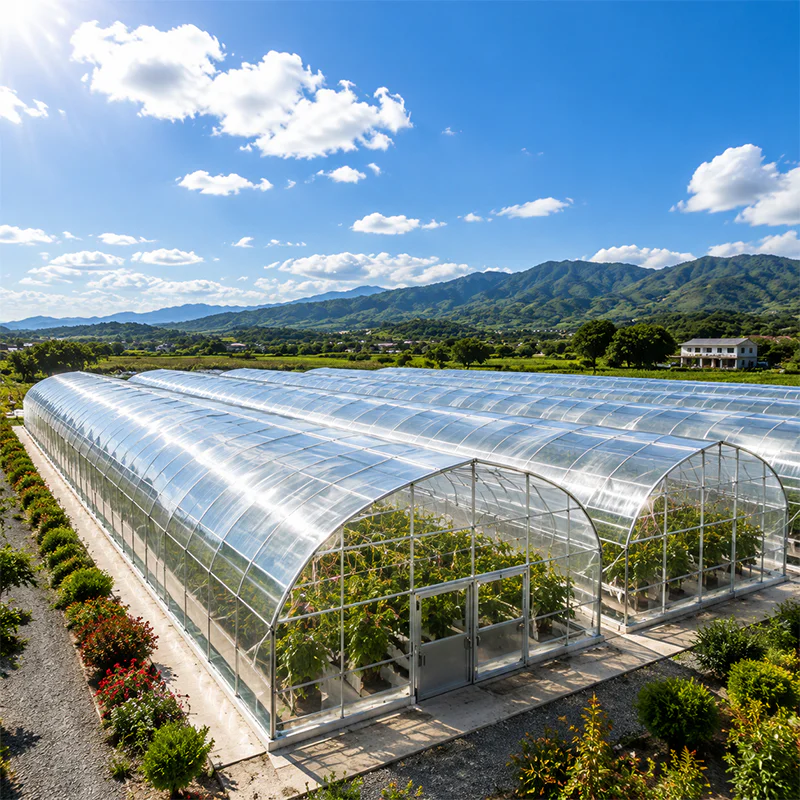
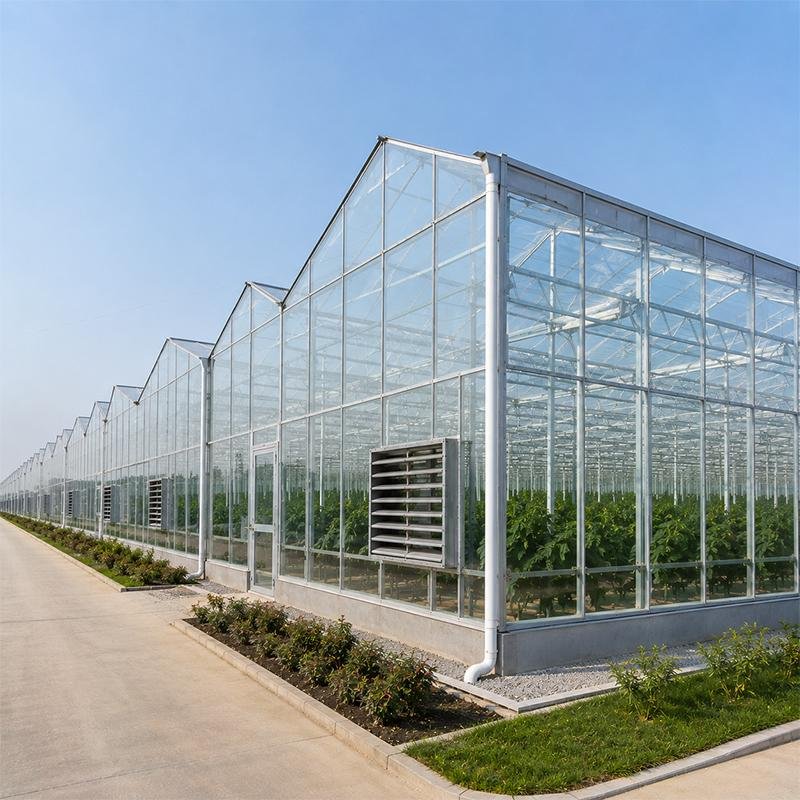
An industrial greenhouse serves as a permanent production engine. Builders engineer them using heavy-duty galvanized steel. They sit securely on solid concrete foundations. Glazing options include rigid polycarbonate, tempered glass, or advanced insulated greenhouses panels. These facilities feature multi-span architectures. They integrate industrial HVAC units. Evaporative cooling and automated shading provide strict climate control.
- Materials: Heavy steel framework mounted permanently on poured concrete footings.
- Glazing: Thick polycarbonate, light-diffusing glass, or insulated panels.
- Primary Use Case: They ensure maximum-yield commercial production. Operators seamlessly integrate them alongside hydroponic systems. They satisfy strict supply chain fulfillment demands year-round.
The Unit Economics: CAPEX vs. OPEX Realities
You must break down the exact math behind both structures. We evaluate the true financial performance rigorously. Avoid looking solely at the purchase price.
Initial Investment (CAPEX)
Traditional hoop houses offer a remarkably low barrier to entry. You buy simple materials cheaply. You skip expensive site preparation entirely. This allows rapid deployment. Conversely, a modern greenhouse demands heavy upfront capital. You pay for land grading, concrete pouring, and specialized glazing.
Many growers try retrofitting a traditional structure slowly. They add piecemeal technology over several years. This assumption often proves dangerous. Bolting heavy HVAC units onto lightweight frames causes structural failure. Building a purpose-built facility from scratch proves far more cost-effective eventually.
Operational Expenditure (OPEX) & Energy
Compare operational costs closely. Traditional farming relies on high manual intervention. Workers manually vent sides and monitor soil moisture constantly. Industrial facilities reduce this labor drastically. Automated sensors and unified AI intelligence layers handle daily adjustments. They optimize temperature autonomously.
Energy efficiency separates the two drastically. Pure indoor vertical farming draws massive electricity. A vertical farm might consume nearly 38.8 kWh per kilogram of yield. However, a professional greenhouse captures over 70% of natural sunlight. It utilizes precise evaporative cooling systems. These wet-pad and fan systems cost 50% less to run compared to traditional air conditioning units.
ROI Timeline Framework
When do premium build costs actually pay off? You must calculate the exact value of crop loss prevention. Year-round premium pricing offsets initial expenses rapidly. High-value crops turn heavy capital expenditure into profit within predictable timelines. Consistent winter harvests capture peak market prices.
| Metric | Traditional Setup | Industrial Facility |
|---|---|---|
| Initial CAPEX | Extremely Low (Minimal site prep) | High (Concrete, steel, HVAC) |
| Labor OPEX | High (Manual venting, manual watering) | Low (Automated sensors, AI layers) |
| Energy Efficiency | Excellent (Passive solar) | Highly Optimized (Evaporative cooling, sun capture) |
| ROI Speed | Fast (but capped by seasonality) | Medium (but scales exponentially year-round) |
Crop Suitability and Supply Chain Impact
You must align your structural choice properly. Match it directly against your target market. Consider specific crop biology before building.
When Traditional Makes Sense
Stick to bulk commodity crops here. Traditional setups handle seasonal point-planting beautifully. Resilient varieties thrive perfectly. Market prices for these basic commodities do not justify high energy inputs. You cannot spend massive electricity growing standard field corn or basic root vegetables.
- Bulk field tomatoes and hardy peppers.
- Seasonal flower rotations.
- Root vegetables requiring basic frost protection.
When Industrial is Mandatory
Sometimes, upgrading to a Commercial Greenhouse becomes absolutely mandatory. Fast-turnaround crops demand absolute precision. Leafy greens, medical cannabis, and premium vine crops need exact formulas. Precise temperature and humidity control dictates your final product quality.
Consider the massive supply chain advantage. Industrial setups bypass seasonal auctions entirely. They prevent costly supply disruptions caused by weather. You enable direct-to-retailer consistency. Supermarkets demand exact volume every single week. You easily meet strict commercial food safety mandates.
Structural Integrity and Climate Resilience
Architectural design dictates regional viability. You must match the engineering to your local climate.
Weather Vulnerabilities of Traditional Setups
Traditional setups remain highly susceptible to damage. Catastrophic failures happen during heavy snow loads. Aluminum pipes bend under accumulating ice. High winds easily tear thin polyethylene film. Rapid temperature spikes cause massive heat damage inside. Passive venting lacks adequate heat dissipation during severe heatwaves.
Engineering of a Commercial Greenhouse
Commercial engineers design permanent structures meticulously. They calculate exact load-bearing capacities. They design specific roof profiles to conquer regional weather threats.
- Gothic Arch Designs: This profile maximizes vertical growing space. It naturally sheds heavy snow accumulations. High-latitude regions benefit immensely from this steep pitch.
- Sawtooth Designs: These feature alternating roof slopes. They create aggressive natural ventilation. Thermal buoyancy pulls hot air out efficiently. It remains the superior choice across high-heat and tropical climates.
- Multi-Span Configurations: Operators can easily expand their footprint. You build wall-to-wall effortlessly. You do this without disrupting the existing micro-climate inside the facility.
Compliance, Zoning, and Agricultural Subsidies
Implementation risks often catch growers off guard. Upgrading involves hidden administrative hurdles. You must navigate local bureaucracy carefully.
Permits & Building Codes
Local agencies often deem traditional structures temporary. They frequently bypass strict local building codes. You can install them quickly without municipal interference. A large greenhouse changes the regulatory game completely. It requires a permanent concrete foundation. You need heavy utility tie-ins for water, electrical, and gas lines. HVAC systems necessitate rigorous local permitting. You must secure official engineering stamps before pouring concrete.
Funding & Subsidies
Government funding requires crucial nuance. The USDA offers specific agricultural grants. The EQIP high-tunnel initiative provides excellent financial assistance. However, these programs often stipulate strict rules. Crops must be planted directly into the natural soil profile. Fully enclosed commercial hydroponic setups use concrete floors. They may not qualify for these specific funds. This limitation alters your overall financial strategy significantly. Research your local agricultural department grants early.
The Decision Framework: Which Setup Fits Your Scale?
Use this shortlisting logic strictly. We created a step-by-step checklist for prospective buyers. You can evaluate your operational readiness quickly.
Stick with Traditional if:
- Your primary goal involves extending a seasonal harvest. You only need 4 to 8 extra weeks.
- You own abundant agricultural land but remain heavily capital-constrained.
- Your local municipal building codes completely prohibit permanent agricultural structures.
- You grow resilient commodity crops requiring minimal climate manipulation.
Upgrade to an Industrial Greenhouse if:
- You have secured strict vendor contracts. These require continuous, guaranteed year-round yields.
- You operate inside a region experiencing extreme, volatile weather. These conditions regularly threaten crop viability.
- You are actively transitioning your business. You want a highly automated, data-driven CEA model.
- You grow high-margin, fragile crops demanding exact environmental formulas.
Conclusion
Neither option is universally better. The choice depends entirely upon your business model. Comparing them directly is like comparing apples to oranges. One operates as a helpful seasonal agricultural tool. The other functions as a localized, highly efficient manufacturing facility. Relying on outdated structures limits your growth potential.
Review your localized climate data closely. Calculate your target crop margins accurately. Stop viewing structures as mere weather shields. Consult a reputable OEM/ODM greenhouse manufacturer today. Spec out a custom structural blueprint tailored precisely for your land. Treat this transition as a profound manufacturing upgrade. Secure your supply chain and maximize your yield proactively.

FAQ
What is the lifespan of an industrial greenhouse vs a traditional one?
A: An industrial facility utilizing heavy galvanized steel and tempered glass routinely lasts over 20 years. Minimal structural degradation occurs. Conversely, a traditional setup relies on polyethylene film. You must replace this plastic film every 3 to 5 years. The lightweight aluminum frames also degrade faster under heavy wind stress.
Are insulated greenhouses worth the extra initial cost?
A: Yes, they absolutely are. Insulated panels drastically reduce your monthly heating bills. This OPEX savings becomes critical in high-latitude or extreme temperature zones. The energy retention pays for the higher initial material cost rapidly. You maintain stable micro-climates without overworking your HVAC systems.
Can I slowly upgrade a traditional greenhouse into a commercial one?
A: You generally cannot. Temporary structural frames lack the necessary load-bearing capacity. They physically cannot support heavy industrial HVAC units, automated lighting rigs, or automated shading trusses. Attempting to bolt heavy equipment onto lightweight pipes usually causes catastrophic structural failure during extreme weather.
Do I need a building permit for a professional greenhouse?
A: Almost universally, yes. Permanent structures require rigorous municipal oversight. Once you pour a concrete foundation, local codes apply. Heavy utility integrations for commercial electricity and natural gas trigger mandatory inspections. You must secure proper building permits and engineering stamps before construction begins.