





Choosing between a single span greenhouse and a multi span greenhouse is one of the most important decisions in greenhouse planning.The right structure affects land use, ventilation efficiency, operating costs, crop flexibility, and long-term expansion potential.Among the most widely used greenhouse structures today are the single span greenhouse and the multi span greenhouse. Although both designs serve the same fundamental purpose, they differ significantly in structure, application scenarios, and operational advantages.
Understanding these differences helps farmers, agricultural investors, and commercial growers select the most suitable greenhouse system for their production goals. This article focuses on the positive characteristics of each design, with special attention to the practical strengths of the single span greenhouse in various agricultural settings.
Single Span vs Multi Span: Quick Comparison
| Aspect | Single Span | Multi Span |
|---|---|---|
| Structure | Independent unit | Connected spans |
| Best For | Small-medium farms | Large commercial farms |
| Expansion | Modular | Centralized |
| Crop Flexibility | High | Medium |
| Initial Cost | Lower | Higher |
| Automation | Flexible | Easier at scale |
Efficient Land Management
Efficient use of land resources is a key consideration in greenhouse planning. The structural layout of a greenhouse directly affects how well farmland can be organized, expanded, and managed over time.
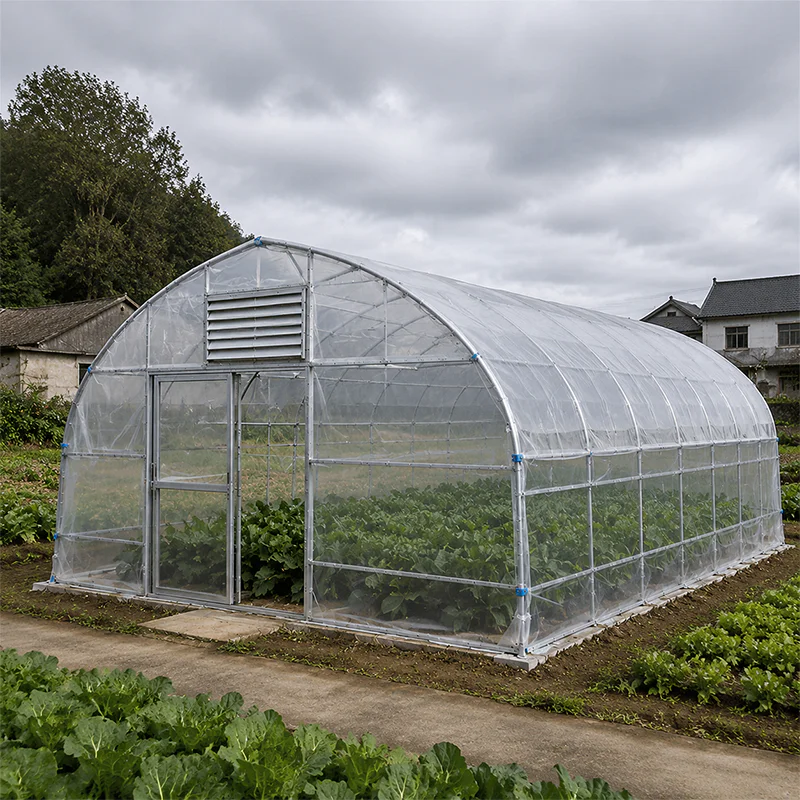
A single span greenhouse is designed as an independent unit with a clear and simple structure. This independence allows growers to plan greenhouse placement with a high level of flexibility. Whether the land is rectangular, irregular, or divided into multiple plots, a single span greenhouse can be positioned to make optimal use of available space. This adaptability is especially valuable for farms that develop in stages or operate across different land sections.
For agricultural producers seeking gradual expansion, the modular nature of a single span greenhouse for Farm operations provides excellent land management efficiency. Each greenhouse can be added according to production demand without interfering with existing structures. This approach supports orderly planning and smooth scaling.
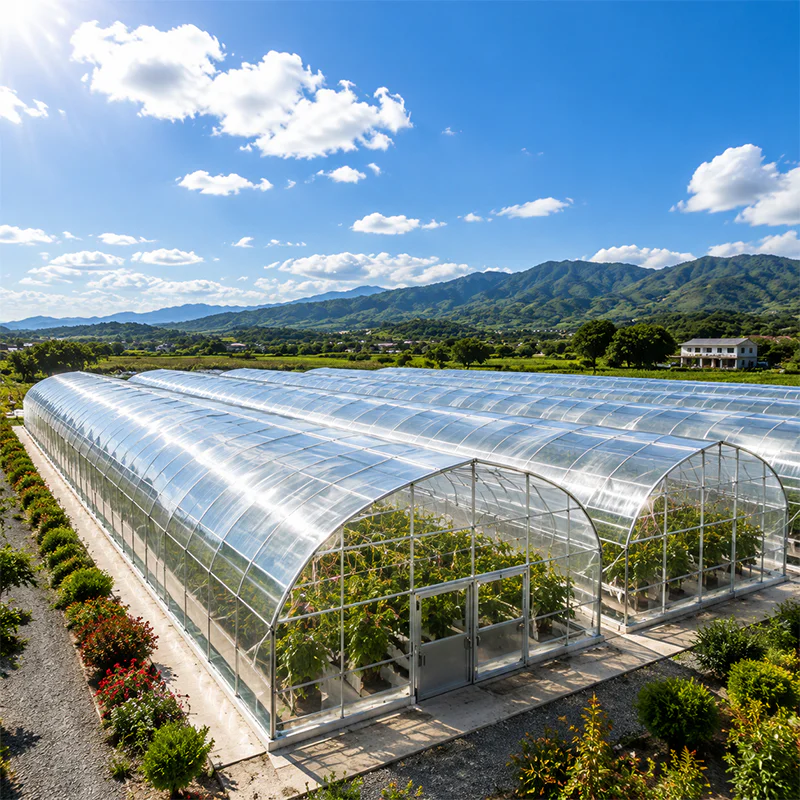
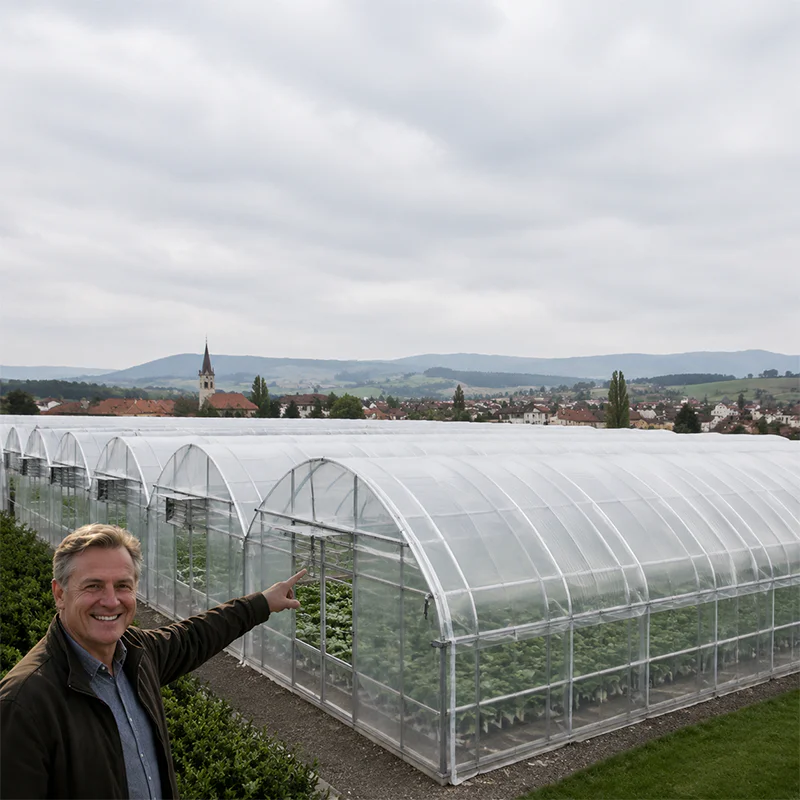
Multi span greenhouses, on the other hand, are designed to cover large areas with multiple connected spans. This layout enables unified land coverage and creates a continuous cultivation area, which is particularly suitable for extensive agricultural projects. Such structures are often chosen for large-scale production zones where consistency and integrated management are key priorities.
Both greenhouse types contribute positively to land utilization, with each design offering practical solutions for different farm sizes and development strategies.

Durability of Both Designs
Durability is a defining feature of modern greenhouse construction, as structures must perform reliably under long-term agricultural use and diverse environmental conditions.
A single span greenhouse is typically constructed using high-strength steel components and advanced surface treatments. One of the most popular structural solutions is the Hot-Dip Galvanizing Frame single span greenhouse, which provides excellent resistance to corrosion and environmental exposure. This ensures stable performance and a long service life, even in humid or coastal agricultural regions.
The independent structure of a single span greenhouse allows each unit to maintain its structural integrity with consistent load distribution. This design supports reliable operation throughout different seasons and climate conditions. As a result, growers can focus on crop management with confidence in the greenhouse framework.
Multi span greenhouses are also engineered with durability in mind. Their connected spans and shared support systems create a strong and unified structure suitable for continuous production environments. With professional design and high-quality materials, multi span greenhouses deliver dependable performance for long-term agricultural projects.
In both cases, modern engineering standards ensure that greenhouse structures meet the durability requirements of professional agricultural production.
Versatility for Various Crops
Crop diversity and cultivation flexibility are important factors for both commercial and agricultural growers. Different crops require specific growing conditions, and greenhouse design plays a major role in meeting those needs.
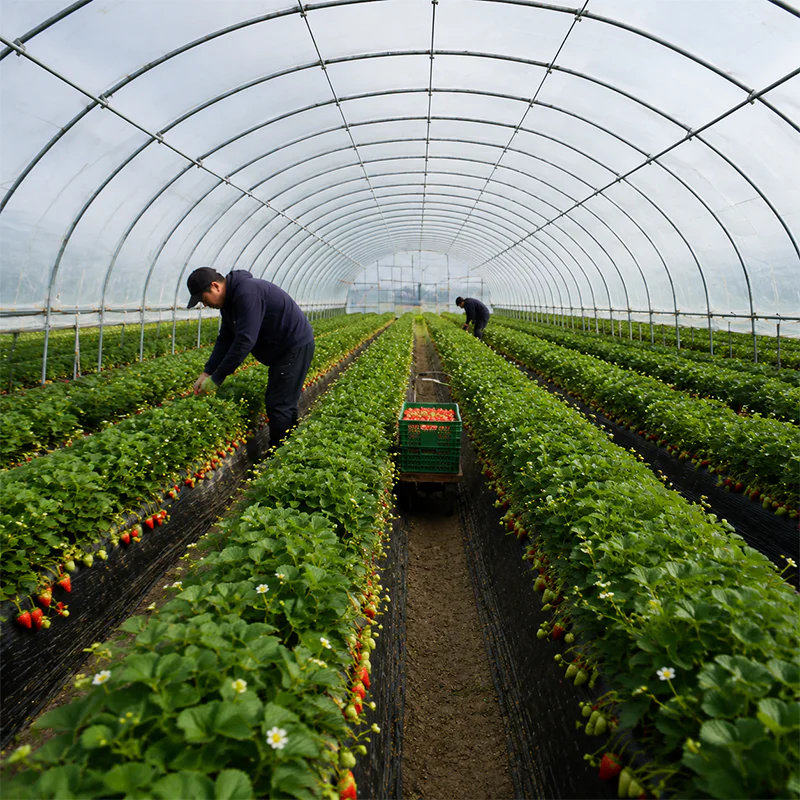
A single span greenhouse offers excellent versatility because each unit functions as a self-contained growing environment. This makes it easy to adjust temperature, humidity, ventilation, and irrigation systems according to crop requirements. Growers can allocate different greenhouses to different crops or growth stages, supporting diversified planting strategies throughout the year.
This versatility makes the single span greenhouse particularly suitable for vegetables, fruits, flowers, seedlings, and experimental crops. It is commonly used by farms that focus on product variety, seasonal rotation, or specialty crops. A Commercial single span greenhouse also allows producers to respond quickly to market demand by adjusting crop plans without structural changes.
Multi span greenhouses provide a spacious and open internal environment, which is ideal for uniform crop cultivation. This structure supports large-scale planting of the same crop type, enabling consistent growth conditions and efficient production workflows. Such environments are widely used for standardized vegetable and flower production.
Both greenhouse types contribute to crop versatility in different ways, allowing growers to align cultivation methods with their production objectives.

Cost Implications of Each Design
Investment planning is an essential part of greenhouse selection, and cost considerations extend across the entire lifecycle of a structure.
A single span greenhouse is often valued for its clear construction logic and efficient use of materials. The independent design supports streamlined installation and straightforward expansion planning. This makes the single span greenhouse a practical option for growers who prefer step-by-step investment and controlled development.
From an operational perspective, the standalone nature of a single span greenhouse supports flexible resource allocation. Each unit can be equipped and upgraded according to production needs, helping growers manage investment in a targeted and strategic manner. This approach is especially attractive for farms transitioning from traditional agriculture to protected cultivation.
Multi span greenhouses are commonly selected for large agricultural enterprises where unified infrastructure and centralized systems are preferred. Their integrated design supports coordinated operation across extensive cultivation areas, contributing to overall production efficiency and long-term planning stability.
Both designs offer positive economic value when matched appropriately with production scale, crop type, and business strategy.
Application Scenarios and Strategic Choice
In practical agricultural applications, the choice between greenhouse designs is closely linked to farm scale, production goals, and management style.
A single span greenhouse is widely used in family farms, modern agricultural parks, research facilities, and specialty crop bases. Its adaptability, modular expansion capability, and precise environmental control make it an effective solution for diverse agricultural models. Many growers also appreciate its suitability for pilot projects and gradual commercial development.
Multi span greenhouses are commonly applied in large production bases and industrial agricultural zones. Their expansive internal space supports mechanized operations, standardized crop management, and integrated logistics systems.
By understanding the strengths of each structure, growers can make informed decisions that align greenhouse design with long-term agricultural planning.

Frequently Asked Questions
Conclusion
Both single span greenhouse and multi span greenhouse designs play an important role in modern protected agriculture. Each offers unique structural and operational advantages that support efficient land use, durable construction, versatile crop production, and sustainable investment planning.
The single span greenhouse stands out for its flexibility, modular expansion, and suitability for a wide range of crops and farm sizes. With options such as the Hot-Dip Galvanizing Frame single span greenhouse, growers can achieve reliable performance and long-term value. Meanwhile, multi span greenhouses provide an integrated solution for large-scale, uniform production environments.
By focusing on agricultural goals, land conditions, and production strategy, growers can confidently choose the greenhouse design that best supports productivity, efficiency, and future growth.