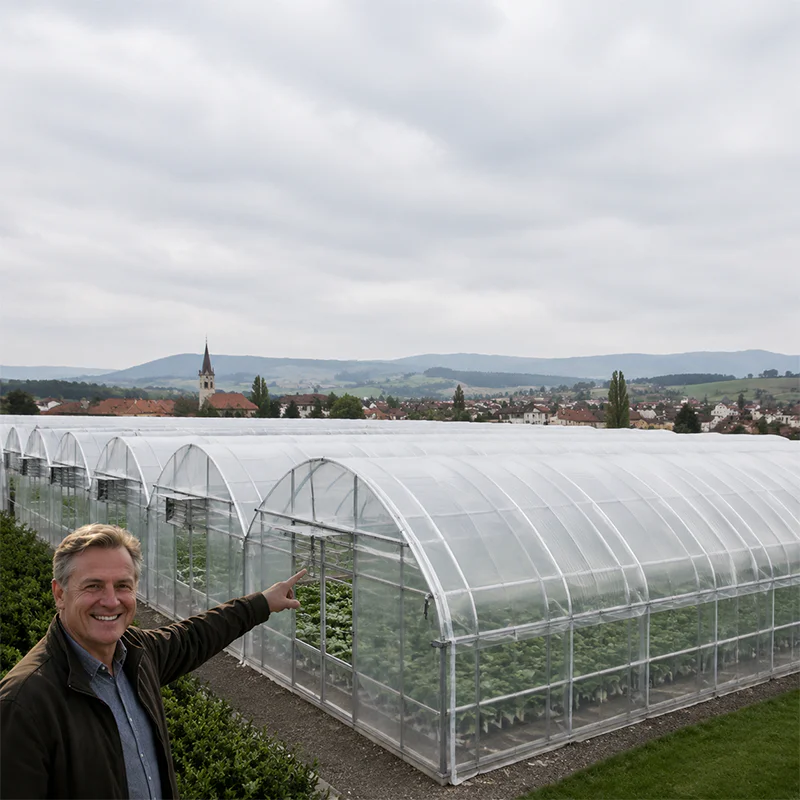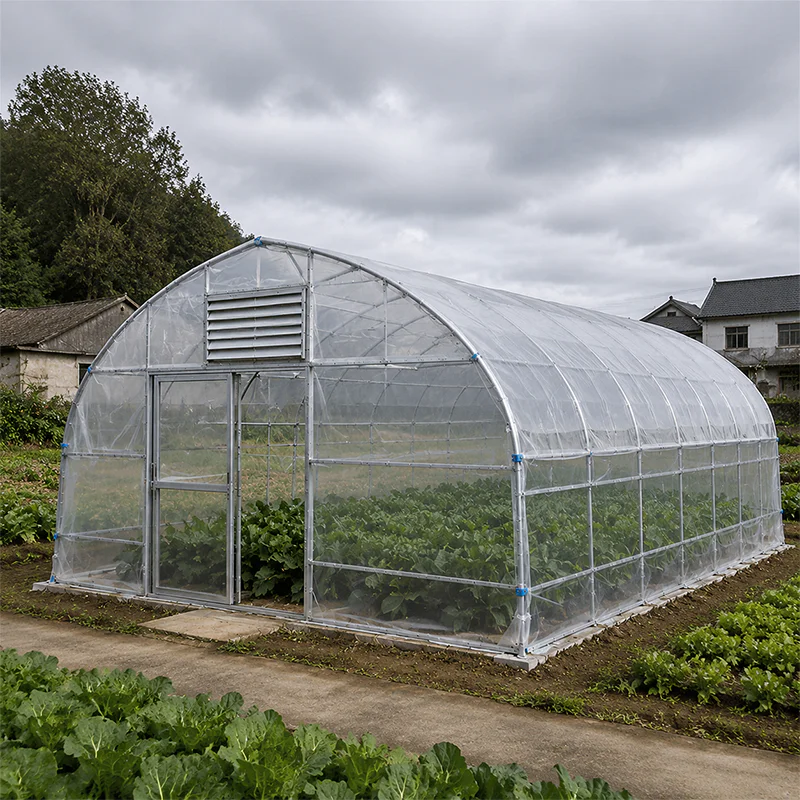







একটি modern greenhouse helps growers improve yield, crop quality, and year-round production by creating a more controlled growing environment. Instead of depending mainly on outdoor weather, growers can manage temperature, humidity, airflow, irrigation, nutrition, shading, and production schedules more accurately. This article follows the supplied structure for modern greenhouse farming and focuses on yield, quality, and continuous production.
For commercial growers, the value of modern greenhouse farming is not only higher output. The real value is more stable production, fewer climate-related losses, better crop uniformity, and stronger supply capacity. A well-planned greenhouse can help farms serve restaurants, supermarkets, distributors, and local markets with more predictable harvests.
What Is Modern Greenhouse Farming?
Modern greenhouse farming is a controlled growing method that uses greenhouse structures, climate systems, irrigation, fertigation, ventilation, shading, hydroponics, and automation to improve crop production. It is used for vegetables, herbs, flowers, strawberries, seedlings, and many commercial crops.
How Modern Greenhouse Farming Differs from Open-Field Farming
Open-field farming depends heavily on outdoor weather, soil conditions, rainfall, and seasonal changes. Growers may face crop loss from heavy rain, strong wind, heat waves, frost, pests, and unstable water supply.
Modern greenhouse farming reduces these risks. The greenhouse protects crops from direct weather exposure and gives growers more control over growing conditions. This does not remove every risk, but it makes production easier to plan.
How It Differs from Basic Greenhouse Growing
A basic greenhouse may only provide simple crop protection. It may use manual ventilation, basic irrigation, and limited climate control.
A modern greenhouse goes further. It can include cooling pads, fans, roof vents, side vents, heating, shading screens, fertigation systems, sensors, control cabinets, and smart monitoring. These systems help growers manage crops with more precision.
Why Commercial Growers Use Modern Greenhouses for Stable Production
Commercial buyers need stable supply and consistent quality. A restaurant cannot plan menus if crop supply changes every week. A supermarket needs produce with uniform size, appearance, and delivery timing.
Modern greenhouse farming helps growers reduce production uncertainty. This makes it easier to plan harvest cycles, manage contracts, and meet buyer expectations.
Why Yield, Quality and Year-Round Production Matter
For a commercial grower, production success depends on more than planting area. Yield, quality, and supply stability all affect business results.
Yield Stability Is More Important Than One-Time High Output
A farm may get one high-yield season, but that does not guarantee business stability. Commercial production needs repeatable results.
A modern greenhouse helps growers keep growing conditions more stable. This supports more predictable crop cycles and reduces the chance of sudden losses from weather stress.
Crop Quality Affects Market Price and Buyer Trust
Crop quality affects price, customer satisfaction, and repeat orders. Buyers often look at size, color, freshness, cleanliness, shelf life, and uniformity.
Controlled irrigation, airflow, light, and nutrition can help crops develop more evenly. This is especially important for tomatoes, cucumbers, peppers, lettuce, herbs, strawberries, and flowers.
Year-Round Production Helps Build Stable Supply Chains
Seasonal gaps can limit income and customer relationships. Year-round production helps growers supply markets for longer periods.
In cold regions, heating and insulation can extend production. In hot regions, ventilation, shading, and cooling can reduce heat stress. The right system depends on local climate and crop value.
Why Restaurants, Supermarkets and Distributors Need Consistent Crops
Restaurants need fresh herbs and vegetables on schedule. Supermarkets need stable quality and volume. Distributors need predictable supply for logistics.
Modern greenhouse farming helps growers become more reliable suppliers. This can improve business relationships and market positioning.
How Modern Greenhouse Farming Improves Crop Yield
Yield improvement comes from better growing control, not only larger greenhouse size.
Better Control of Temperature and Humidity
Temperature affects plant growth, flowering, fruit setting, and crop speed. Humidity affects transpiration, disease pressure, and root activity.
A modern greenhouse can use ventilation, cooling, heating, and sensors to manage these conditions. When crops face less stress, they can grow more consistently.
More Efficient Use of Light and Growing Space
Greenhouse design can improve how crops use sunlight. Shading systems can reduce excessive heat. Supplemental lighting may be used in some indoor or high-value projects.
Better space use also matters. Multi-span greenhouses, hydroponic layouts, benches, racks, and vertical systems can help growers increase usable growing area.
Improved Planting Density and Crop Layout
Planting density should match crop type. Leafy greens can often grow at higher density. Tomatoes and cucumbers need more space, trellis height, and airflow.
A good greenhouse layout helps growers use space without overcrowding crops. Overcrowding may increase disease risk and reduce crop quality.
Reduced Crop Loss from Weather Events
Rain, wind, hail, frost, and heat can damage outdoor crops. A greenhouse reduces direct exposure to these events.
This protection is especially useful for high-value crops and regions with unstable weather.
More Predictable Crop Cycles and Harvest Planning
In a modern greenhouse, growers can plan sowing, transplanting, flowering, harvesting, and crop replacement more clearly. Stable crop cycles help farms meet market demand and reduce supply gaps.

How Modern Greenhouses Improve Crop Quality
Quality is often the reason buyers return. Modern greenhouse systems help growers manage quality from planting to harvest.
Uniform Growing Conditions Support Uniform Crop Size
When temperature, light, irrigation, and nutrition are more consistent, plants grow more evenly. This helps produce crops with more uniform size and appearance.
Uniformity is important for packaging, grading, and retail sales.
Controlled Irrigation Helps Improve Crop Appearance
Too much water can create weak growth and root problems. Too little water can cause stress and poor development.
Drip irrigation, fertigation, and moisture monitoring can help growers deliver water more accurately. This supports better crop appearance and quality.
Better Airflow Helps Reduce Disease Pressure
Poor airflow can trap humidity around plants. This can increase disease pressure.
Greenhouse ventilation, circulation fans, roof vents, and correct spacing can improve air movement. This helps maintain healthier growing conditions.
Cleaner Growing Environments Support Safer Production
Protected growing spaces can reduce dust, mud, and some pest pressure. Hydroponic and substrate systems can also reduce direct contact with field soil.
However, greenhouse sanitation still matters. Tools, channels, tanks, trays, and walkways should be cleaned on a regular schedule.
Consistent Light and Nutrition Improve Crop Development
Plants need suitable light and balanced nutrition. Modern greenhouse systems help growers manage both more accurately.
For example, fertigation can supply nutrients according to crop stage. Shading can reduce excessive light and heat during strong sunlight periods.
How Modern Greenhouse Farming Supports Year-Round Production
Year-round production requires more than a greenhouse cover. It needs climate planning, crop scheduling, and operating discipline.
Extending the Growing Season in Cold Regions
Cold regions may require heating, insulation, double-layer film, thermal screens, or polycarbonate covering. These systems help protect crops during low temperatures.
Growers should calculate heating demand before construction. Heating costs can become a major part of operation.
Reducing Heat Stress in Hot Regions
Hot regions need greenhouse ventilation, shading, cooling pads, exhaust fans, and good airflow design. Without cooling, crops can suffer heat stress.
The system should match the local climate. A design that works in a dry region may not work in a humid region.
Protecting Crops from Rain, Wind and Outdoor Climate Changes
Heavy rain can damage flowers, fruit, and leaves. Strong wind can break plants or affect pollination. Sudden weather changes can reduce crop stability.
Modern greenhouse farming creates a protected production space. This makes year-round crop management more practical.
Using Heating, Cooling and Shading to Maintain Growing Conditions
Heating, cooling, and shading should work together. Heating protects crops in cold periods. Cooling reduces heat stress. Shading helps manage light and temperature.
A modern greenhouse should not rely on one system only. Balanced system planning improves stability.
Planning Crop Cycles for Continuous Harvests
Year-round production requires crop scheduling. Growers should plan planting dates, crop cycles, harvest windows, and replacement schedules.
For leafy greens, staggered planting can support weekly harvests. For fruiting crops, pruning, trellising, and crop replacement should be planned earlier.
Key Systems That Support Better Yield and Quality
Several systems work together to support modern greenhouse farming.
Greenhouse Ventilation for Airflow and Humidity Control
Ventilation removes heat and humidity. It also brings in fresh air. Roof vents, side vents, exhaust fans, and circulation fans can all support airflow.
Good ventilation is one of the most important systems for crop health.
Cooling Pad and Fan Systems for Hot Weather
Fan and pad cooling systems are common in hot climates. Air passes through wet cooling pads and moves through the greenhouse.
This system should be sized according to greenhouse length, crop type, and climate.
Heating Systems for Winter Production
Heating systems may include boilers, hot water pipes, heating fans, or air heaters. The right choice depends on local fuel, crop value, and greenhouse covering.
Shading Systems for Light and Temperature Control
Shading systems reduce strong sunlight and heat. Internal and external shading can be used in different projects.
Shading is especially useful for hot regions, flowers, seedlings, and some hydroponic crops.
Irrigation and Fertigation Systems for Crop Nutrition
Irrigation supplies water. Fertigation supplies nutrients through water. These systems help growers control crop nutrition more accurately.
A good fertigation setup may include tanks, pumps, filters, injectors, main pipes, and branch lines.
Sensors and Controllers for Daily Management
Sensors can monitor temperature, humidity, light, EC, pH, and moisture. Controllers can operate fans, vents, pumps, shading screens, and alarms.
These tools help growers respond faster to changes.

Crop Examples in Modern Greenhouse Farming
Different crops need different greenhouse strategies.
Tomatoes: Higher Structures and Trellising for Long Crop Cycles
Tomatoes often need tall structures, trellis systems, pruning space, and stable irrigation. A higher greenhouse can improve airflow and crop management.
Dutch bucket systems or substrate bags are often used for greenhouse tomato production.
Cucumbers and Peppers: Space, Airflow and Harvest Access
Cucumbers and peppers need enough spacing, air movement, and harvest access. Narrow aisles can slow workers and increase crop damage.
A good layout improves pruning, picking, and plant inspection.
Leafy Greens: High-Density Production and Short Crop Cycles
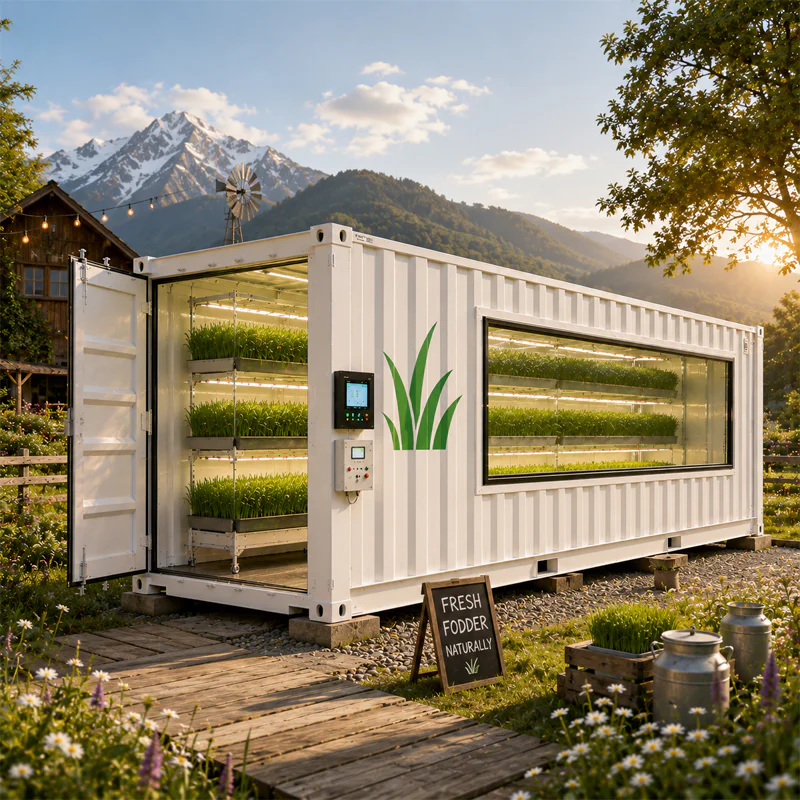
Leafy greens can use NFT systems, DWC systems, vertical racks, or soil beds. They usually have shorter cycles than fruiting crops.
This makes them suitable for frequent harvest planning and local supply.
Strawberries: Protected Growing and Easier Picking Layouts
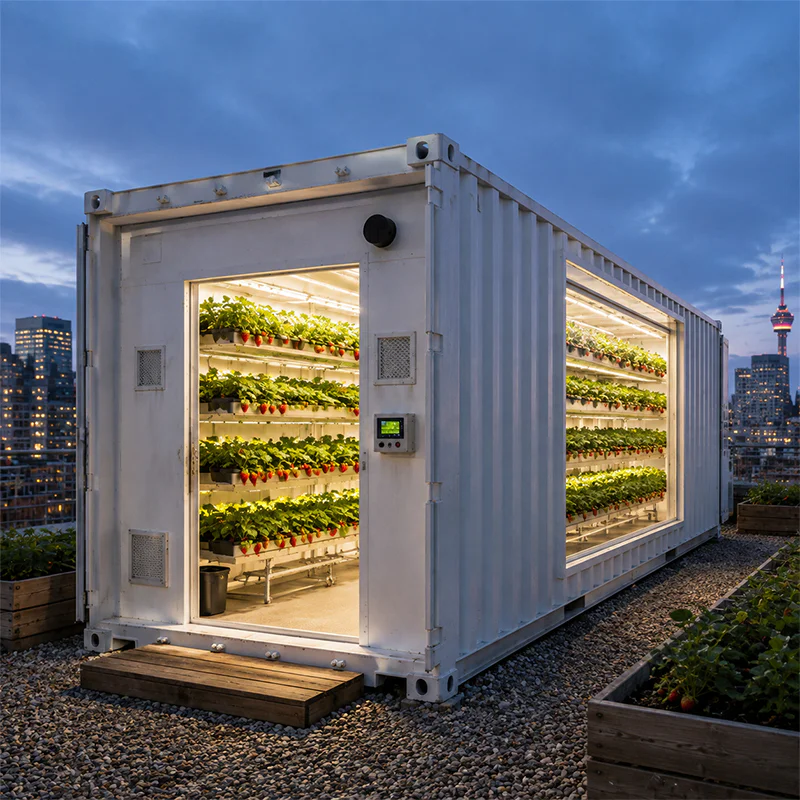
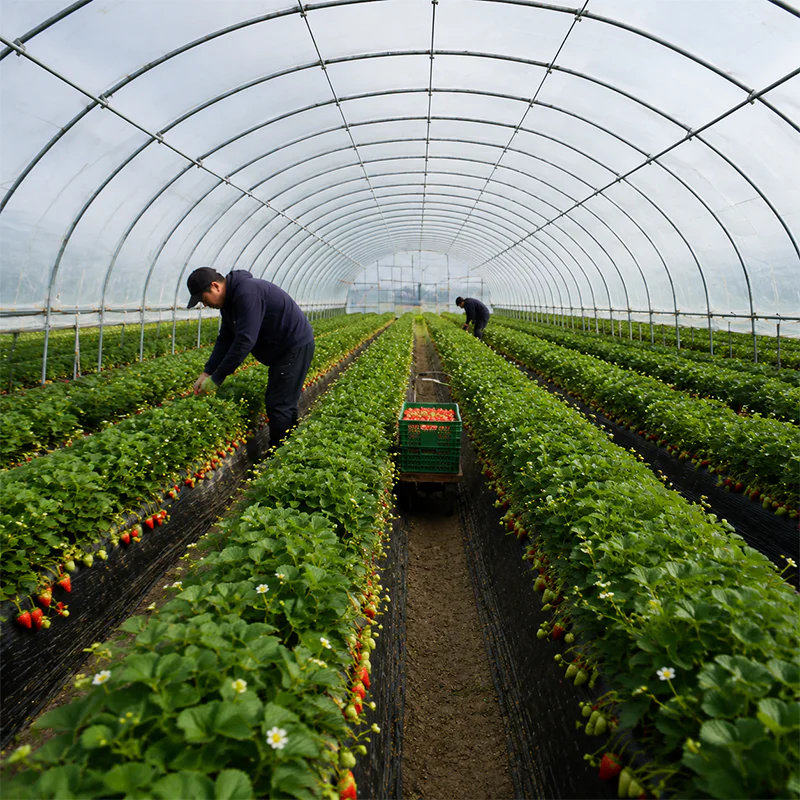
Strawberries can grow in gutters, troughs, towers, or raised systems. Protected growing helps reduce weather impact and can improve picking efficiency.
Humidity, airflow, and pollination should be considered.
Flowers and Nursery Plants: Quality, Uniformity and Scheduling
Flowers and nursery plants require uniform growth and careful scheduling. Benches, trays, pot movement, and light control are important.
A modern greenhouse helps growers manage flowering time and plant quality.
Hydroponic Crops: Stable Water and Nutrient Control
Hydroponic crops depend on water quality, EC, pH, oxygen, and system sanitation. A modern greenhouse can integrate sensors, pumps, tanks, and automatic irrigation to improve control.
Modern Greenhouse Farming vs Traditional Farming
Modern greenhouse farming and traditional farming each have different strengths.
Climate Protection Compared with Open Fields
Open fields are more exposed to weather. Greenhouses reduce direct climate damage and improve management control.
Yield Planning Compared with Seasonal Farming
Traditional farming often follows seasonal limits. Modern greenhouse farming can extend seasons and support more planned production.
Water and Fertilizer Control Compared with Soil Farming
Greenhouse irrigation and fertigation can deliver water and nutrients more precisely. Soil farming may have more variation from rainfall, soil type, and drainage.
Labor Efficiency Compared with Manual Field Operations
Greenhouses can improve work organization. Workers can move through planned aisles, use carts, and manage crops in fixed zones.
Automation can also reduce repetitive work.
Investment and Management Differences
Modern greenhouse farming usually requires higher investment and stronger management. It needs trained operators, maintenance planning, and system knowledge.
The decision should be based on crop value, market demand, climate, and long-term goals.
How Greenhouse Layout Affects Yield and Operation
A good layout helps crops and workers.
Crop Rows, Walkways and Working Space
Crop rows should match irrigation, plant spacing, and harvest methods. Walkways should allow workers to move safely.
Too little working space can reduce efficiency.
Equipment Areas for Pumps, Tanks and Control Systems
Water tanks, pumps, fertilizer systems, filters, and control cabinets need space. These areas should be easy to access and protected from water damage.
Harvesting Routes and Labor Movement
Harvesting routes affect labor time. Workers should move crops from planting zones to packing or storage areas without long detours.
Why Usable Growing Area Matters More Than Total Area
Total greenhouse area includes walkways, equipment, doors, and service zones. Usable growing area is the part that produces crops.
Growers should calculate both before estimating yield.
Planning Expansion Without Interrupting Production
Future expansion should be planned from the beginning. Roads, water supply, power, drainage, and greenhouse direction should allow new units later.
How Hydroponics Improves Modern Greenhouse Farming
Hydroponics can support modern greenhouse farming when matched with the right crop.
NFT Systems for Leafy Greens and Herbs
NFT systems are suitable for lettuce, herbs, spinach, and other small leafy crops. They use channels with a flowing nutrient solution.
Dutch Bucket Systems for Tomatoes and Cucumbers
Dutch bucket systems give fruiting crops more root space. They work well with drip irrigation and trellis systems.
DWC Systems for Leafy Vegetable Production
DWC systems use deeper nutrient solution and aeration. They can support leafy vegetable production when water quality and oxygen are managed well.
Hydroponic Towers for Space-Saving Production
Hydroponic towers use vertical space. They are useful for limited land, restaurants, urban farms, and demonstration projects.
Why Hydroponic Layout Must Match Crop Type
Not every hydroponic system fits every crop. Large-root crops may not suit narrow NFT channels. Fruiting crops may need buckets, bags, or other support systems.
How Automation Helps Growers Improve Production
Automation helps growers manage systems faster and more consistently.
Reducing Repetitive Manual Work
Automation can control vents, fans, pumps, shading, heating, and irrigation. This reduces manual tasks and saves labor time.
Faster Response to Climate Changes
Weather can change quickly. Automatic systems can respond faster than manual operation, especially in large greenhouses.
More Accurate Irrigation and Fertigation
Timers, sensors, and controllers can improve irrigation timing. Fertigation systems can deliver nutrients with more control.
Better Monitoring of Temperature, Humidity, EC and pH
Monitoring helps growers detect problems early. EC and pH are especially important in hydroponic and fertigation systems.
When Automation Is Worth the Investment
Automation is often worth considering for commercial farms, high-value crops, large greenhouses, and projects with labor shortages.
Small farms may start with semi-automatic systems and upgrade later.
Challenges of Modern Greenhouse Farming
Modern greenhouse farming has strong benefits, but it also has challenges.
Higher Initial Investment
A modern greenhouse may cost more than a simple structure. The investment may include frame, covering, cooling, heating, irrigation, automation, and hydroponic systems.
Need for Skilled Operation and Training
Workers need to understand climate settings, irrigation schedules, sensor data, and equipment maintenance.
Without training, advanced systems may not deliver expected value.
Equipment Maintenance and Spare Parts
Fans, pumps, motors, sensors, valves, and controllers need maintenance. Spare parts should be planned for key systems.
Energy Cost for Heating, Cooling and Lighting
Energy cost can affect profit. Heating, cooling, and lighting should be selected based on crop value and climate conditions.
Why Overbuilding Can Reduce Profit
More technology does not always mean better profit. Overbuilding can increase cost without improving crop returns.
Growers should choose systems that match real production needs.

How to Plan a Modern Greenhouse Farm for Better Results
Good planning improves project performance.
Start with Crop and Market Demand
The first question should be what crop you will grow and who will buy it. Market demand should guide greenhouse size and system level.
Confirm Local Climate and Site Conditions
Local climate affects cooling, heating, ventilation, and structure strength. Site conditions affect layout, drainage, sunlight, and access roads.
Choose the Right Greenhouse Structure
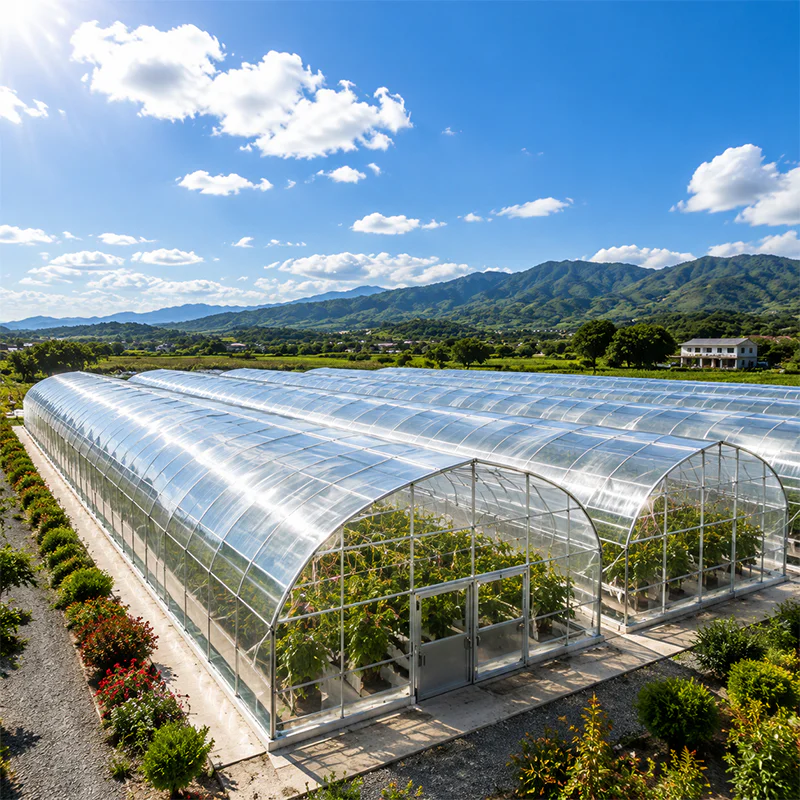
The structure should match crop type, climate, budget, and expansion plan. Film, polycarbonate, glass, tunnel, and multi-span structures all have different uses.
Plan Irrigation, Ventilation and Climate Control Early
These systems should be planned before construction. Adding them later may cause layout problems.
Calculate Production Capacity and Operating Cost
Growers should calculate planting density, crop cycle, expected harvest, labor, energy, water, and maintenance cost.
Leave Space for Future Expansion
A modern greenhouse farm should allow future growth. Expansion planning can reduce redesign costs later.
Common Mistakes That Reduce Yield and Quality
Avoiding common mistakes can protect investment.
Choosing Greenhouse Size Before Crop Planning
Greenhouse size should follow crop and production goals. Choosing size first can lead to poor layout.
Ignoring Local Climate Data
Climate data affects structure, covering, ventilation, heating, and cooling. Guessing may increase risk.
Underestimating Ventilation Needs
Poor ventilation can cause heat, humidity, and disease problems. Ventilation should be a core part of the design.
Using the Same System for Different Crops
Tomatoes, lettuce, strawberries, and flowers need different systems. One system may not fit all crops.
Forgetting Maintenance Access
Equipment needs inspection and repair. A layout without maintenance access can increase downtime.
Focusing Only on Initial Price
The cheapest greenhouse may not produce the best long-term value. Growers should compare production capacity, quality, labor, and operating cost.
How Aurlant Supports Modern Greenhouse Farming Projects
Aurlant supports modern greenhouse farming projects through greenhouse structure design, optional system planning, hydroponic integration, and layout support. The goal is to help growers build systems that match crop type, local climate, land conditions, and production goals.
Greenhouse Structure Selection Based on Crop and Climate
A suitable greenhouse structure should be selected based on crop height, planting method, local weather, and future expansion needs. Film, polycarbonate, glass, single-span, and multi-span structures can be considered according to project requirements.
Ventilation, Cooling, Heating and Shading System Planning
Climate systems should be planned before construction. Cooling pads, exhaust fans, roof vents, side vents, shading screens, heating systems, and insulation options need to match local climate conditions and crop needs.
Hydroponic and Fertigation System Integration
For hydroponic greenhouse projects, NFT systems, Dutch bucket systems, hydroponic towers, fertigation equipment, and irrigation layouts should be planned together. This helps avoid crowded layouts and difficult maintenance later.
Smart Control Options for Commercial Farms
Smart control options can include sensors, control cabinets, automatic irrigation, climate control, and remote monitoring. These systems are useful for farms that need stable production and more efficient daily management.
Layout and Quotation Support for Overseas Projects
For overseas projects, layout suggestions, system configuration, and quotation support can be prepared based on land size, crop plan, climate conditions, and budget range.
Turnkey Greenhouse Solutions for Stable Production
Aurlant can support growers from structure planning to system matching. This helps customers build greenhouse projects that support stable production, easier operation, and long-term expansion.
FAQ About Modern Greenhouse Farming
How does modern greenhouse farming increase yield?
It increases yield by improving climate control, irrigation accuracy, crop layout, and harvest planning. It also reduces weather-related crop loss.
Can a modern greenhouse improve crop quality?
Yes. A modern greenhouse can improve crop quality by creating more stable growing conditions, better airflow, controlled irrigation, and more consistent nutrition.
Is modern greenhouse farming suitable for year-round production?
It can be suitable for year-round production if heating, cooling, shading, ventilation, and crop scheduling are planned correctly.
What crops are best for modern greenhouse farming?
Common crops include tomatoes, cucumbers, peppers, lettuce, herbs, strawberries, flowers, nursery plants, and hydroponic crops.
Is hydroponics necessary in a modern greenhouse?
No. Hydroponics is not required for every modern greenhouse. Soil beds, grow bags, substrate systems, and hydroponics can all be used depending on the crop.
How much automation does a modern greenhouse need?
The automation level depends on greenhouse size, crop value, labor cost, climate risk, and budget. Semi-automatic systems may be enough for some projects.
Is modern greenhouse farming worth the investment?
It can be worth the investment when the greenhouse is planned around real crop demand, market value, climate conditions, and operating ability. A detailed project plan is important before investing.
Conclusion: How Modern Greenhouse Farming Creates Long-Term Value
Modern greenhouse farming improves yield, crop quality, and year-round production by giving growers better control over climate, irrigation, nutrition, layout, and daily operation.
Stable Conditions Support Stable Production
Stable temperature, humidity, airflow, water, and nutrition help crops grow more consistently. This supports better harvest planning.
Good Layout and Systems Improve Daily Operation
A practical greenhouse layout improves worker movement, equipment access, harvesting routes, and system maintenance.
Crop Quality Depends on More Than Greenhouse Structure
Crop quality depends on structure, climate control, irrigation, nutrition, sanitation, and grower management. The greenhouse is only one part of the system.
The Best Modern Greenhouse Starts with Practical Planning
The best modern greenhouse starts with crop selection, market demand, local climate, site conditions, and budget planning. With the right design and systems, modern greenhouse farming can help growers build stable production and stronger long-term value.