






Purchasing a container farm is only the first step toward building a successful indoor farming project.
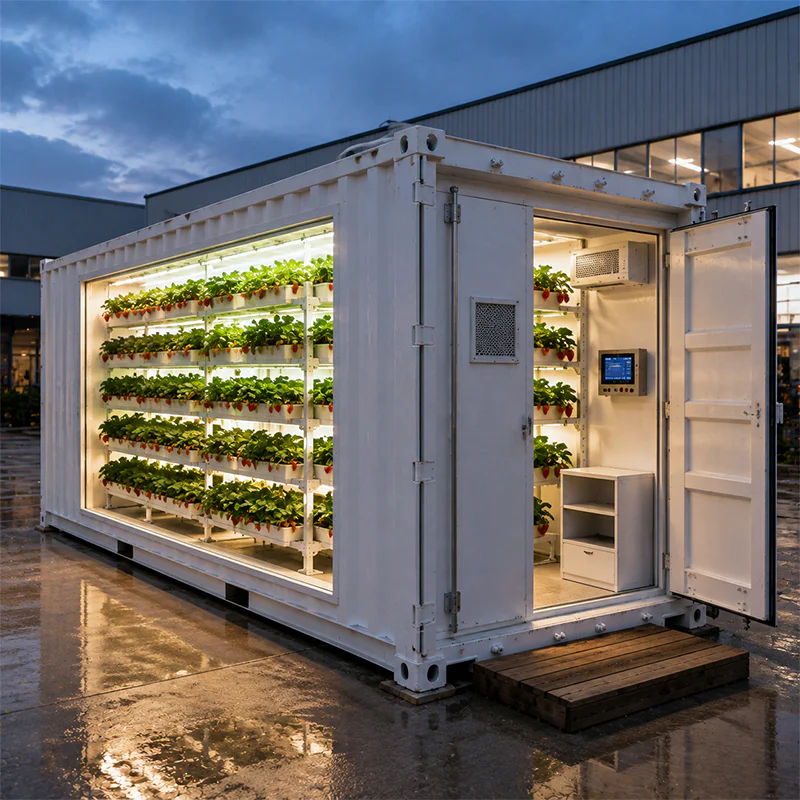
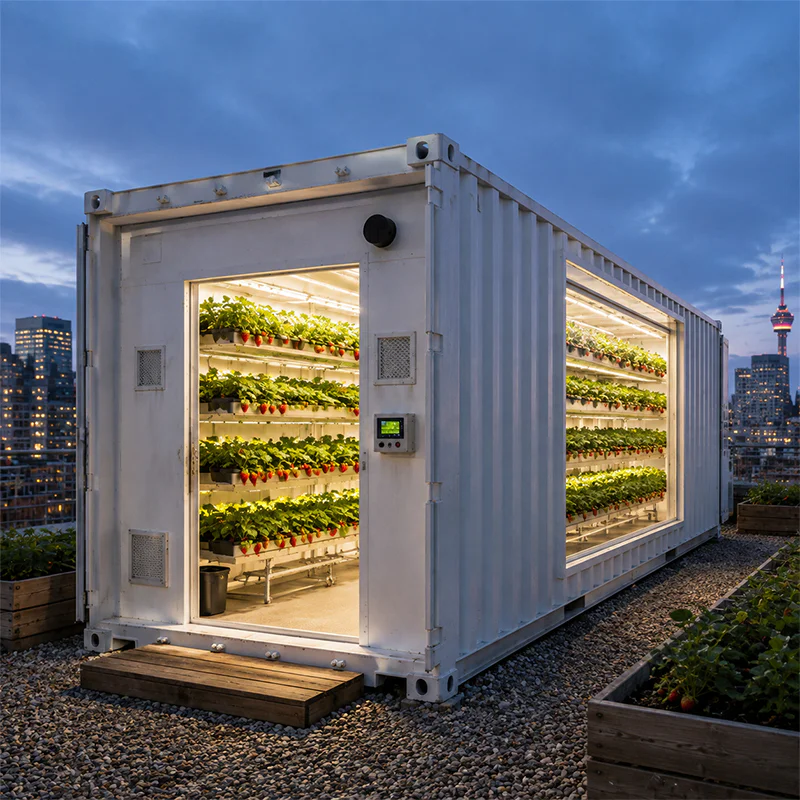
Unlike traditional agricultural structures, a container farm integrates multiple technologies, including hydroponic systems, LED lighting, climate control equipment, electrical systems, and automated management tools.
A professional installation process ensures that all components work together correctly and creates a stable environment for crop production.
From site preparation to final operation, every stage affects:
- Production stability
- Eficiencia energética
- Crop performance
- Long-term operating costs
This guide explains the complete installation process of a container farm and the key factors commercial growers should consider before starting operation.
Why Professional Container Farm Installation Matters
A container farm is not simply a modified shipping container.
It is a complete controlled environment agriculture system that requires integration between multiple components.
During installation, several systems must work together:
- Structural components
- Hydroponic equipment
- Lighting systems
- Climate management
- Electrical controls
- Water circulation
Incorrect installation can lead to:
- Unstable environmental conditions
- Equipment failures
- Higher maintenance costs
- Reduced crop performance
A professional setup process helps ensure reliable operation from the beginning.
Step 1: Site Preparation Before Installation
Selecting the Installation Location
The first step is choosing a suitable location.
Entre las consideraciones importantes se incluyen:
Stable Ground Conditions
The installation area should provide:
- Flat ground
- Strong support capacity
- Good drainage
A stable foundation prevents structural problems during long-term operation.
Electricity Availability
Because indoor farming equipment requires continuous power, the location should provide:
- Reliable electricity supply
- Suitable voltage
- Safe electrical connections
Power requirements depend on:
- LED lighting capacity
- Climate equipment
- Automation systems
Water Source Preparation
Hydroponic systems require suitable water quality.
Before installation, growers should evaluate:
- Water source
- Filtration requirements
- Nutrient management needs
Step 2: Container Delivery and Positioning
After site preparation, the container is transported to the project location.
Entre las consideraciones importantes se incluyen:
- Transportation access
- Lifting equipment requirements
- Final placement position
The container should be positioned carefully to ensure:
- Easy maintenance access
- Convenient operation
- Safe connection of utilities
Step 3: Installing the Internal Growing System
The internal cultivation system is one of the most important installation stages.
It usually includes:
- Growing racks
- Hydroponic channels
- Water tanks
- Pumps
- Nutrient circulation equipment
The layout should consider:
- Plant density
- Worker movement
- Maintenance access
- Harvest efficiency
A properly designed system improves production workflow and reduces operational difficulties.
Step 4: Installing LED Lighting Systems
Lighting installation directly affects crop performance.
During setup, technicians need to ensure:
- Correct lighting height
- Uniform light distribution
- Proper electrical connection
Lighting settings should match crop requirements.
Different crops may require different:
- Light intensity
- Lighting schedules
- Growth conditions
Step 5: Climate Control System Setup
Environmental control is essential for maintaining stable growing conditions.
Installation usually includes:
- Cooling equipment
- Heating equipment when required
- Ventilation systems
- Humidity control devices
The system should be tested to confirm it can maintain suitable conditions under local climate conditions.
For example:
- Hot regions may require stronger cooling capacity
- Cold regions may require additional heating support
Step 6: Water System Installation and Testing
Hydroponic systems depend on reliable water circulation.
The installation process includes:
- Connecting water tanks
- Installing pumps
- Checking pipelines
- Testing circulation performance
Technicians should verify:
- Water flow rate
- Leakage prevention
- Nutrient delivery stability
A properly installed water system supports consistent plant growth.
Step 7: Electrical Connection and Automation Setup
Modern container farms include intelligent control systems.
Electrical installation covers:
- Lighting control
- Pump operation
- Climate equipment
- Sensor systems
Automation systems may monitor:
- Temperature
- Humidity
- Water parameters
- Equipment status
After installation, all control functions should be tested before operation.
Step 8: System Commissioning Before Production
Before planting crops, the complete system requires commissioning.
Testing normally includes:
Equipment Testing
Checking:
- Pumps
- Iluminación
- Climate equipment
- Sensors
Environmental Testing
Monitoring:
- Temperature stability
- Niveles de humedad
- Air circulation
Hydroponic Testing
Confirming:
- Water circulation
- Nutrient delivery
- System operation
This stage helps identify potential issues before commercial production begins.
Starting Crop Production After Installation
After successful commissioning, growers can begin crop production.
The first production cycle should focus on:
- Monitoring plant growth
- Adjusting environmental settings
- Recording production data
Important records include:
- Growth speed
- Nutrient usage
- Energy consumption
- Harvest performance
These records help improve future production efficiency.
Maintenance After Container Farm Installation
A long-term successful operation requires regular maintenance.
Daily Maintenance
Operators should check:
- Plant conditions
- Water circulation
- Environmental parameters
Regular Equipment Inspection
Important systems include:
- Pumps
- Lighting equipment
- Climate systems
- Sensors
Cleaning and Hygiene Management
Indoor farming requires good sanitation practices.
Regular cleaning helps:
- Reduce disease risks
- Maintain equipment performance
- Improve crop quality
Choosing the Right Container Farm Supplier
Supplier selection is an important factor in project success.
A reliable supplier should provide:
- System design support
- Guía de instalación
- Technical training
- After-sales service
For commercial projects, selecting a supplier that can provide a turnkey container farming solution helps simplify project management and reduces installation risks.
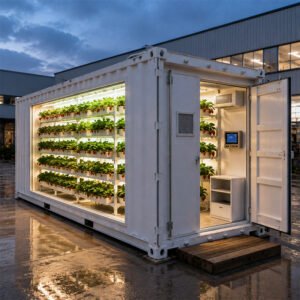
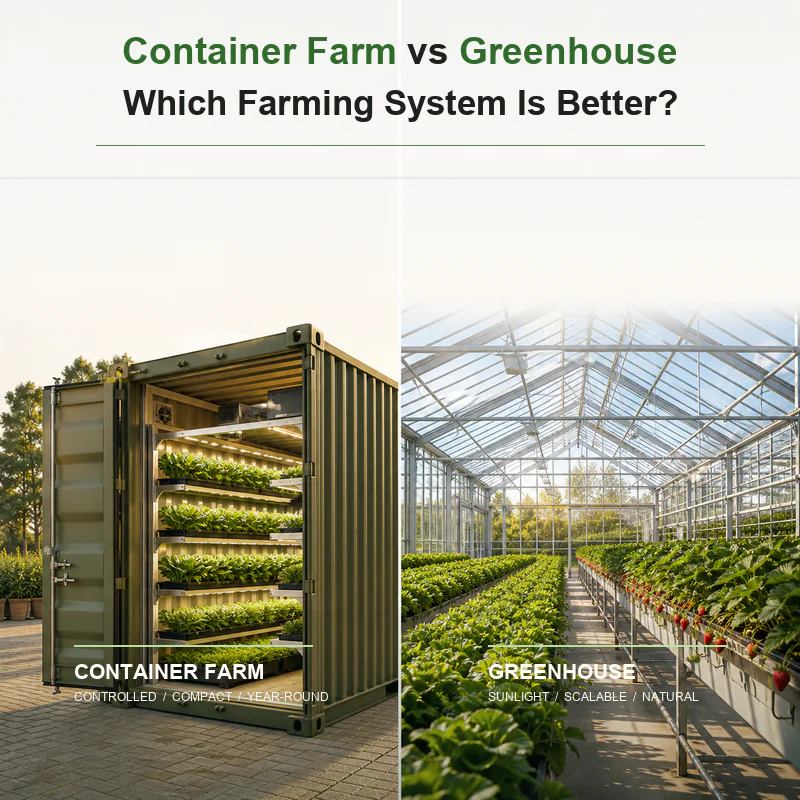
Container Farm Installation vs Greenhouse Project Installation
Different agricultural systems have different implementation requirements.
Container farms focus on:
- Indoor environment control
- Compact installation
- Integrated equipment
Greenhouses usually involve:
- Larger structural construction
- Irrigation systems
- Climate management solutions
For larger agricultural developments, some investors may also consider commercial greenhouse engineering solutions based on land availability and crop requirements.
Common Installation Mistakes to Avoid
Ignoring Local Climate Conditions
Equipment configuration should match the project environment.
Insufficient Power Planning
Power requirements should be evaluated before installation.
Poor Workflow Design
Internal layout should allow:
- Easy harvesting
- Maintenance access
- Daily operation
Starting Production Without Testing
Full commissioning reduces future operational problems.
Conclusión
A successful container farm installation requires careful planning, professional equipment integration, and complete system testing.
From site preparation and equipment setup to commissioning and daily operation, each stage influences the long-term performance of the farming system.
For commercial growers, choosing the right design and installation approach can improve production stability, reduce operational risks, and create a stronger foundation for modern indoor agriculture projects.
PREGUNTAS FRECUENTES
How long does container farm installation take?
Installation time depends on system complexity, project location, and equipment configuration.
What needs to be prepared before installing a container farm?
Growers should prepare suitable space, electricity, water supply, and transportation access before installation.
Can a container farm be installed in remote areas?
Yes. Container farms can be deployed in many locations as long as basic infrastructure requirements are available.
Does a container farm supplier provide installation support?
Many professional suppliers provide installation guidance, commissioning support, and technical assistance.
What should be tested before starting production?
The hydroponic system, lighting, climate control, electrical systems, and automation functions should all be tested before planting.