






Selecting the right greenhouse structure is one of the most important decisions for commercial farming projects.
A greenhouse is not only a protective structure for crops. It affects production efficiency, environmental management, labor workflow, energy consumption, and future expansion possibilities.
Many growers focus mainly on greenhouse price or available land area. However, the most suitable structure depends on multiple factors, including:
- Crop type
- Climate conditions
- Production scale
- Automation requirements
- Long-term business objectives
Different greenhouse structures have different advantages.
Single-span, multi-span, and sawtooth greenhouse systems are designed for different farming scenarios.
Understanding these differences helps growers make better investment decisions.

Why Greenhouse Structure Selection Matters
The greenhouse structure determines how efficiently a farm operates.
A suitable design can improve:
- Space utilization
- Environmental control
- Crop management efficiency
- Equipment integration
- Production stability
An unsuitable structure may create problems such as:
- Poor airflow
- Difficult maintenance
- Limited expansion capability
- Higher operating costs
For commercial agriculture, structure selection should be based on production strategy rather than simply choosing the lowest-cost option.
Single-span Greenhouses: Flexible Solution for Smaller Projects
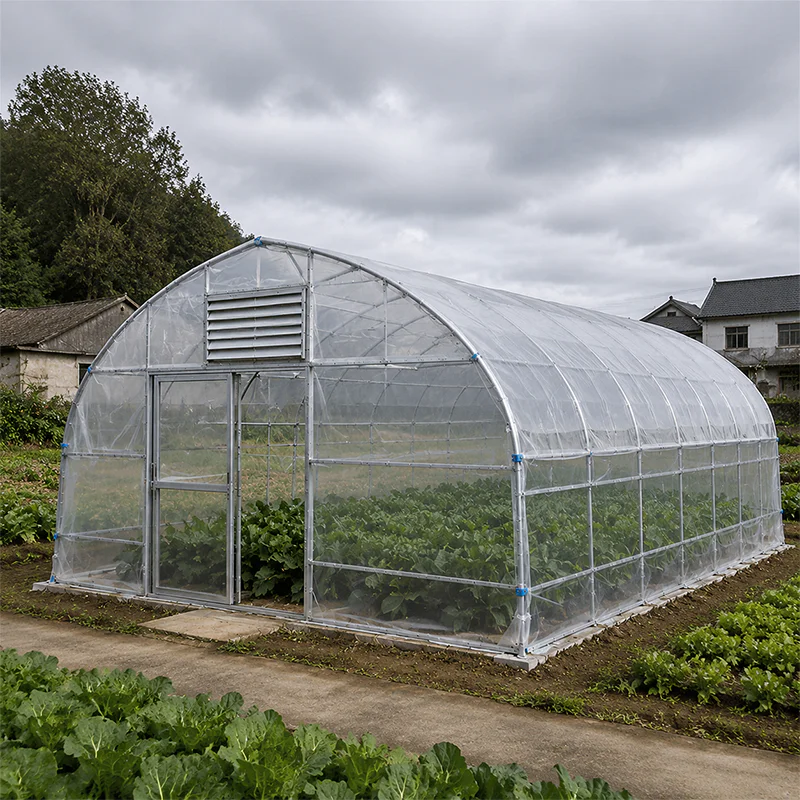
Single-span greenhouses consist of individual greenhouse units with independent structures.
They are commonly selected for:
- Pequeñas explotaciones agrícolas comerciales
- Trial projects
- Regional vegetable production
- Actividades de los viveros
Main Advantages
Single-span structures provide:
- Menor inversión inicial
- Simple construction
- Instalación flexible
- Easier management for smaller operations
They are suitable for growers who need practical cultivation space without complex infrastructure.
Potential Limitations
However, single-span structures may have limitations when production expands.
Challenges may include:
- Menor eficiencia en el uso del suelo
- More separated working areas
- Additional management effort for multiple units
For growing businesses, future expansion should be considered before selecting this structure.
Multi-span Greenhouses: Designed for Large Commercial Production
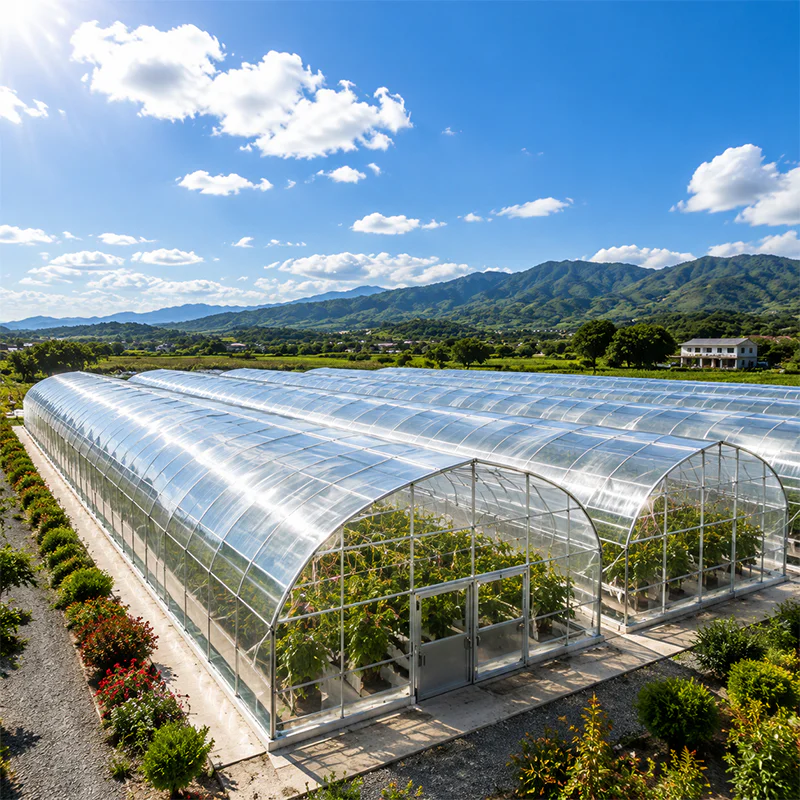
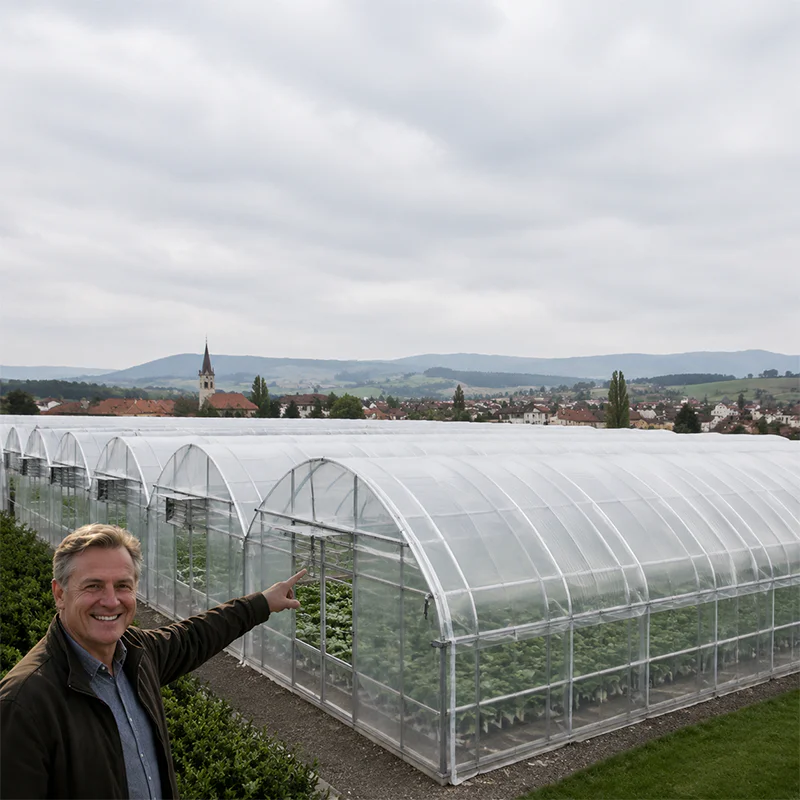
Multi-span greenhouses connect multiple growing sections into one continuous structure.
Se utilizan mucho para:
- Large vegetable farms
- Commercial horticulture
- Export agriculture projects
The design provides:
- Higher land utilization efficiency
- Larger continuous production areas
- Easier equipment integration
Large farms often choose multi-span structures because they support systematic production management.
Un profesional commercial greenhouse design solution for large scale farming can integrate structure planning, irrigation, climate control, and crop production requirements.
Sawtooth Greenhouses: Focus on Natural Ventilation Performance
Sawtooth greenhouse structures are designed with special roof profiles that improve natural airflow.
They are commonly considered for:
- Hot climate regions
- Tropical agriculture
- Areas requiring passive cooling
The main advantage is improved ventilation through roof openings.
This can help reduce heat accumulation and improve growing conditions in warm environments.
However, climate conditions must be evaluated carefully because different regions have different structural requirements.
Comparing Greenhouse Structures Based on Farm Goals
The best greenhouse structure depends on the project objective.
For Low Investment Projects
Single-span greenhouses may be suitable because they provide:
- Lower construction complexity
- Flexible usage
- Easier project entry
They are often preferred by growers starting commercial production.
For Large Production Farms
Multi-span greenhouses are often preferred because they provide:
- Higher production capacity
- Better space efficiency
- Easier automation integration
They are suitable for farms targeting large-scale output.
For Hot Climate Agriculture
Sawtooth greenhouses may provide advantages where natural ventilation is important.
They can reduce dependence on mechanical cooling systems in suitable climates.
How Crop Type Influences Greenhouse Selection
Crop requirements directly affect structural decisions.
Verduras de hoja
Leafy crops often require:
- Efficient space utilization
- Temperatura estable
- Good airflow
Different structures can support these crops depending on production scale.
Fruit Vegetables
Crops such as:
- Tomatoes
- Cucumbers
- Peppers
usually require:
- Greater height
- Support systems
- Better environmental management
Producción en viveros
Nursery projects often require:
- Flexible layouts
- Propagation areas
- Easy access management
The greenhouse structure should match the production workflow.
Climate Factors in Greenhouse Structure Decisions
Climate is another major selection factor.
Entre las consideraciones importantes se incluyen:
Regiones cálidas y húmedas
Growers should focus on:
- Ventilación
- Heat management
- Humidity control
Cold Regions
Important factors include:
- Aislamiento
- Structural strength
- Heating requirements
Areas With Strong Wind or Snow
The greenhouse structure should be designed according to local weather loads.
Engineering requirements may influence the final selection.
Integrating Greenhouse Structures With Modern Farming Systems
Modern commercial greenhouses often work together with advanced cultivation technologies.
Algunos ejemplos son:
- Riego automático
- Sistemas de fertirrigación
- Climate monitoring
- Hydroponic production
For intensive vegetable production, growers may combine greenhouses with an NFT hydroponic system for commercial vegetable production to improve resource efficiency and production control.
The greenhouse structure should be planned together with the cultivation system to achieve better overall performance.
Common Mistakes When Selecting Greenhouse Structures
Several mistakes can affect long-term project performance.
Elegir basándose únicamente en el precio
The cheapest option may not provide the best long-term value.
No tener en cuenta la expansión futura
A structure should support future production growth.
Selección sin análisis climático
Local weather conditions strongly influence greenhouse performance.
Overlooking Operational Requirements
Labor, equipment, and management methods should be considered during design.
How to Select the Right Greenhouse Structure
Before making a decision, growers should evaluate:
- Objetivos de producción
- Crop requirements
- Climate conditions
- Capacidad de inversión
- Automation needs
- Expansion plans
A professional greenhouse selection process helps reduce risks and improves long-term project performance.

Conclusión
Choosing the right commercial greenhouse structure requires a balance between production goals, climate conditions, investment plans, and operational requirements.
Single-span greenhouses provide flexibility for smaller projects.
Multi-span greenhouses support large-scale commercial production.
Sawtooth greenhouses provide advantages in regions where natural ventilation is important.
There is no universal greenhouse structure suitable for every farm.
The best solution is the one that matches the specific needs of the project and supports long-term agricultural development.
PREGUNTAS FRECUENTES
What is the best greenhouse structure for commercial farming?
The best structure depends on crop type, climate, production scale, and management requirements.
Are multi-span greenhouses better than single-span greenhouses?
Multi-span greenhouses are often better for large-scale production, while single-span structures may be more suitable for smaller projects.
Why are sawtooth greenhouses used in hot climates?
They improve natural ventilation through roof design, helping reduce heat accumulation.
Should greenhouse structure selection consider future expansion?
Yes. Future production growth and equipment upgrades should be considered during planning.
Can greenhouse structures support hydroponic farming?
Yes. Commercial greenhouses can integrate hydroponic systems, irrigation, and automation technologies.