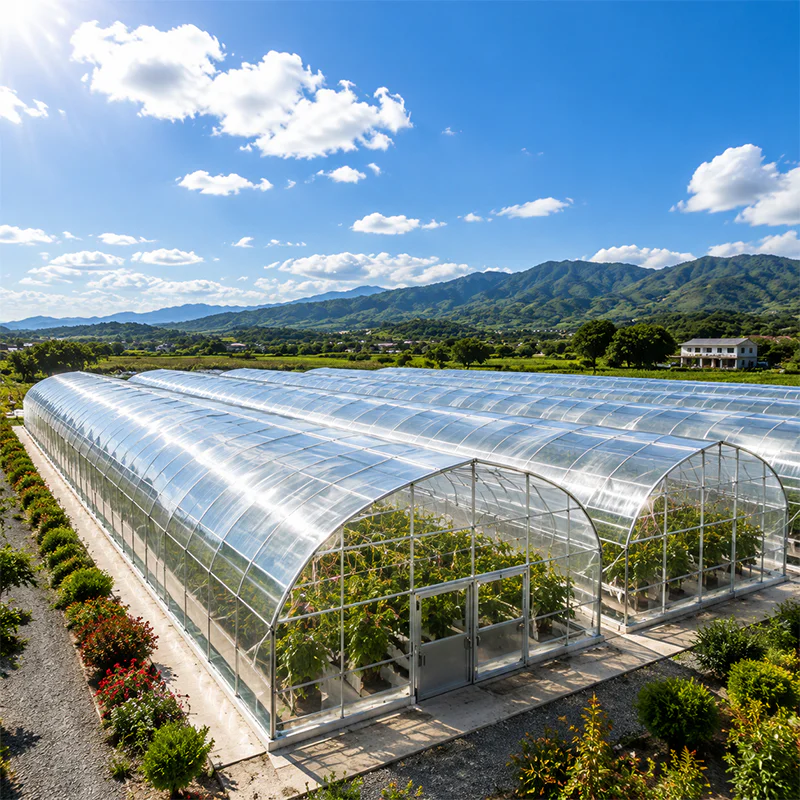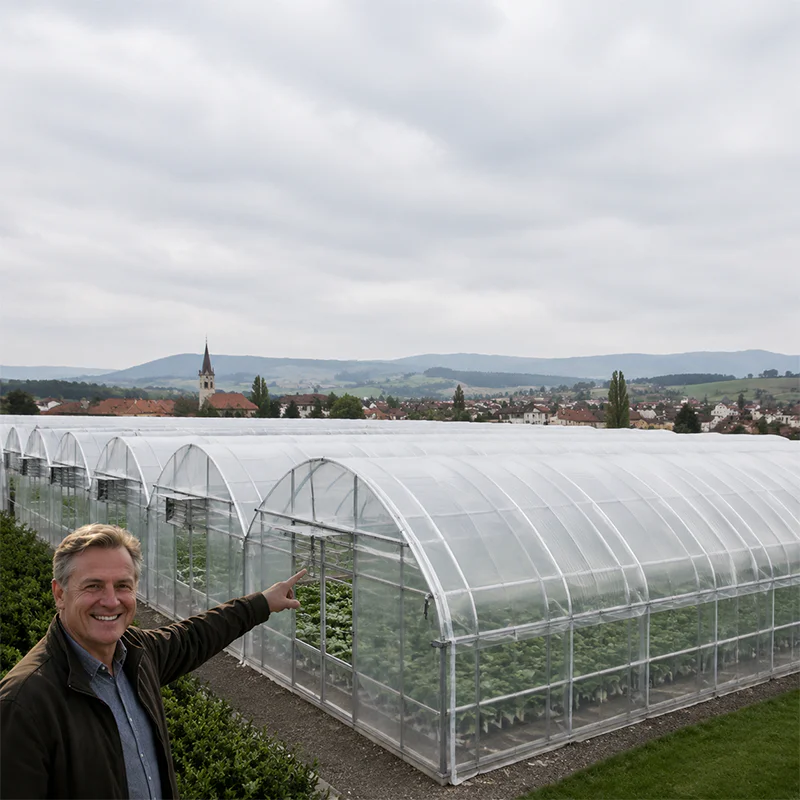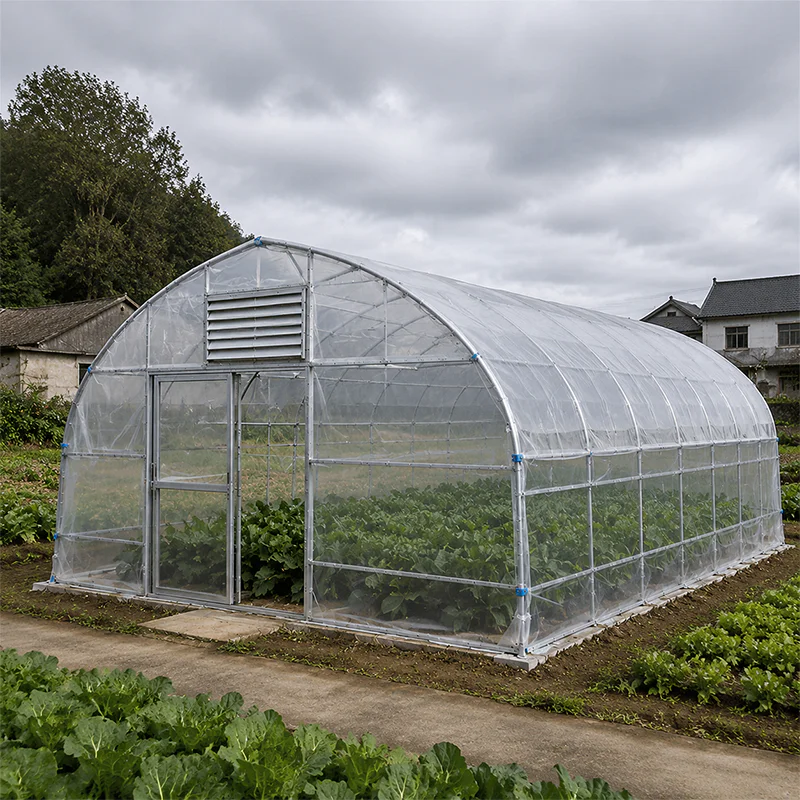







A successful large greenhouse starts with clear design planning. Size, structure, layout, ventilation, irrigation, heating, shading, and future expansion all affect the final result. For commercial growers, large greenhouse design is not only about building a bigger structure. It is about creating a growing space that supports crops, workers, equipment, climate control, and long-term production goals. This article follows your required structure and keyword brief.
A well-planned greenhouse can improve land use, reduce daily operation problems, and support stable crop production. A poor design may increase energy use, labor cost, and maintenance pressure. Before investing in a large greenhouse, growers should evaluate crop needs, local climate, structure type, system configuration, and budget.
What Is a Large Greenhouse?
A large greenhouse is a protected growing structure designed for higher crop capacity and more organized production. It is usually larger than a backyard greenhouse and often includes systems such as ventilation, cooling, shading, irrigation, fertigation, heating, and automation.
Common Definitions of a Large Greenhouse
There is no single fixed definition for a large greenhouse. In general, a greenhouse may be considered large when it requires planned crop zones, walkways, equipment areas, and climate systems. Many commercial projects are measured in hundreds or thousands of square meters.
Large Greenhouse vs Small Greenhouse
A small greenhouse is often used for home gardening, seedling growing, or trial planting. A large greenhouse needs more careful planning because airflow, drainage, irrigation, labor movement, and equipment layout become more complex.
Large Greenhouse vs Commercial Greenhouse
A large greenhouse is not always commercial. Some large structures support research, education, or demonstration projects. A commercial greenhouse is designed for production and sales. In many cases, large greenhouse projects are also invernadero comercial design projects.
When a Greenhouse Becomes a Large-Scale Growing Project
A greenhouse becomes a large-scale growing project when crop planning, system integration, labor flow, and return on investment must be considered together. At this stage, a simple structure is not enough. The grower needs a complete design plan.
Why Large Greenhouse Design Matters
Large greenhouse design affects both construction and long-term operation. A greenhouse may look good on paper, but poor layout can create daily problems after installation.
How Design Affects Crop Yield and Growing Efficiency
Greenhouse size, height, ventilation, light, irrigation, and spacing all affect crop performance. If crops are too crowded, airflow may be poor. If the structure is too low, tall crops may not grow well.
How Layout Affects Labor and Daily Operation
A good greenhouse layout reduces unnecessary walking and makes daily work easier. Workers need space for planting, pruning, harvesting, cleaning, and equipment maintenance. Clear aisles improve efficiency.
How Structure Affects Safety and Service Life
The greenhouse structure must match local wind, snow, rain, and temperature conditions. A stronger structure may cost more at first, but it can reduce risk and extend service life.
Why Poor Design Can Increase Long-Term Costs
Poor design can lead to higher labor cost, poor ventilation, wasted space, and system repairs. A cheaper design may become expensive if it does not match the crop or climate.
Key Factors Before Planning a Large Greenhouse
Before selecting the structure, growers should confirm the project basics.
Crop Type and Production Goal
Different crops require different height, spacing, irrigation, and climate control. Tomatoes need trellis height. Leafy greens need efficient planting density. Flowers may need benches and movement space.
Available Land Area and Site Shape
The greenhouse should fit the land shape. Road access, drainage, slope, sunlight, and nearby buildings should also be checked before design.
Local Climate Conditions
Climate affects greenhouse ventilation, cooling, heating, covering material, and frame strength. Hot regions need better cooling. Cold regions need insulation and heating. Snowy areas need stronger roofs.
Budget and Investment Plan
The budget should include structure, covering, systems, installation, shipping, operation, and maintenance. A large greenhouse is a long-term investment.
Future Expansion Needs
If the farm may expand later, the first greenhouse should be positioned carefully. Roads, water pipes, power supply, and drainage should leave room for growth.
Local Installation and Maintenance Ability
Growers should consider whether local teams can install and maintain the greenhouse. Simple systems may be easier to manage. Advanced automation may need more technical support.

Large Greenhouse Size Planning
Size planning is one of the most important parts of large greenhouse design.
How to Decide the Right Greenhouse Width
Width should match structure type, crop rows, and ventilation needs. A multi span greenhouse can cover a wide area with repeated spans. Single-span structures are simpler but may use land less efficiently.
How to Decide the Right Greenhouse Length
Length depends on land space, crop layout, and airflow. Very long greenhouses need careful greenhouse ventilation planning, especially in hot climates.
How to Choose the Right Greenhouse Height
Height affects airflow, crop growth, trellising, and worker comfort. Tomatoes, cucumbers, peppers, and hanging crops usually need more height than leafy vegetables.
Span Width and Bay Width Planning
Span width and bay width affect the greenhouse structure and internal layout. Common planning should consider columns, crop rows, walkways, irrigation lines, and equipment access.
Usable Growing Area vs Total Greenhouse Area
Total area is not the same as usable growing area. Walkways, equipment rooms, water tanks, fans, cooling pads, and working areas all take space.
Why Larger Size Does Not Always Mean Higher Profit
A larger greenhouse can produce more crops, but it also needs more labor, water, energy, and management. Profit depends on crop value, market demand, and operating efficiency.
Common Large Greenhouse Structures
The structure should match the crop, climate, budget, and service life target.
Multi-Span Film Greenhouse
A multi span greenhouse with film covering is common for vegetables, flowers, and hydroponic crops. It offers large growing space and lower covering cost than glass.
Polycarbonate Greenhouse
Polycarbonate greenhouses offer better insulation than single-layer film. They are suitable for regions needing stronger temperature control or better impact resistance.
Invernadero de cristal
Glass greenhouses provide good light transmission and a professional appearance. They are often used for high-end commercial production, research, and long-term projects.
Invernadero de Venlo
Venlo greenhouses are common in advanced commercial greenhouse design. They are suitable for large-scale projects with climate control and automation.
Invernadero Sawtooth
Sawtooth greenhouses are useful in hot regions because the roof shape supports natural ventilation. They can help release warm air and improve airflow.
High Tunnel and Single-Span Greenhouse for Expansion Projects
High tunnels and single-span greenhouses can support phased expansion. They are easier to install and may work well for seasonal crops or small commercial farms.
Large Greenhouse Layout Design
A good layout makes the greenhouse easier to operate.
Crop Rows and Planting Zones
Crop rows should match planting density, irrigation lines, and harvesting access. Different crops may need separate zones.
Main Walkways and Side Aisles
Main walkways should support workers, carts, tools, and harvest movement. Side aisles should allow easy inspection and maintenance.
Working Areas for Harvesting and Packing
Large greenhouses often need space for sorting, packing, and temporary crop storage. This area should be planned before construction.
Equipment Rooms and Control Areas
Control cabinets, fertilizer systems, electrical boxes, and monitoring equipment need safe locations. They should be protected from water and heavy traffic.
Water Tanks, Pumps and Fertigation Space
Water tanks, pumps, filters, and fertilizer injectors need enough space. Poor placement can make maintenance difficult.
Road Access and Material Transport Routes
Road access is important for installation, material delivery, harvesting, and maintenance. Large farms should plan transport routes early.
Large Greenhouse Structure Design
The structure affects safety, durability, and system performance.
Frame Material Selection
Hot-dip galvanized steel is widely used for greenhouse frames. It helps resist corrosion and supports long-term use.
Estructura de acero galvanizado en caliente
A hot-dip galvanized steel greenhouse structure is suitable for many commercial projects. It can support film, polycarbonate, glass, shade systems, and ventilation equipment.
Column Spacing and Structural Stability
Column spacing affects strength and internal operation. Wider spacing may improve movement, but structure design must still meet load requirements.
Roof Shape and Drainage Design
Roof shape affects light, drainage, heat release, and snow shedding. Drainage should prevent water accumulation around the greenhouse.
Wind Load and Snow Load Considerations
Wind and snow loads should be checked before design. Regions with harsh weather need stronger frames, proper anchoring, and suitable roof design.
Foundation and Ground Preparation
A stable foundation supports the greenhouse frame. Ground preparation should consider drainage, leveling, and local soil conditions.
Covering Materials for Large Greenhouses
Covering material affects light, insulation, cost, and crop environment.
PE or PO Film Covering
Film covering is common for large greenhouse projects. It is cost-effective and suitable for many vegetables and flowers.
Polycarbonate Sheet Covering
Polycarbonate sheets offer better insulation and strength than film. They are useful in regions with cold weather or strong wind.
Glass Covering
Glass provides high light transmission and long service life. It usually requires a stronger frame and higher investment.
Blackout Covering and Light Deprivation Options
Blackout systems are used for light-sensitive crops. They help control photoperiod and reduce unwanted light exposure.
How Covering Material Affects Light, Cost and Insulation
Film is economical. Polycarbonate improves insulation. Glass offers strong light performance. The right material depends on crop needs, climate, and budget.

Ventilation and Cooling Design for Large Greenhouses
Greenhouse ventilation is a core part of large greenhouse design.
Natural Ventilation Design
Natural ventilation uses roof vents, side vents, and airflow direction. It can reduce heat and humidity when climate conditions allow.
Roof Vents and Side Vents
Roof vents release hot air. Side vents bring in fresh air. Both should be designed according to greenhouse size and local wind conditions.
Exhaust Fans and Cooling Pads
Fan and pad cooling systems are common in hot regions. Air enters through cooling pads and exits through exhaust fans.
Airflow Planning for Long Greenhouse Structures
Long greenhouses need airflow planning. Poor airflow can create hot zones, high humidity, and uneven crop growth.
Cooling Design for Hot and Tropical Regions
Hot and tropical regions may need stronger ventilation, shading, cooling pads, and larger air exchange capacity.
Common Ventilation Mistakes to Avoid
Common mistakes include using too few vents, placing fans poorly, ignoring crop height, and not considering local climate.
Heating and Insulation Planning
Heating is important in cold regions and winter production.
When Large Greenhouses Need Heating
Heating may be needed when outdoor temperatures fall below crop requirements. Tomatoes, cucumbers, flowers, and seedlings may need stable temperatures.
Heating Options for Cold Climate Regions
Heating options include hot water pipes, heaters, boilers, and air heating systems. The best option depends on climate and fuel availability.
Insulation for Film, PC and Glass Greenhouses
Double-layer film, polycarbonate sheets, thermal screens, and sealed gaps can improve insulation.
Energy Efficiency and Operating Cost
Heating cost can become a major expense. Energy-saving design should be planned before construction.
Why Climate Data Should Guide Heating Design
Local temperature data helps decide heating capacity. Guessing can lead to high cost or poor crop protection.
Shading, Blackout and Light Control Systems
Light control affects crop growth and greenhouse temperature.
External Shading Systems
External shading reduces solar heat before it enters the greenhouse. It is useful in hot and sunny regions.
Internal Shading Systems
Internal shading helps control light and temperature. It can also reduce heat loss at night in some systems.
Blackout Systems for Light-Sensitive Crops
Blackout curtains are used for crops that need controlled light cycles. The system should close tightly and operate smoothly.
Light Distribution for Vegetables, Flowers and Hydroponics
Vegetables, flowers, and hydroponic crops need balanced light. Uneven light may cause uneven growth.
How Light Control Affects Crop Quality
Proper light control can improve crop uniformity, reduce heat stress, and support better production planning.
Irrigation and Fertigation System Design
Water and nutrients should be planned with the greenhouse layout.
Drip Irrigation for Large Greenhouses
Drip irrigation is common for soil crops, grow bags, and fruiting vegetables. It delivers water near the root zone.
Fertigation System Planning
Fertigation mixes fertilizer with irrigation water. It helps growers manage nutrients more accurately.
Water Source and Water Quality
Water quality affects crop health and system performance. Growers should check pH, salts, and possible contaminants.
Filtration, Pumps and Main Pipe Layout
Filters protect emitters and pipes. Pumps must match flow requirements. Main pipes should be easy to inspect.
Drainage and Water Recycling Options
Drainage prevents standing water and root issues. Some projects may recycle irrigation water if proper treatment is available.
Irrigation Space for Hydroponic Greenhouses
Hydroponic greenhouses need space for nutrient tanks, pumps, return pipes, and maintenance paths.
Hydroponic System Integration in Large Greenhouses
Hydroponics changes greenhouse layout and system planning.
NFT Systems for Leafy Vegetables
NFT systems are suitable for lettuce, herbs, and small leafy crops. Channels need proper slope, water flow, and access.
Dutch Bucket Systems for Tomatoes and Cucumbers
Dutch buckets are suitable for larger fruiting crops. They offer root space and support drip irrigation.
DWC and Raft Systems
DWC and raft systems can support leafy greens. They require water depth, aeration, and sanitation planning.
Hydroponic Towers and Vertical Growing Systems
Hydroponic towers and vertical systems save space. They need light, spacing, and maintenance access.
How Hydroponics Changes Greenhouse Layout
Hydroponic systems require tanks, pumps, pipes, channels, drainage, and control areas. These must fit the greenhouse layout.
Maintenance Space for Hydroponic Equipment
Maintenance access is essential. Workers need to clean channels, check roots, repair pumps, and manage nutrient tanks.
Crop-Specific Large Greenhouse Design
Each crop has different design needs.
Large Greenhouse Design for Tomatoes
Tomatoes need height, trellis support, airflow, pruning access, and irrigation control. A high multi span greenhouse is often suitable.
Large Greenhouse Design for Cucumbers and Peppers
Cucumbers and peppers also need support systems and good ventilation. Wider aisles can improve harvesting and crop care.
Large Greenhouse Design for Leafy Vegetables
Leafy vegetables can use lower structures and high-density systems. NFT, DWC, and vertical racks may work well.
Large Greenhouse Design for Strawberries
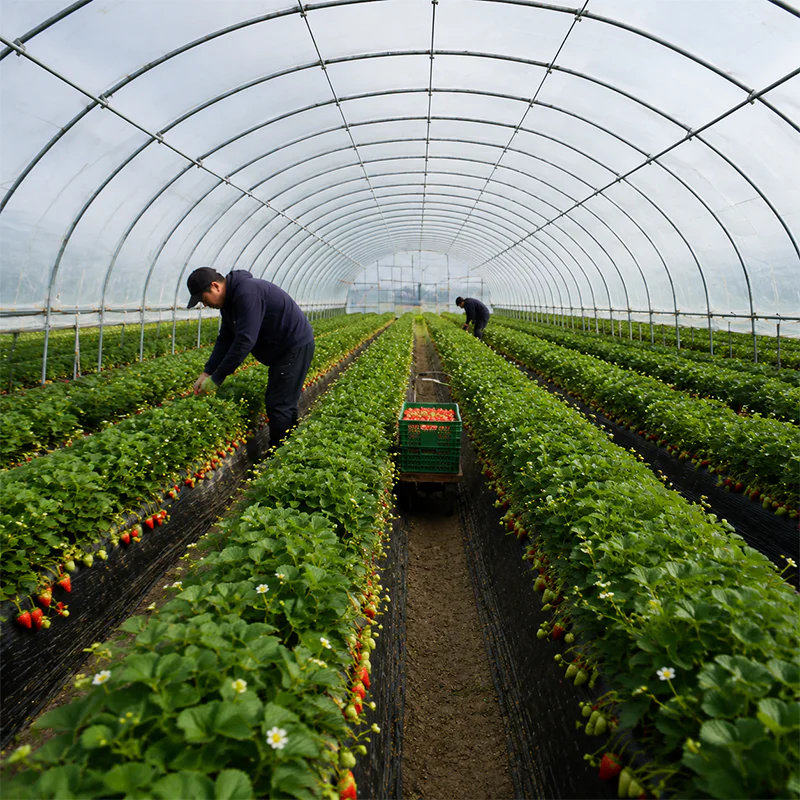
Strawberries can use gutters, troughs, towers, or benches. Picking access and airflow should be considered.
Large Greenhouse Design for Flowers and Nursery Plants
Flowers and nursery plants need benches, pot movement space, and good light distribution.
Large Greenhouse Design for Cannabis or Light-Control Crops
Light-sensitive crops may need blackout systems, odor control, strong climate management, and secure operation planning.
Smart Control and Automation in Large Greenhouses
Automation can improve consistency, but it should match the project scale.
Sistemas de climatización
Climate control systems manage temperature, humidity, vents, fans, cooling pads, heating, and shading.
Sensors for Temperature, Humidity, CO2 and Light
Sensors help growers monitor conditions. Data supports better decisions and faster adjustments.
Irrigation and Fertigation Automation
Automatic irrigation and fertigation can reduce labor and improve nutrient consistency.
Remote Monitoring and IoT Control
Remote monitoring allows managers to check conditions through phones or computers. This is useful for large or overseas projects.
When Automation Is Worth the Investment
Automation is worth considering when labor cost is high, crops are high-value, or climate control is critical.
Manual Control vs Automatic Control
Manual control may suit small or simple projects. Automatic control is better for large-scale or technical production.
Cost Factors in Large Greenhouse Design
Cost should be evaluated as a full project, not only the frame price.
Coste de la estructura
Structure cost depends on steel amount, span, height, load requirements, and roof design.
Coste de los materiales de recubrimiento
Film, polycarbonate, and glass have different costs and service life.
Ventilation, Cooling and Heating Cost
Climate systems can form a large part of the budget, especially in hot or cold regions.
Irrigation and Fertigation Cost
Pumps, filters, tanks, pipes, and fertilizer systems should be included in the budget.
Hydroponic System Cost
Hydroponic systems add cost but may improve planting density and crop control.
Gastos de envío e instalación
Large greenhouse materials require proper packing and shipping. Installation cost depends on local labor and project complexity.
Costes de funcionamiento y mantenimiento a largo plazo
Energy, water, fertilizer, labor, repairs, and covering replacement should be considered.
Large Greenhouse Design for Different Climates
Local climate should guide structure and system choices.
Hot and Dry Climate Regions
Hot and dry regions need shading, cooling, ventilation, and water planning.
Tropical and Humid Climate Regions
Tropical regions need strong airflow, humidity control, and disease prevention planning.
Cold Climate Regions
Cold regions need insulation, heating, strong frames, and proper snow design.
Windy Regions
Windy regions need stronger anchoring, frame design, and covering fixation.
Snowy Regions
Snowy regions need roof designs and frame strength that can handle local snow conditions.
Why Local Climate Should Decide the Structure
A greenhouse design that works in one climate may not work in another. Local data should guide the final design.
Common Mistakes in Large Greenhouse Design
Avoiding mistakes can reduce future cost.
Choosing Size Without a Crop Plan
Greenhouse size should follow crop needs and production goals.
Ignoring Walkways and Equipment Space
Workers and equipment need space. Ignoring this can reduce efficiency.
Underestimating Ventilation Needs
Poor greenhouse ventilation can increase heat, humidity, and disease risk.
Selecting the Wrong Covering Material
The covering material should match climate, crop, budget, and service life.
Forgetting Future Expansion
Future expansion should be planned from the beginning.
Comparing Only Initial Price
Low initial price may lead to high operation cost.
Not Checking Local Wind and Snow Requirements
Wind and snow requirements affect safety. They should be confirmed before production.
How to Plan a Large Greenhouse Project Step by Step
A step-by-step process helps growers make better decisions.
Step 1: Confirm Crop and Production Target
Choose crops and define the target yield or business model.
Step 2: Measure Land and Site Conditions
Measure land size, slope, access roads, drainage, and sunlight.
Step 3: Choose Structure Type
Select film, polycarbonate, glass, sawtooth, Venlo, or multi span greenhouse structure.
Step 4: Plan Internal Layout
Plan crop rows, aisles, equipment areas, water tanks, and working zones.
Step 5: Select Climate Control Systems
Choose ventilation, cooling, heating, shading, and irrigation systems.
Step 6: Calculate Budget and ROI
Compare structure cost, equipment cost, operation cost, crop value, and payback period.
Step 7: Request a Professional Design and Quotation
Ask for a layout and quotation before ordering. This reduces mistakes.
How Aurlant Supports Large Greenhouse Design
Aurlant supports growers with greenhouse planning, structure supply, and integrated system solutions.
Greenhouse Size and Structure Recommendations
Aurlant can recommend size, span, height, and structure based on crop and climate.
Multi-Span Greenhouse and Turnkey Solutions
Aurlant provides multi span greenhouse solutions for vegetables, flowers, hydroponics, and commercial farms.
Hydroponic, Irrigation and Climate Control Integration
Aurlant can help integrate hydroponic systems, irrigation, cooling, shading, and automation.
Design Support Based on Crop and Climate
Project design can be adjusted for tomatoes, cucumbers, leafy greens, strawberries, flowers, and other crops.
Quotation and Layout Support for Overseas Projects
Aurlant can provide layout support, equipment configuration, and quotation guidance for overseas growers.
FAQ About Large Greenhouse Design
What size is considered a large greenhouse?
A large greenhouse may start from several hundred square meters and can extend to 1,000 sqm, 5,000 sqm, or larger. The definition depends on project scale and system needs.
What is the best structure for a large greenhouse?
The best structure depends on climate, crop, budget, and production goal. Multi span greenhouse structures are common for commercial projects.
How high should a large greenhouse be?
Height depends on crops and systems. Tall crops such as tomatoes and cucumbers need more height than leafy vegetables.
What crops are suitable for large greenhouses?
Large greenhouses can grow tomatoes, cucumbers, peppers, leafy greens, strawberries, flowers, nursery plants, and hydroponic crops.
How much does a large greenhouse cost?
Cost depends on size, structure, covering material, systems, local climate, shipping, and installation. A detailed quotation should be based on project data.
Can a large greenhouse use hydroponic systems?
Yes. Large greenhouses can use NFT, DWC, Dutch buckets, hydroponic towers, racks, and other systems.
How do I choose between film, polycarbonate and glass covering?
Film is cost-effective. Polycarbonate offers insulation and impact resistance. Glass provides high light transmission and long service life. The choice depends on climate and budget.
Is a large greenhouse better than several small greenhouses?
A large greenhouse can improve land use and system control. Several small greenhouses may reduce risk and allow phased investment. The best choice depends on the project plan.
Conclusion: How to Build a Practical Large Greenhouse Design
Start with Crop and Climate
A practical greenhouse project should begin with crop type and local climate.
Balance Size, Structure and Budget
The best size is not always the largest. It should support crop needs, structure safety, and investment goals.
Plan Systems Before Construction
Ventilation, cooling, heating, irrigation, and hydroponics should be planned before manufacturing.
Leave Space for Future Growth
A strong large greenhouse design should support current production and future expansion. With careful planning, growers can build a greenhouse that improves production, reduces operation problems, and supports long-term farming value.