





Principales conclusiones
- A Sawtooth Greenhouse uses roof vents to improve natural ventilation.
- The design is suitable for tropical and hot climate regions.
- It reduces cooling costs compared with many traditional greenhouses.
- Several structural types are available for different farming needs.
- The system supports vegetables, flowers, hydroponics, and commercial agriculture.

¿Qué es un invernadero de dientes de sierra?
Definition and Structural Characteristics
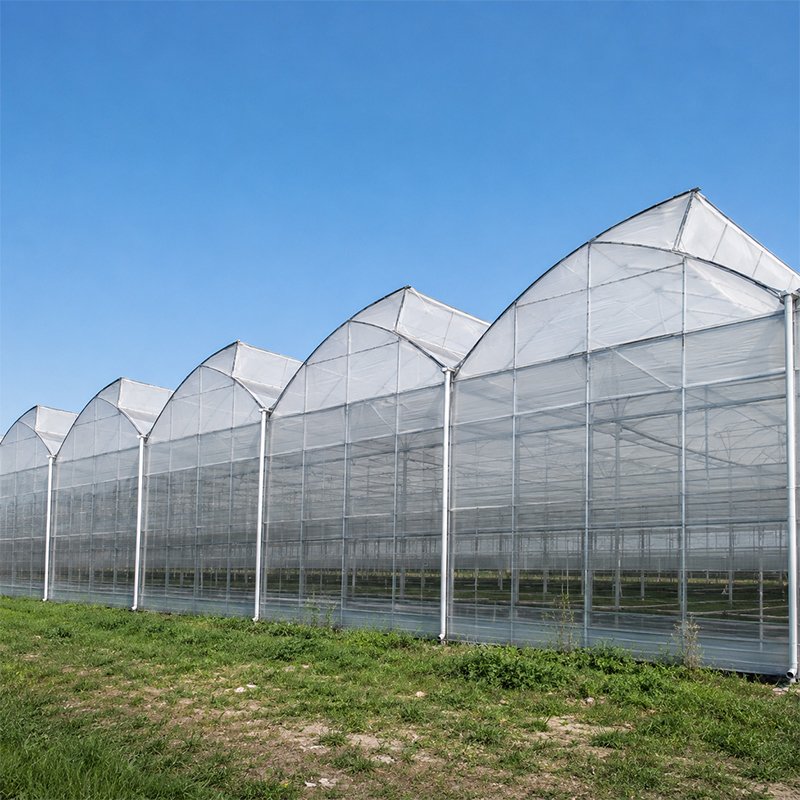
A Sawtooth Greenhouse is a greenhouse structure with an asymmetrical roof profile. The roof resembles the teeth of a saw, which gives the structure its name. One roof section is higher than the other, creating an opening that improves natural airflow.
En sawtooth type greenhouse is widely used in tropical and subtropical regions where heat management is a major concern.
Key Components of a Sawtooth Greenhouse
A typical greenhouse includes several important elements:
- Hot-dip galvanized steel frame
- Aberturas de ventilación en el tejado
- Greenhouse film, polycarbonate, or glass covering
- Side ventilation systems
- Drainage systems
- Sistemas de riego y fertirrigación
These components work together to create a controlled growing environment.
How Does It Differ From Traditional Greenhouses?
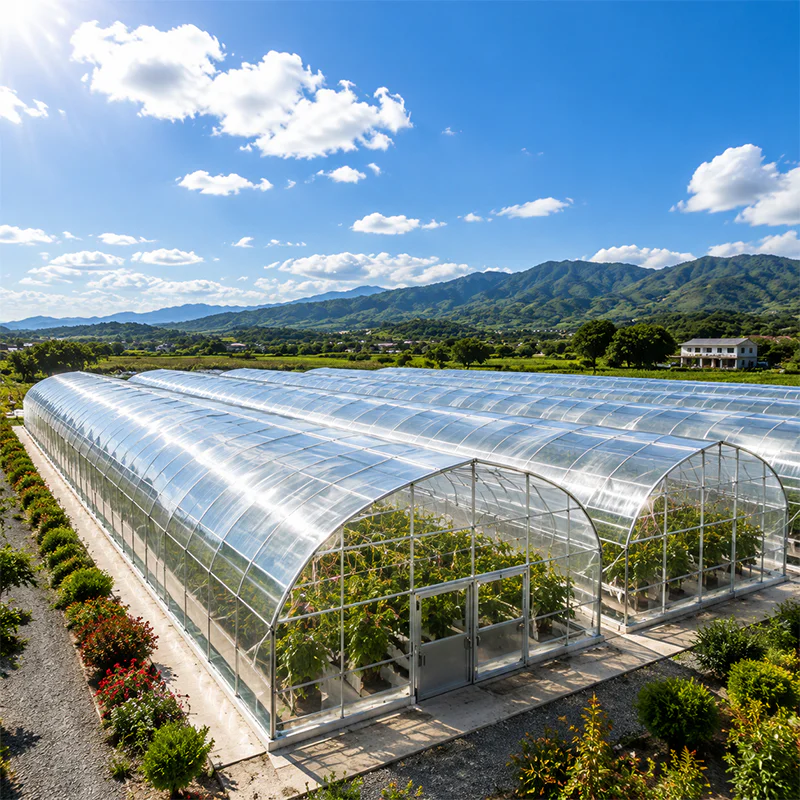
Traditional tunnel houses often rely on side ventilation alone. A Sawtooth Greenhouse combines side ventilation with roof ventilation.
This allows hot air to escape more efficiently. As a result, internal temperatures remain lower during hot weather.
How Does a Sawtooth Greenhouse Work?
The Chimney Effect Explained
The main principle behind a Sawtooth Greenhouse is the chimney effect.
Warm air naturally rises. When hot air reaches the roof opening, it escapes through the upper vent. Cooler outside air enters through side vents and replaces the warm air.
This continuous cycle improves ventilation without using additional energy.
Natural Ventilation and Airflow Management
Natural ventilation reduces dependence on mechanical cooling equipment.
The roof opening creates a constant airflow path. This helps remove excess heat, moisture, and stale air from the growing area.
Why Sawtooth Greenhouses Excel in Hot Climates
Hot climate agriculture requires effective temperature control.
A sawtooth greenhouse design allows heat to leave the structure quickly. This helps maintain healthier growing conditions and reduces plant stress.
For regions in Africa, Southeast Asia, the Middle East, and South America, this design often performs better than standard tunnel houses.
Principales tipos de invernaderos Sawtooth
Invernadero de dientes de sierra triangulares
This design uses straight roof sections that form a triangular profile. It is simple and cost-effective.
Invernadero simple de media vertiente en diente de sierra
This structure combines an arch roof with a sawtooth vent. It offers good airflow and structural strength.
Invernadero doble de media vertiente en diente de sierra
The roof consists of two curved sections. This design improves airflow distribution and light transmission.
Multi-Span Sawtooth Greenhouse
Multiple greenhouse bays are connected together. This option is suitable for large commercial farming projects and supports efficient land utilization.
Benefits of Sawtooth Greenhouses
Better Ventilation and Temperature Control
Roof ventilation removes hot air naturally. This improves climate control and creates a more stable growing environment.
Lower Cooling Costs
Because ventilation is driven by natural airflow, growers spend less on cooling equipment and electricity.
Improved Crop Health and Yield
Stable temperatures help crops grow consistently. Plants experience less heat stress and disease pressure.
Energy Savings for Commercial Farms
Large greenhouse projects can achieve significant energy savings through passive ventilation strategies.
Sawtooth Greenhouse Advantages and Disadvantages
Main Advantages
The primary advantages include:
- Excellent natural ventilation
- Reduced cooling costs
- Better humidity control
- Improved crop quality
- Lower energy consumption
Potential Limitations
Like any greenhouse structure, there are challenges.
- Higher construction costs than simple tunnels
- More complex engineering requirements
- Additional maintenance for roof vents
When a Sawtooth Greenhouse Is the Best Choice
This design is ideal when:
- The climate is hot and humid
- Cooling costs are high
- Large-scale production is planned
- Natural ventilation is a priority
Best Crops and Applications
Vegetables and Hydroponic Crops
Leafy greens, lettuce, tomatoes, cucumbers, peppers, and herbs perform well inside these structures.
Hydroponic systems also benefit from the improved airflow.
Flowers and Ornamentals
Many flower growers use sawtooth structures to improve temperature management and reduce disease risks.
Tropical and Commercial Agriculture
Large commercial vegetable farms frequently choose this design because of its ability to handle high temperatures.
Invernadero Sawtooth frente a otros tipos de invernadero
Diente de sierra frente a invernadero túnel
Tunnel houses cost less initially but provide weaker ventilation.
Sawtooth structures offer better temperature control and higher productivity in hot climates.
Sawtooth vs Multi-Span Film Greenhouse
Multi-span film greenhouses maximize growing area.
However, adding sawtooth ventilation often improves climate performance in warm regions.
Which Greenhouse Offers Better ROI?
The answer depends on local conditions.
In hot climates, a Sawtooth Greenhouse often delivers stronger long-term returns because it lowers operating costs and improves crop quality.
Cost Analysis of a Sawtooth Greenhouse
Structure and Covering Material Costs
Costs vary according to:
- Greenhouse size
- Steel structure specifications
- Covering material selection
- Local labor costs
Common covering materials include PE film, PO film, polycarbonate sheets, and glass.
Ventilation and Automation Costs
Automatic roof vents, climate sensors, and control systems increase the initial investment but improve operational efficiency.
Long-Term Operating Savings
Energy savings often offset part of the initial investment over time.
Reduced cooling requirements lower operating expenses throughout the greenhouse lifecycle.
How to Choose the Right Sawtooth Greenhouse
Climate Considerations
Evaluate temperature, humidity, wind conditions, and annual rainfall before selecting a greenhouse design.
Greenhouse Size and Commercial Greenhouse Dimensions
Commercial greenhouse dimensions vary depending on crop type and production goals.
Large projects often use multi-span structures with customized layouts.
Selecting the Right Covering Material
Film covering offers a lower investment cost.
Polycarbonate provides insulation benefits.
Glass delivers maximum light transmission.
Choosing a Reliable Greenhouse Supplier
Work with a manufacturer that offers engineering support, customization services, and installation guidance.

PREGUNTAS FRECUENTES
What Is the Main Advantage of a Sawtooth Greenhouse?
The main advantage is natural roof ventilation that removes heat efficiently.
Is a Sawtooth Greenhouse Suitable for Tropical Climates?
Yes. It is one of the most effective greenhouse designs for tropical and subtropical regions.
How Much Does a Sawtooth Greenhouse Cost?
Costs vary according to size, materials, automation systems, and project location.
What Crops Grow Best in a Sawtooth Greenhouse?
Tomatoes, cucumbers, peppers, leafy greens, herbs, and flowers are common choices.
Can a Sawtooth Greenhouse Be Used for Hydroponics?
Yes. Many commercial hydroponic farms use this design because of its airflow advantages.
Conclusión
Why Sawtooth Greenhouses Are a Smart Investment
A Sawtooth Greenhouse combines efficient ventilation, lower cooling costs, and strong crop performance. The design works particularly well in hot climates where temperature control is critical.
For commercial growers seeking long-term efficiency, improved crop quality, and lower operating costs, the sawtooth greenhouse remains one of the most practical greenhouse solutions available today.