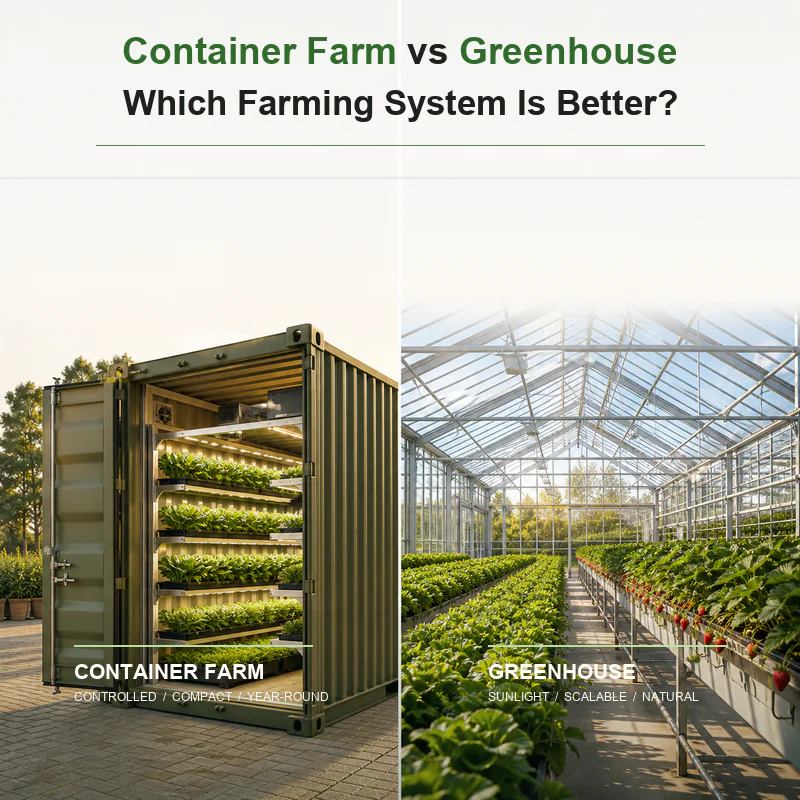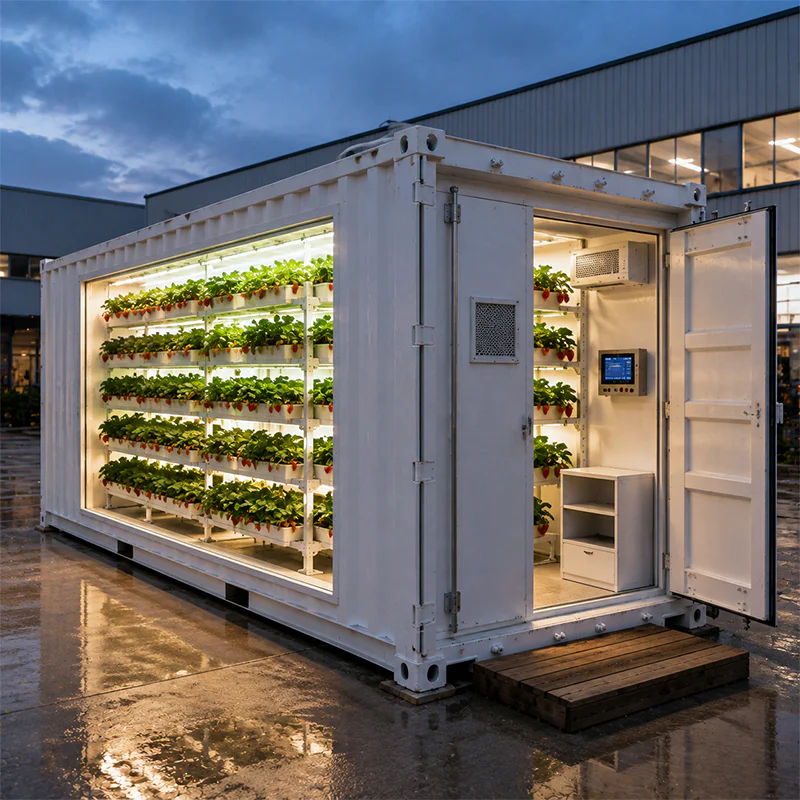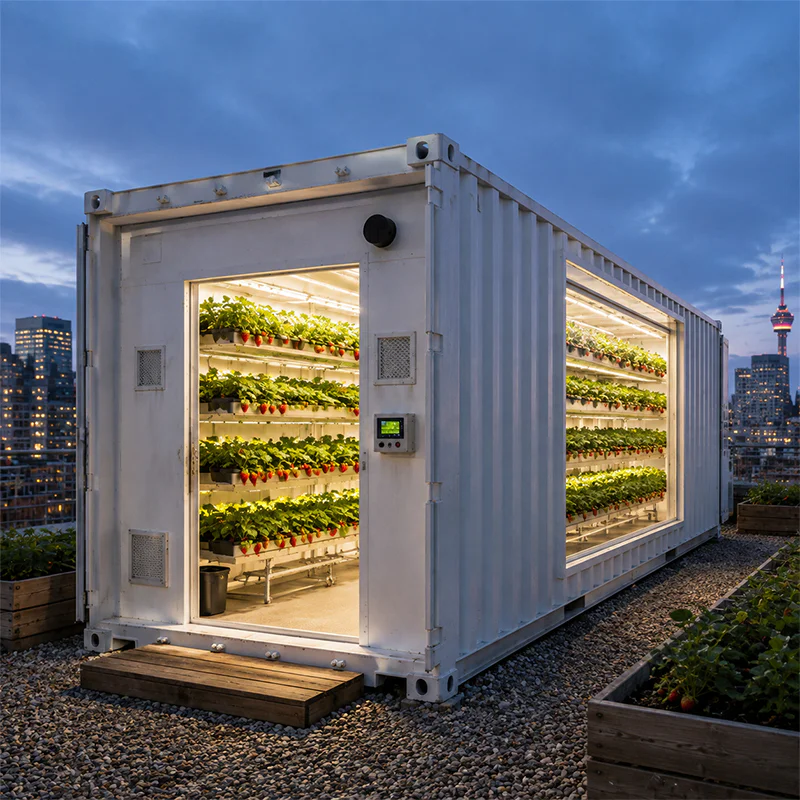







Energy consumption is one of the most important factors investors consider before building an indoor agriculture project.
A container farm can provide year-round crop production in a controlled environment, but it requires electricity to operate essential systems such as LED lighting, climate control, water circulation, and automation equipment.
Understanding energy usage helps growers estimate operating costs, select suitable equipment, and evaluate long-term profitability.
Unlike traditional farming, where production depends mainly on natural conditions, container farming requires careful energy management to maintain stable growing environments.
This article explains the main electricity-consuming components, factors affecting energy costs, and strategies to improve operational efficiency.
Why Energy Consumption Matters in Container Farming
Indoor agriculture changes the traditional farming model.
Instead of relying on:
- Sunlight
- Natural rainfall
- Outdoor temperature
A container farm creates a controlled environment using technology.
This provides advantages such as:
- Stable production cycles
- Higher space utilization
- Reduced climate dependence
However, these benefits come with additional energy requirements.
For commercial growers, electricity costs directly influence:
- Production cost per crop
- Product pricing
- Return on investment
- Long-term operation efficiency

Main Electricity Consumption Components
LED Grow Lighting System
LED lighting is usually the largest energy-consuming component in indoor farming.
Plants require specific light conditions for photosynthesis, especially in fully enclosed growing environments.
Energy usage depends on:
- LED power rating
- Number of lighting layers
- Daily lighting hours
- Crop requirements
Leafy vegetables usually require shorter growth cycles, making them suitable for efficient indoor production.
Modern LED technology helps reduce electricity consumption compared with traditional lighting systems.
Climate Control and Environmental Management
Maintaining a stable growing environment is another important energy factor.
A container farm may require:
- Кондиционер
- Cooling systems
- Heating equipment
- Dehumidification systems
- Вентиляция
Energy demand varies depending on:
- Local climate
- Container insulation
- Target growing temperature
- Тип культуры
For example, projects located in extremely hot or cold regions may require more climate control compared with mild environments.
Water Circulation and Hydroponic Equipment
Hydroponic systems use pumps to circulate nutrient solutions.
Compared with lighting and climate systems, water circulation usually consumes less electricity.
However, reliable operation requires:
- Water pumps
- Filtration systems
- Nutrient management equipment
Efficient pump selection can reduce unnecessary energy usage while maintaining proper nutrient delivery.
Automation and Monitoring Systems
Modern indoor farming projects often include intelligent control systems.
These systems monitor:
- Температура
- Humidity
- Water parameters
- Lighting schedules
Automation equipment normally has relatively low energy consumption but provides important benefits:
- Reducing manual operation
- Improving production consistency
- Preventing environmental problems
Typical Energy Distribution in Container Farms
The exact energy ratio depends on system design and climate conditions.
Generally:
Освещение
Usually represents the largest electricity demand because plants require continuous artificial light.
Климат-контроль
Can become the largest cost factor in extreme climates.
Pumps and Automation
Usually represent a smaller percentage but are essential for stable operation.
Understanding this distribution helps investors identify where energy optimization can create the biggest improvements.
Factors Affecting Container Farm Electricity Costs
Location and Climate Conditions
Geographic location has a major impact on energy requirements.
Examples:
Hot climates:
- Higher cooling demand
Cold climates:
- Higher heating demand
Good insulation design can reduce unnecessary energy loss.
Crop Selection
Different crops have different energy requirements.
Leafy vegetables generally require:
- Short growth cycles
- Lower plant height
- Efficient lighting conditions
Crops with longer growth periods or larger structures may require different system designs.
Production Capacity
A larger production target usually requires:
- More lighting
- Larger climate systems
- Higher circulation capacity
However, commercial projects can often achieve better energy efficiency through optimized system design.
How to Reduce Container Farm Energy Costs
Improve Insulation Performance
Good insulation reduces heat exchange between the inside and outside environment.
This helps:
- Reduce cooling loads
- Reduce heating requirements
- Improve climate stability
Use High-Efficiency LED Technology
Selecting efficient LED systems can reduce electricity consumption while maintaining suitable plant growth conditions.
Important factors include:
- Light spectrum
- Power efficiency
- Installation layout
Optimize Climate Control Settings
Overcooling or excessive heating increases unnecessary costs.
Proper environmental management helps balance:
- Plant requirements
- Energy usage
- Production goals
Use Smart Monitoring Systems
Automation allows growers to adjust operating conditions based on real-time data.
This prevents:
- Excessive lighting time
- Unnecessary cooling
- Water circulation waste
Energy Efficiency and Commercial Profitability
Electricity cost is only one part of the complete business model.
A well-designed container farm should also consider:
- Crop selling price
- Production volume
- Labor savings
- Market demand
Although indoor farming requires electricity investment, it can create value through:
- Reliable production
- Premium fresh products
- Local food supply
- Reduced transportation distance
Comparing Energy Use Between Container Farming and Traditional Agriculture
Traditional agriculture generally has lower direct electricity consumption because it relies on natural resources.
However, it faces limitations:
- Weather dependency
- Seasonal production
- Land requirements
A container farm uses more technology but provides:
- Controlled production
- Predictable harvest schedules
- Higher production density
The best solution depends on business goals and local conditions.
Energy Management for Commercial Container Farm Projects
For investors planning commercial projects, energy analysis should be completed before installation.
Important evaluation factors include:
- Local electricity price
- Expected crop output
- Operating hours
- Equipment efficiency
- Production strategy
Professional system design can help balance initial investment and long-term operating costs.
Заключение
Electricity consumption is a key consideration when evaluating a container farm investment.
The main energy-consuming systems include LED lighting, climate control, and hydroponic equipment.
Although indoor farming requires electricity, efficient equipment selection, insulation design, and smart management can significantly improve operating performance.
For commercial growers, understanding energy usage is essential for creating a profitable and sustainable controlled environment agriculture project.
ЧАСТО ЗАДАВАЕМЫЕ ВОПРОСЫ
How much electricity does a container farm use?
Electricity usage depends on container size, crop type, lighting system, climate conditions, and automation level.
What uses the most electricity in a container farm?
LED lighting and climate control systems usually represent the largest energy consumption.
Can container farms reduce energy costs?
Yes. Efficient LEDs, insulation, and smart environmental control can reduce unnecessary energy consumption.
Are container farms expensive to operate?
Operating costs depend on electricity prices, production targets, and system efficiency. Proper design can improve long-term profitability.
Is renewable energy suitable for container farming?
Solar and other renewable energy sources can be considered depending on location, electricity demand, and project requirements.