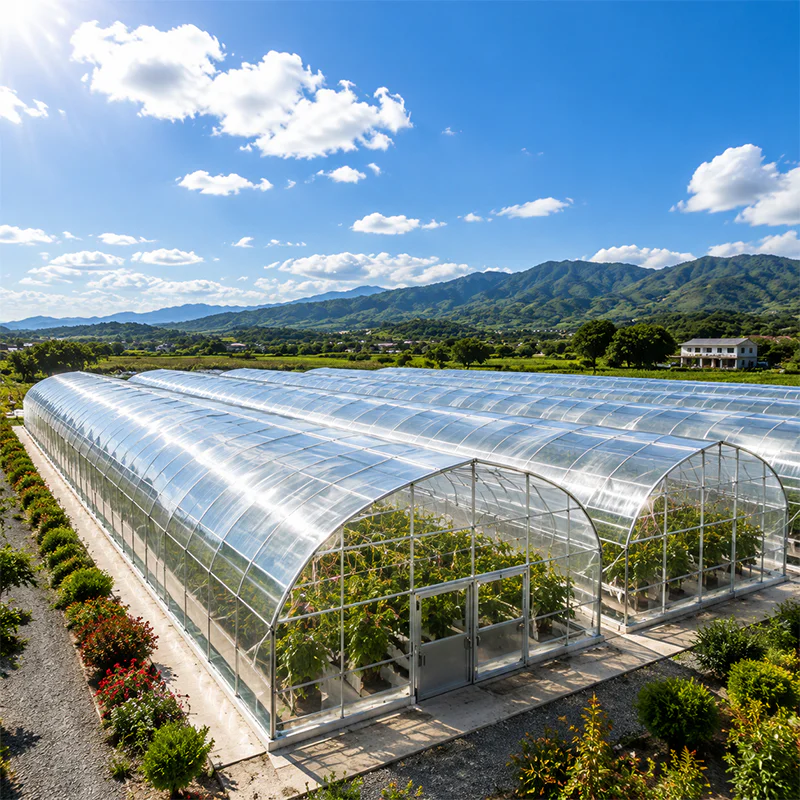







A Теплица Sawtooth can be a practical choice for commercial farming, especially in warm regions where heat control is critical. It offers strong natural ventilation and lower cooling costs. However, it is not the best option for every project. This guide explains how it works, what it costs, and whether it fits your farming goals.
Что такое теплица «пилообразная»?
Basic Structure and Design
A Sawtooth Greenhouse has a roof with alternating vertical and sloped sections. The vertical side is usually fitted with vents. This design allows hot air to rise and escape.
The structure is often built with steel frames and covered with film or polycarbonate. It can be designed as a Однопролетная теплица Sawtooth for small projects or a Многопролетная теплица Sawtooth for large farms.
How It Differs from Traditional Greenhouses
Traditional greenhouses rely more on side ventilation and mechanical cooling. A Sawtooth Greenhouse uses roof ventilation as the main airflow method.
This reduces dependence on fans and cooling systems. It is often considered more efficient in hot climates.
Why It Is Used in Commercial Farming
Commercial farms require stable production and cost control. A Коммерческая теплица «Пилообразная» supports continuous airflow and reduces overheating risks.
It is widely used in regions where high temperature affects crop yield.
Key Advantages of a Sawtooth Greenhouse
Natural Ventilation Performance
The roof design creates a natural airflow cycle. Warm air exits through roof vents, and cooler air enters from lower openings.
This improves air circulation without heavy energy use.
Lower Cooling Requirements
Because airflow is natural, fewer cooling systems are needed. This reduces energy consumption over time.
This is one reason many farmers consider it an Экономичная теплица Sawtooth.
Stable Growing Environment
Better airflow helps maintain stable temperature and humidity. This supports healthy plant growth and reduces stress.
Suitable for Large-Scale Farming
The design can be extended into large connected structures. A Многопролетная теплица Sawtooth is suitable for export farms and commercial production.

Cost Factors of a Sawtooth Greenhouse
Initial Construction Cost
Initial investment depends on size, materials, and design complexity. A Теплица Sawtooth may cost more than a tunnel greenhouse.
However, it can be competitive with other commercial greenhouse systems.
Material and Structure Cost
Steel frame quality and covering materials affect cost. Strong materials increase durability but require higher investment.
System Integration Cost
Additional systems such as irrigation, shading, and monitoring may be required. These improve efficiency but add to initial cost.
Operating and Maintenance Cost
Operating costs are often lower due to reduced energy use. Maintenance depends on system design and material quality.
Return on Investment (ROI)
Reduced Energy Consumption
Natural ventilation reduces electricity use. This lowers long-term operating cost.
Labor Cost Savings
Automation systems can reduce manual work. This improves efficiency in large farms.
Increased Crop Yield
Stable climate conditions support higher yield and better crop quality.
Payback Period for Commercial Projects
The payback period depends on crop type and management. Many projects recover investment within a few years.

Теплица «Пилообразная» по сравнению с другими типами теплиц
Sawtooth vs Multi-Span Greenhouse
A Sawtooth Greenhouse focuses on ventilation. A standard multi-span structure focuses on space and layout.
Combining both designs can improve performance.
Sawtooth vs Tunnel Greenhouse
Tunnel greenhouses have lower initial cost but limited airflow. Sawtooth structures provide better ventilation.
Sawtooth vs Glass Greenhouse
Glass greenhouses offer high light transmission but higher cost. Sawtooth designs offer a balance between cost and airflow.
Best Applications for Sawtooth Greenhouses
Vegetable Production (Tomato, Cucumber)
Vegetables benefit from stable airflow and temperature. This supports consistent production.
Fruit Cultivation (Strawberry, Blueberry)
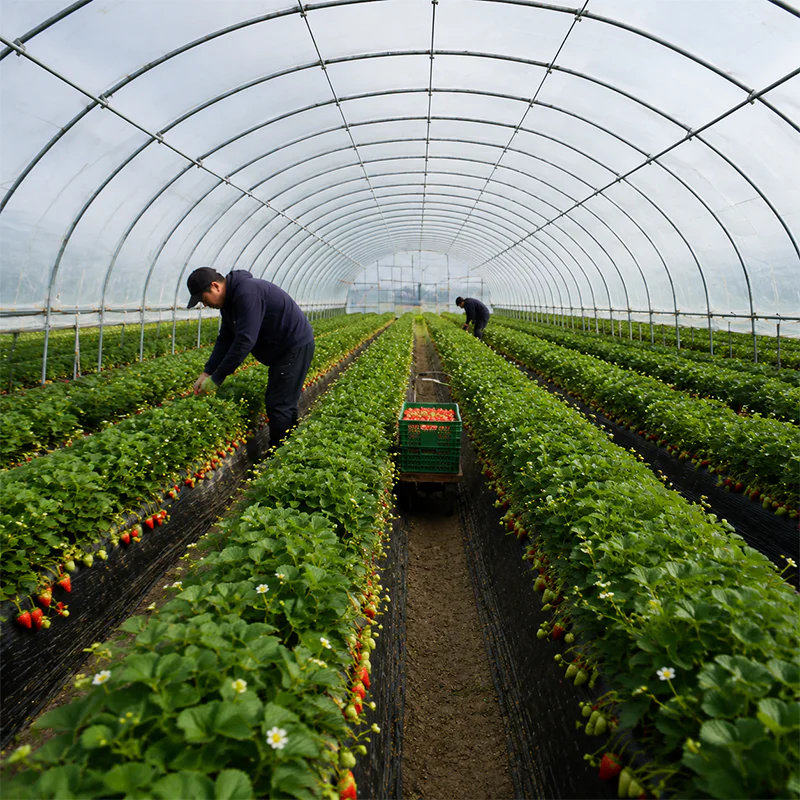
Fruits require controlled humidity and temperature. A Теплица Sawtooth can support these needs.
Flower and Nursery Production
Flower production requires stable conditions. This greenhouse type helps maintain a balanced environment.

When Is a Sawtooth Greenhouse Not the Best Choice?
Cold Climate Conditions
In cold regions, heat retention is more important than ventilation. Other greenhouse types may perform better.
High Snow Load Areas
The roof design may not handle heavy snow without reinforcement.
Small-Scale Farming Projects
For small farms, the investment may not be justified. Simpler greenhouse types may be more practical.
Key Factors to Consider Before Investment
Climate and Location
Climate determines whether this greenhouse type is suitable. It performs best in warm or tropical regions.
Тип культуры
Different crops require different conditions. Choose a structure based on crop needs.
Budget and Project Scale
Large projects benefit more from this design. Budget planning is important.
Supplier and Design Capability
Work with experienced suppliers. Good design improves long-term performance.
Is a Sawtooth Greenhouse Worth It?
Summary of Benefits vs Cost
A Sawtooth Greenhouse offers strong ventilation and lower operating cost. However, it may require higher initial investment.
Who Should Invest in It
It is suitable for commercial farms in warm climates. It is also useful for projects focused on energy efficiency.
Final Recommendation for Commercial Farming
If your project requires airflow control and cost efficiency, this greenhouse type is worth considering. Evaluate climate and crop needs before making a decision.
Начните свой проект по строительству теплицы «Пилообразной»
Custom Design Options
Each project can be designed based on crop type, climate, and scale. Custom solutions improve performance and efficiency.
Get a Quote for Your Project
If you are planning a commercial farming project, a Sawtooth Greenhouse can support better airflow and cost control. Contact Aurlant to explore a solution tailored to your project needs.