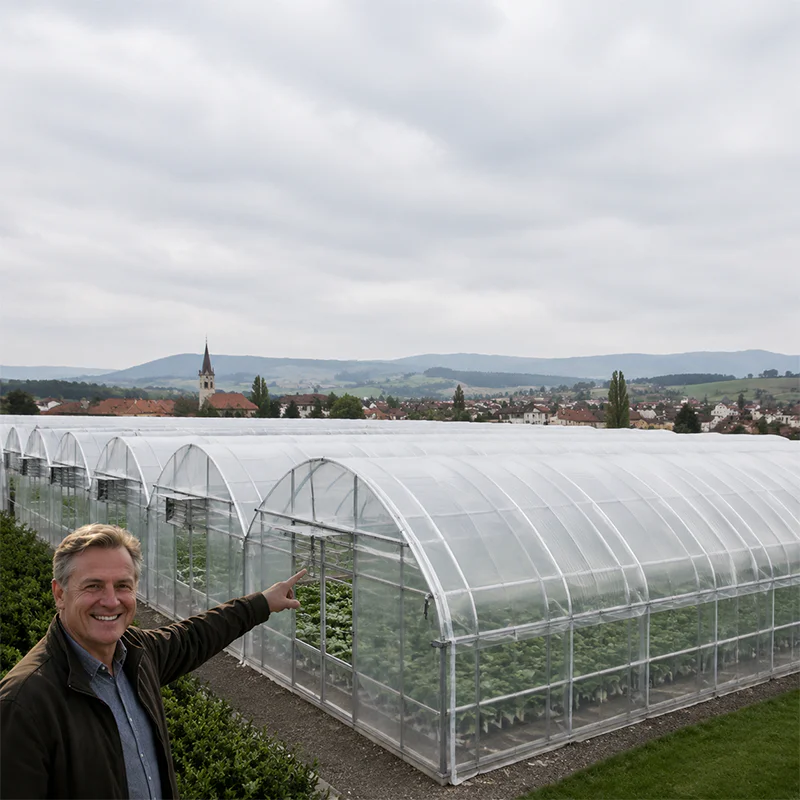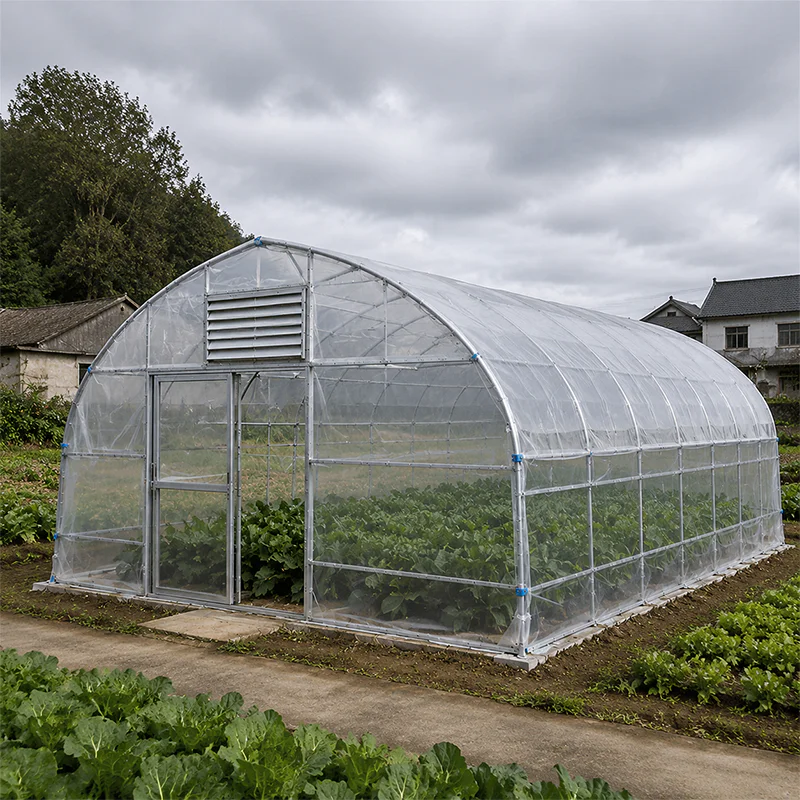







Large-scale agricultural production requires greenhouse structures that can support stable output, efficient management, and long-term expansion.
Compared with smaller greenhouse systems, commercial farms usually need more than additional growing space. They require carefully planned structures that integrate crop production, climate management, irrigation, automation, and daily operation.
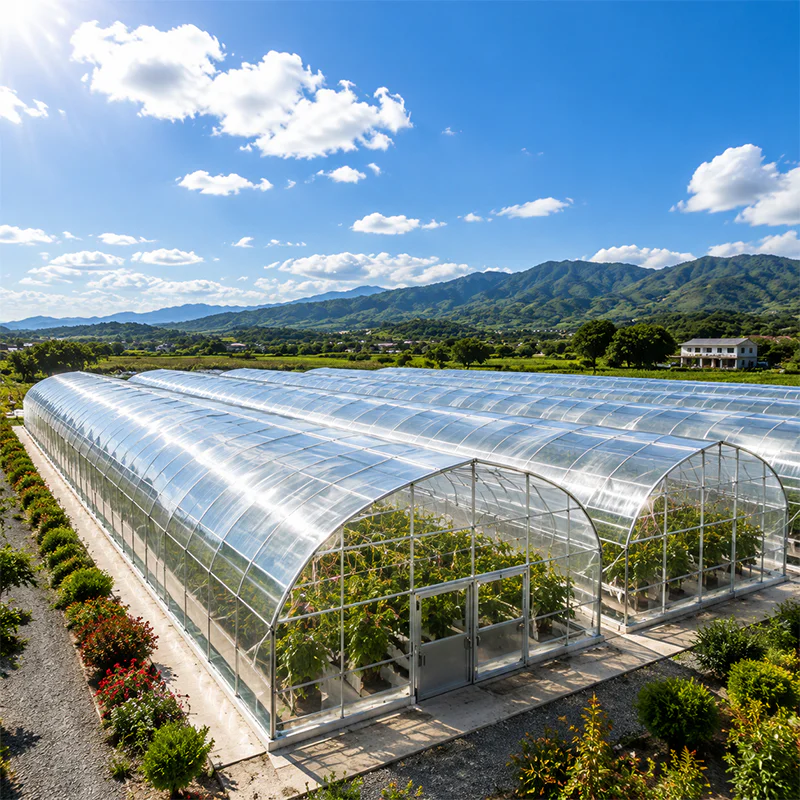
A multi-span greenhouse provides a practical solution for large farming projects because multiple greenhouse sections are connected into one continuous cultivation area.
The design allows growers to improve land utilization while creating a more efficient production environment.
However, selecting the right structure requires careful consideration of engineering requirements, crop needs, climate conditions, and future expansion plans.

Why Large Farms Choose Multi-span Greenhouse Structures
Large agricultural projects often face challenges that cannot be solved by simple greenhouse structures.
These challenges include:
- Limited land utilization efficiency
- Complex crop management requirements
- Higher labor costs
- Need for automated systems
- Increasing production targets
A connected greenhouse structure helps create a more organized production environment.
Compared with separate single greenhouse units, a multi-span design can provide:
- Larger continuous growing areas
- Easier equipment management
- More efficient internal transportation
- Better production planning
For commercial growers, the structure becomes part of the overall farming system rather than only a cultivation shelter.
Structural Design Principles of Multi-span Greenhouses
The basic concept of a multi-span greenhouse is connecting multiple greenhouse bays together through shared structures.
A typical design includes:
- Steel framework
- Roof covering system
- Ventilation structures
- Drainage system
- Оросительное оборудование
- Environmental control components
The structure must balance several factors:
- Strength
- Светопропускание
- Air circulation
- Equipment installation
- Crop requirements
A well-designed greenhouse should provide a stable environment while maintaining efficient production workflow.
Span Design and Space Utilization Planning
One of the most important factors in multi-span greenhouse design is span planning.
The span width influences:
- Internal growing area
- Прочность конструкции
- Ventilation performance
- Equipment arrangement
Different crops may require different layouts.
For example:
Leafy vegetables usually focus on efficient planting density.
Fruit crops such as tomatoes and cucumbers require more vertical space and supporting systems.
Therefore, greenhouse dimensions should be designed according to production goals instead of using a standard layout for every project.
Climate Considerations in Multi-span Greenhouse Design
Climate conditions directly influence structural decisions.
Commercial greenhouse projects should evaluate:
- Диапазон температур
- Условия ветра
- Количество осадков
- Snow load
- Солнечное излучение
In hot climates, ventilation design becomes especially important.
In colder regions, insulation and heating requirements may have a stronger influence.
Профессионал commercial multi-span greenhouse design solution for large scale farming should be customized according to local environmental conditions.
Ventilation and Environmental Management
Large greenhouse areas require effective airflow management.
Poor ventilation may lead to:
- Excessive heat accumulation
- High humidity
- Increased disease risk
Modern multi-span structures can integrate:
- Roof ventilation
- Side ventilation
- Cooling systems
- Climate sensors
These systems work together to maintain suitable growing conditions.
Environmental management is especially important for commercial farms because small climate variations can affect large production volumes.
Internal Layout Design for Commercial Production
A successful greenhouse design must consider more than planting space.
The internal layout should include:
Growing Areas
The main cultivation zone should maximize production efficiency.
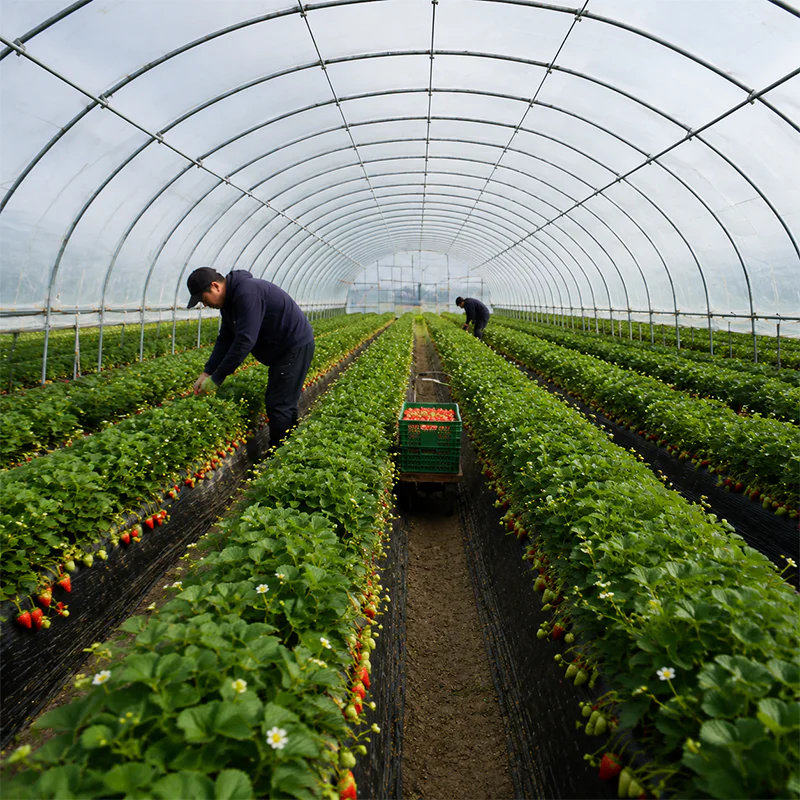
Working Paths
Proper pathways improve:
- Harvesting efficiency
- Equipment movement
- Crop maintenance
Technical Areas
Commercial farms may require space for:
- Оросительное оборудование
- Системы фертигации
- Control units
- Storage areas
Ignoring these areas during planning can reduce practical operating efficiency.
Integration With Modern Agricultural Systems
Multi-span greenhouses are often combined with advanced cultivation technologies.
К ним могут относиться:
- Автоматическое орошение
- Системы фертигации
- Climate control
- Hydroponic cultivation
For commercial vegetable production, growers may integrate an NFT hydroponic system for commercial vegetable production to improve resource efficiency and production consistency.
The greenhouse structure and cultivation system should be designed together to achieve better overall performance.
Automation Requirements for Large Greenhouse Projects
Automation is becoming increasingly important in commercial agriculture.
Large farms often use:
- Temperature monitoring
- Humidity sensors
- Automatic ventilation
- Irrigation control
- Remote management systems
Automation helps reduce manual workload and improves environmental control accuracy.
However, automation should be selected based on project size, crop requirements, and operational capability.
Multi-span Greenhouse Design Challenges
Although multi-span structures provide many advantages, several factors require attention.
Potential challenges include:
- Higher initial investment
- More complex engineering requirements
- Greater planning requirements
- Need for professional installation
Large greenhouse projects should focus on long-term efficiency rather than only initial construction costs.
Planning a Multi-span Greenhouse Project
Before construction, growers should evaluate:
- Available land area
- Тип культуры
- План производства
- Climate conditions
- Equipment requirements
- Future expansion plans
A detailed design stage can reduce future modification costs and improve operational efficiency.
Choosing a Professional Greenhouse Design Partner
A reliable supplier should provide more than greenhouse structures.
Important capabilities include:
- Engineering design
- Project customization
- System integration
- Technical support
Commercial greenhouse projects require coordination between structure, equipment, and crop production planning.

Заключение
Multi-span greenhouse design is an important solution for large-scale agricultural production.
By combining efficient land utilization, flexible layouts, and integrated farming systems, multi-span structures help commercial growers improve production efficiency.
However, successful greenhouse projects depend on correct planning.
Factors such as climate, crop requirements, automation needs, and future expansion should all be considered before selecting the final design.
A properly engineered multi-span greenhouse can provide a reliable foundation for modern commercial farming.
ЧАСТО ЗАДАВАЕМЫЕ ВОПРОСЫ
What is a multi-span greenhouse used for?
Multi-span greenhouses are mainly used for commercial agriculture projects requiring larger cultivation areas and efficient production management.
Why are multi-span greenhouses suitable for large farms?
They provide continuous growing space, better land utilization, and easier integration of agricultural equipment.
How does climate affect multi-span greenhouse design?
Climate conditions influence ventilation, structural strength, covering materials, and environmental control requirements.
Can multi-span greenhouses support hydroponic farming?
Yes. They can be combined with hydroponic systems, irrigation equipment, and automation technologies.
What should be considered before building a multi-span greenhouse?
Important factors include crop type, land conditions, climate, production goals, and future expansion requirements.