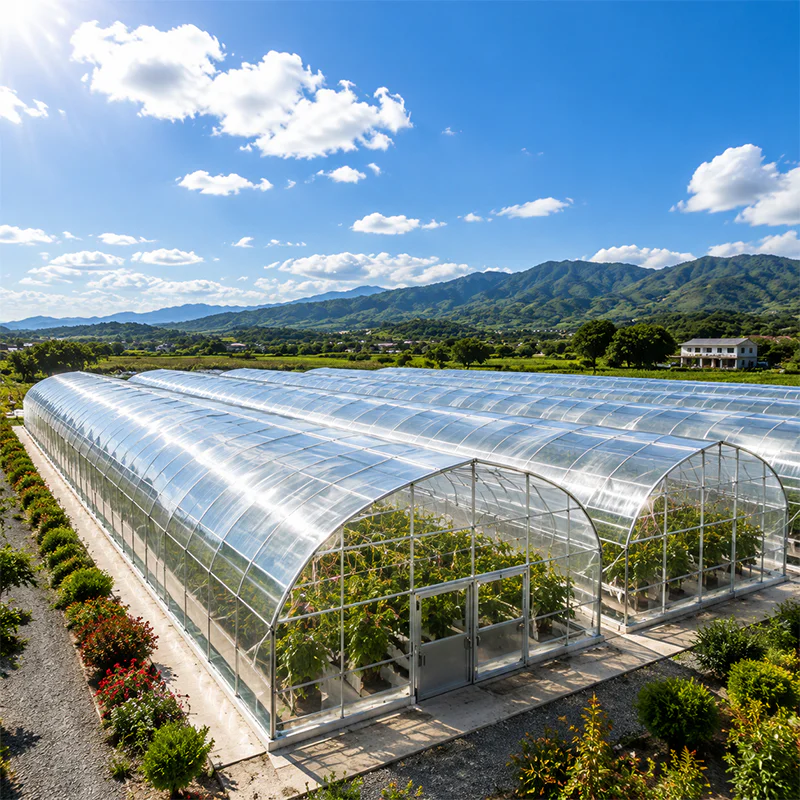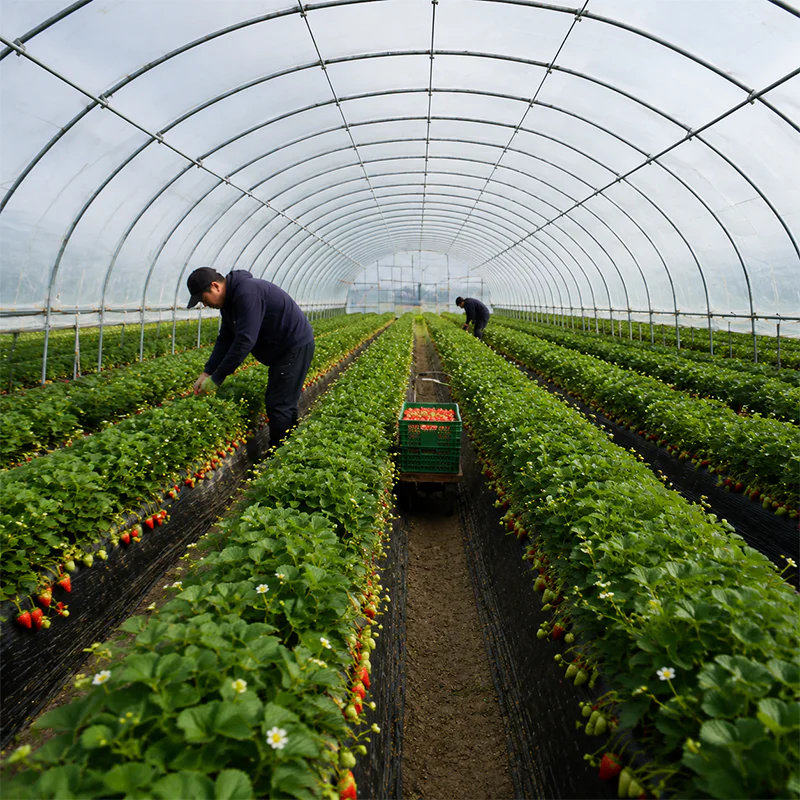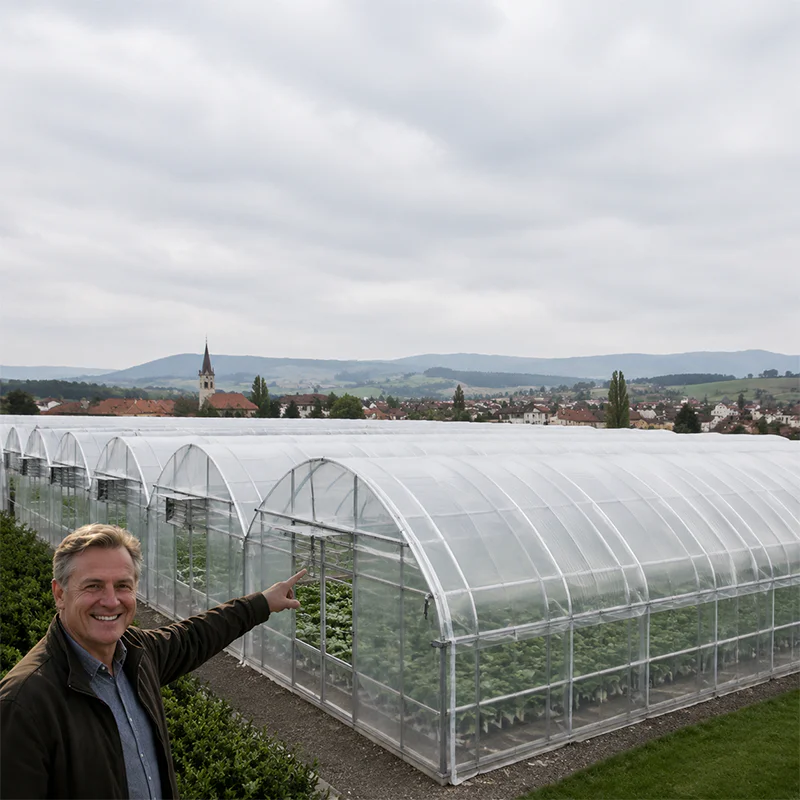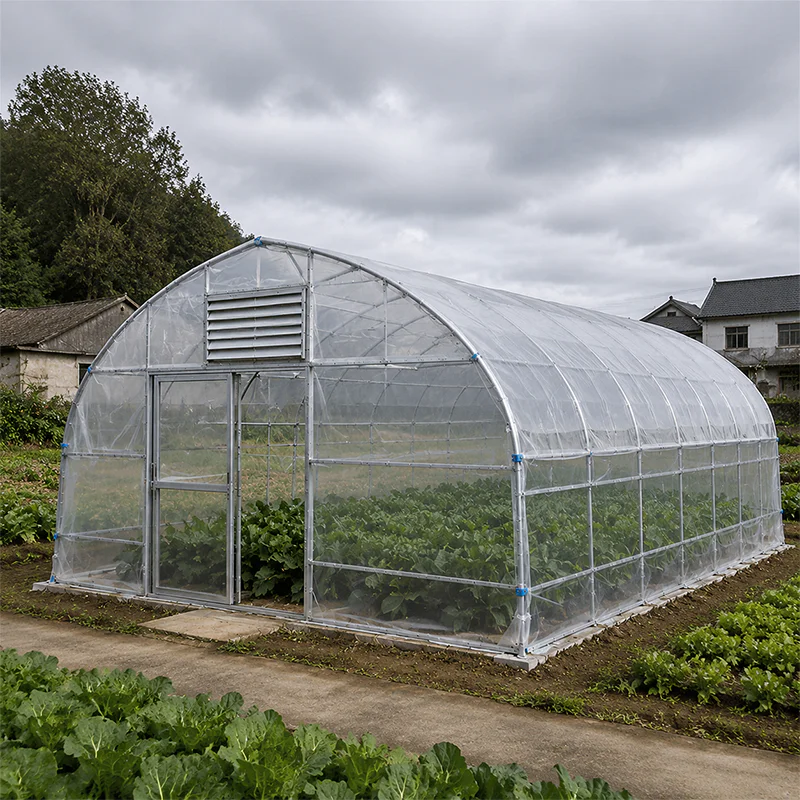






Polycarbonate blackout greenhouses are advanced agricultural structures designed to support precision farming applications in controlled environment agriculture.
Unlike traditional greenhouse systems, they combine high-strength polycarbonate materials with blackout technology to enable full control over light cycles, temperature stability, and environmental conditions.
These systems are widely used in modern commercial agriculture where crop consistency, quality control, and production efficiency are essential.

What Makes Polycarbonate Blackout Greenhouses Unique?
The uniqueness of polycarbonate blackout greenhouses lies in their dual-function design:
- Structural durability from polycarbonate panels
- Light control from blackout systems
This combination allows growers to operate highly controlled agricultural environments regardless of external weather conditions.
In many commercial applications, they are integrated with multi-span greenhouse systems for large-scale agricultural production, especially in industrial farming zones.
Agricultural Applications Overview
Polycarbonate blackout greenhouses are used in multiple agricultural sectors where environmental precision is required.
Key application areas include:
- High-value crop cultivation
- Controlled flowering agriculture
- Medicinal plant production
- Year-round vegetable farming
- Specialty horticulture industries
These applications require strict environmental stability and predictable crop cycles.
Application in High-Value Crop Production
One of the most important uses of polycarbonate blackout systems is high-value crop cultivation.
These systems allow farmers to:
- Control flowering cycles precisely
- Maintain consistent crop quality
- Optimize harvest timing
- Reduce environmental dependency
This makes them highly suitable for commercial agriculture businesses focused on premium markets.

Integration with Smart Farming Systems
Modern polycarbonate blackout greenhouses are often integrated with smart agriculture technologies.
These include:
- Automated climate control systems
- Environmental monitoring sensors
- AI-based farming management systems
- Smart irrigation systems
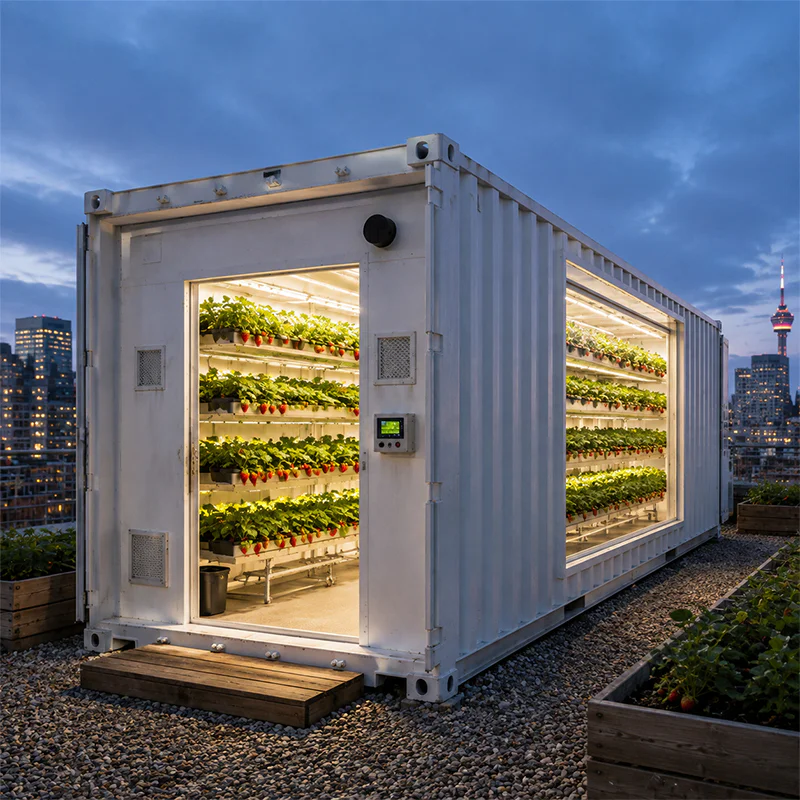
In advanced setups, they are combined with vertical hydroponic farming systems for controlled environment agriculture production, enabling full control over both light and nutrient delivery systems.
Role in Controlled Environment Agriculture
Controlled environment agriculture (CEA) is one of the fastest-growing sectors in modern farming.
Polycarbonate blackout greenhouses play a key role in this sector by providing:
- Stable temperature regulation
- Precise light cycle control
- Efficient resource utilization
- Reduced environmental risks
This makes them ideal for industrial-scale farming operations.
Advantages in Commercial Agriculture
The application of polycarbonate blackout systems provides several advantages:
- High structural durability
- Long-term operational stability
- Precise environmental control
- Improved crop yield consistency
- Reduced production risks
These advantages are critical for commercial farming success.
Limitations in Real-World Applications
Despite their advantages, these systems also have limitations:
- Higher initial investment cost
- Complex engineering requirements
- Maintenance needs for automation systems
- Energy dependency for environmental control
Proper system design is essential for maximizing efficiency.
Future of Polycarbonate Blackout Applications
The future of these systems is closely tied to smart agriculture development.
Expected trends include:
- AI-driven greenhouse control systems
- Fully automated crop management
- Integration with digital agriculture platforms
- Expansion in global controlled farming projects
These developments will further increase their adoption in commercial agriculture.

Conclusion
Polycarbonate blackout greenhouses represent a key advancement in modern agricultural applications.
By combining durable structural materials with advanced light control systems, they enable precise, scalable, and efficient farming solutions for commercial agriculture.
As global demand for high-quality agricultural production increases, these systems will play a major role in shaping the future of controlled environment agriculture.
FAQ
What are polycarbonate blackout greenhouse applications?
They are used in controlled environment agriculture for high-value crop production, precision farming, and commercial greenhouse systems.
What crops are suitable for these systems?
High-value crops, medicinal plants, and controlled flowering crops are most suitable.
Why use polycarbonate instead of film systems?
Because polycarbonate offers better durability, insulation, and long-term structural stability.
Can these systems be automated?
Yes, they are often integrated with smart agriculture and automation systems.
Are they suitable for large-scale farming?
Yes, they are widely used in commercial and industrial agricultural production systems.