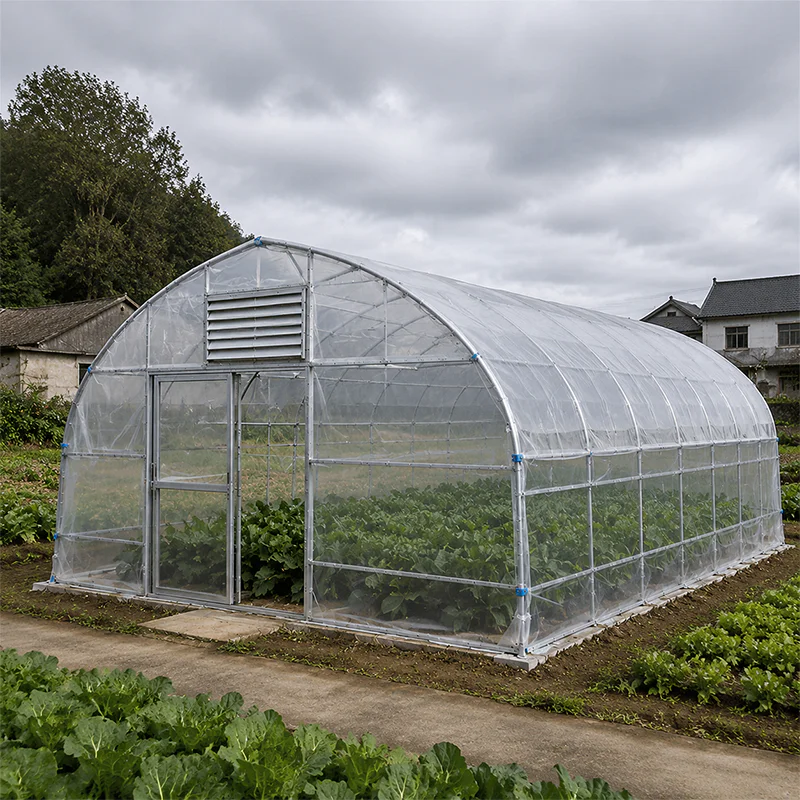






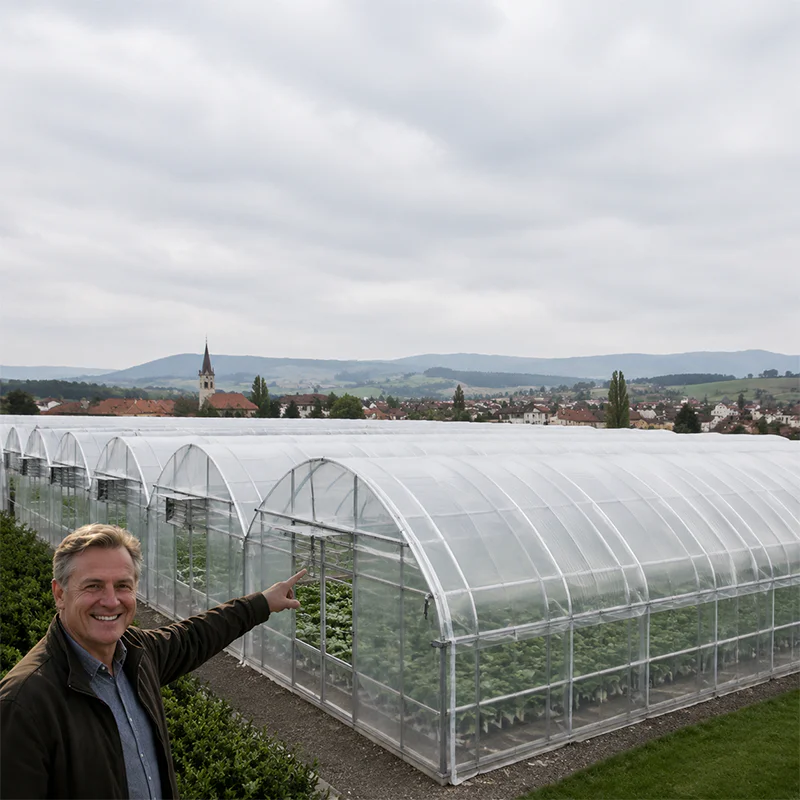
A stable growing environment is one of the most important factors in commercial greenhouse production.
Temperature, humidity, airflow, and carbon dioxide levels directly influence crop growth.
Without proper ventilation, heat and moisture can accumulate inside the greenhouse. This may create unfavorable conditions for plants and increase management challenges.
A greenhouse ventilation system helps growers maintain a more balanced internal environment.
It allows fresh air exchange, removes excess heat, controls humidity, and supports healthier crop development.
For commercial farms, ventilation is not only a cooling method. It is an essential part of greenhouse climate management.

Why Greenhouse Ventilation Is Important
Plants require suitable environmental conditions throughout their growth cycle.
A closed greenhouse can create several problems:
- High temperature accumulation
- Excess humidity
- Poor air circulation
- Increased disease risk
- Reduced crop quality
During sunny days, solar radiation can quickly increase greenhouse temperature.
At the same time, plant transpiration releases moisture into the air.
Without effective airflow management, humidity levels may become too high.
A properly designed ventilation system helps maintain a healthier production environment.
How Greenhouse Ventilation Systems Work
The basic purpose of ventilation is to exchange indoor and outdoor air.
Warm air naturally rises because of temperature differences.
When ventilation openings are available, hot air can escape while cooler air enters the greenhouse.
This process helps regulate:
- درجة الحرارة
- Humidity
- Air movement
- Gas exchange
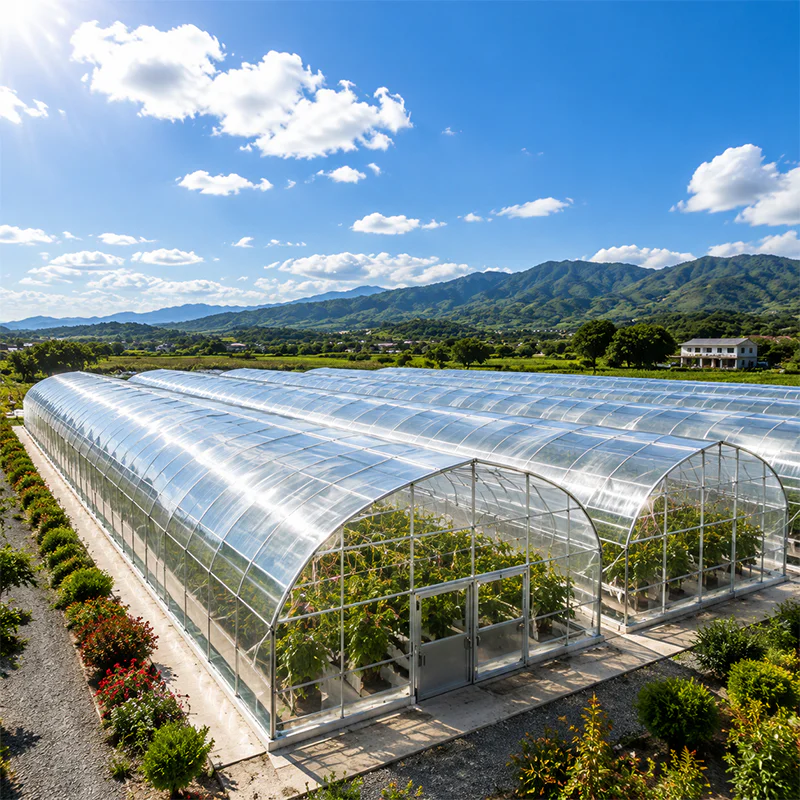
A complete greenhouse ventilation system solution for commercial farming may include roof vents, side vents, fans, motors, sensors, and control equipment.
Different greenhouse designs require different ventilation strategies.
Natural Ventilation Systems
Natural ventilation uses environmental forces such as wind and temperature differences.
Common methods include:
- Roof ventilation
- Side ventilation
- Roll-up curtain systems
The main advantage of natural ventilation is lower energy consumption.
It is especially useful in regions with:
- Warm climates
- Good natural airflow
- Moderate humidity conditions
Natural ventilation is often combined with greenhouse structural design to improve climate performance.
Mechanical Ventilation Systems
Mechanical ventilation uses equipment to actively move air.
Common components include:
- Exhaust fans
- Circulation fans
- Air circulation equipment
These systems provide better control when natural airflow is insufficient.
They are commonly used in:
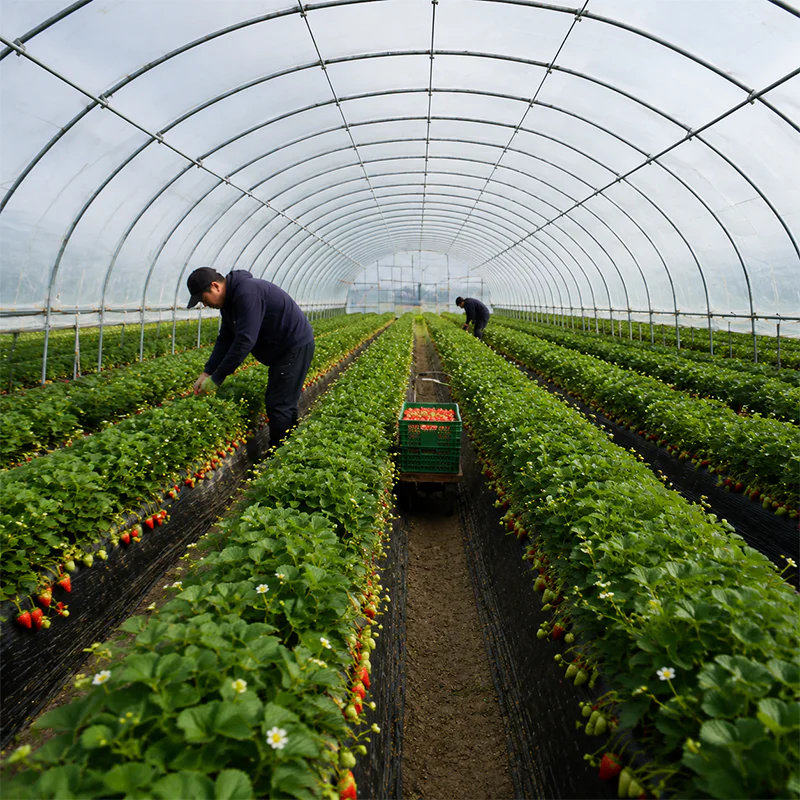
- Large commercial greenhouses
- High-density planting projects
- Regions with extreme weather conditions
Mechanical ventilation can help maintain stable conditions during periods of low wind or high temperature.
Roof Ventilation and Side Ventilation
Different ventilation locations provide different effects.
Roof Ventilation
Roof vents are important because hot air naturally rises.
Opening the upper area allows heat to escape more efficiently.
This helps reduce temperature buildup during hot periods.
Side Ventilation
Side ventilation improves fresh air exchange.
It allows outside air to enter and supports continuous airflow.
Side ventilation is often combined with insect nets to protect crops.
The Relationship Between Ventilation and Crop Growth
Proper airflow affects plant performance in several ways.
Temperature Regulation
Excessive heat can reduce plant photosynthesis and growth.
Ventilation helps maintain suitable temperatures and reduces heat stress.
إدارة الرطوبة
High humidity can increase disease pressure.
Better airflow helps remove excess moisture and improves plant conditions.
Carbon Dioxide Distribution
Air movement helps distribute carbon dioxide around plants.
This supports photosynthesis and improves growing efficiency.
Ventilation Systems for Different Climate Conditions
Ventilation requirements depend strongly on local climate.
Hot and Dry Regions
The main challenge is removing excessive heat.
Solutions may include:
- Roof ventilation
- Side ventilation
- Shading systems
- Cooling equipment
المناطق الحارة والرطبة
Humidity management becomes more important.
Growers should focus on:
- Continuous airflow
- Moisture removal
- Disease prevention
Cold Regions
Ventilation must balance air exchange with heat preservation.
Excessive ventilation may increase heating demand.
Therefore, automated control becomes more important.
Automated Greenhouse Ventilation Systems
Modern commercial farms increasingly use automated climate management.
An automated greenhouse ventilation system may include:
- Temperature sensors
- Humidity sensors
- Motorized vents
- Control panels
- Smart monitoring systems
Automation allows growers to adjust ventilation according to real-time conditions.
This improves consistency and reduces manual operation requirements.
Integrating Ventilation With Other Greenhouse Systems
Ventilation works best when combined with other agricultural technologies.
Modern greenhouse projects may integrate:
- أنظمة الري
- Fertigation systems
- Shading systems
- Climate controllers
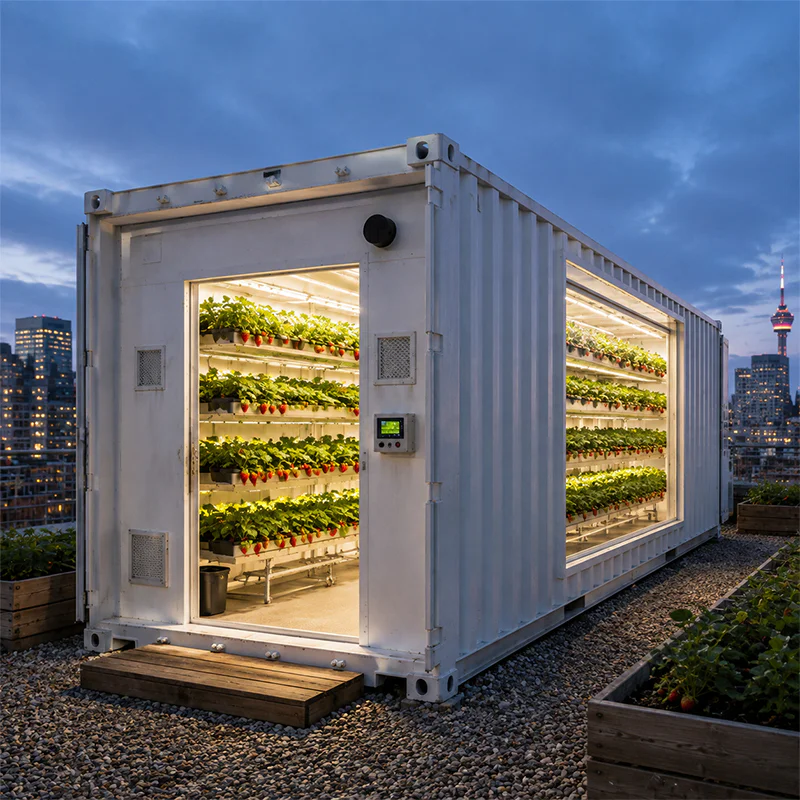
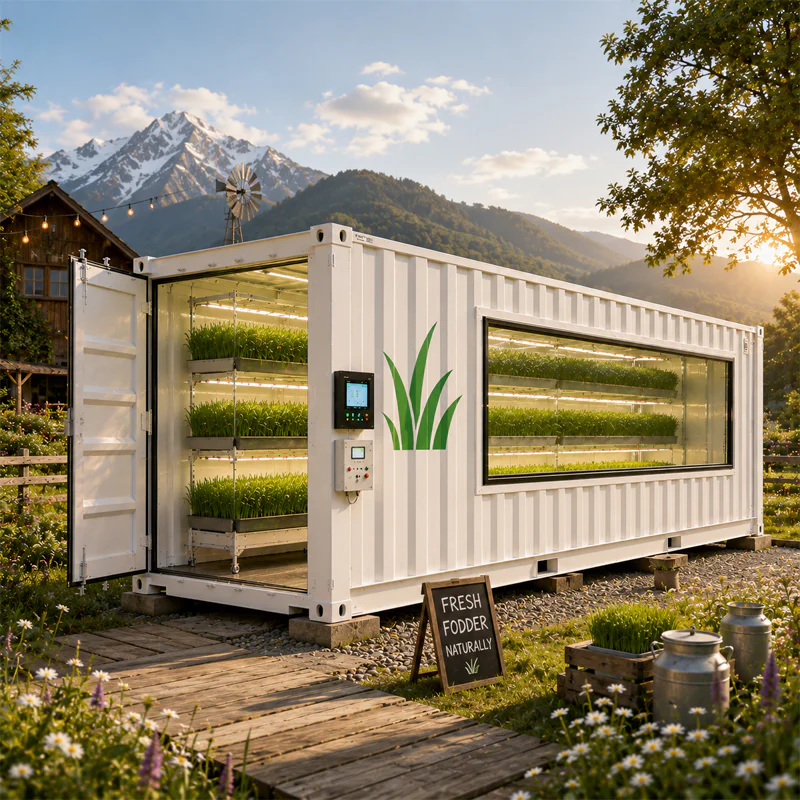
For controlled environment agriculture, growers may also use a container farm climate control solution for indoor crop production where temperature and airflow need precise management.
The overall goal is creating a stable environment that supports efficient crop production.
Common Ventilation Design Mistakes
Several mistakes can reduce greenhouse performance.
Insufficient Ventilation Capacity
A ventilation system should match:
- Greenhouse size
- Crop type
- Local climate
An undersized system may fail during extreme weather.
Ignoring Humidity Control
Many growers focus only on temperature.
However, humidity management is equally important.
Lack of Automation Planning
Manual systems may work for small projects.
Large commercial farms often require automated control for better efficiency.
How to Choose the Right Greenhouse Ventilation Solution
Before selecting a ventilation system, growers should evaluate:
- Climate conditions
- Greenhouse structure
- Crop requirements
- Production scale
- Automation needs
A professional design should balance performance, energy consumption, and operating requirements.

الخاتمة
A greenhouse ventilation system plays an important role in modern commercial agriculture.
By controlling temperature, humidity, and airflow, it helps create better growing conditions and improves crop management efficiency.
Different farms require different ventilation solutions based on climate, greenhouse design, and production goals.
With proper planning and system integration, effective ventilation can support stable production and long-term greenhouse performance.
الأسئلة الشائعة
What is the purpose of a greenhouse ventilation system?
A greenhouse ventilation system controls temperature, humidity, and airflow to create suitable growing conditions.
What is the difference between natural and mechanical ventilation?
Natural ventilation uses airflow from environmental conditions, while mechanical ventilation uses fans and equipment for active air movement.
Do all greenhouses need automated ventilation?
Not all greenhouses require automation, but commercial farms often benefit from automated control for better consistency.
How does ventilation affect crop growth?
Proper ventilation reduces heat stress, controls humidity, and improves air circulation around plants.
How should a greenhouse ventilation system be selected?
Selection depends on greenhouse size, crop type, climate conditions, and production requirements.