



Choosing the correct greenhouse size is one of the first decisions that affects production efficiency, investment cost, daily operation, and future expansion.
Many growers focus only on the available land area when selecting a greenhouse. However, a successful greenhouse project requires more than fitting a structure into a space.
The right size should match several factors:
- Crop type
- Production target
- Climate conditions
- Equipment requirements
- Labor workflow
- Future expansion plans
A greenhouse that is too small may limit production capacity and create operational difficulties. A greenhouse that is too large may increase unnecessary investment and management costs.
Therefore, standard greenhouse sizes should be considered as a starting point rather than a fixed answer.
Professional growers usually evaluate greenhouse dimensions together with crop planning, internal layout, and long-term business goals.

Why Greenhouse Size Planning Matters for Commercial Farming
Greenhouse size directly influences how efficiently a farm operates.
A properly planned structure can improve:
- Planting efficiency
- Worker movement
- Irrigation management
- Climate control performance
- Harvesting workflow
For commercial projects, size selection affects not only the construction stage but also the entire production cycle.
For example, insufficient space may create problems such as:
- Narrow working aisles
- Limited equipment installation areas
- Difficult maintenance access
- Reduced crop management efficiency
On the other hand, excessive unused space increases:
- Construction cost
- Energy consumption
- Maintenance requirements
This is why greenhouse planning for commercial farms should focus on production goals rather than simply choosing the largest possible structure.
Common Standard Greenhouse Sizes for Different Growing Goals
The ideal greenhouse size depends on the purpose of the project.
Different growers have different requirements, from home gardening to commercial agriculture.
Small Greenhouse Sizes for Home and Beginner Growers
Small greenhouses are commonly used for:
- Home gardening
- Seed propagation
- Hobby planting
- Seasonal vegetable production
Typical sizes include:
- 6 × 8 ft
- 8 × 10 ft
- 10 × 12 ft
These structures are easier to install and maintain.
They are suitable for crops such as:
- Herbs
- Lettuce
- Seedlings
- Flowers
- Small quantities of tomatoes and peppers
However, growers should consider future needs before selecting a small structure.
Many beginners underestimate the space required for:
- Shelves
- Tools
- Water systems
- Working areas
A slightly larger greenhouse can often provide better long-term usability.
Medium Greenhouse Sizes for Small Farms
Medium-sized greenhouses are commonly selected by:
- Local vegetable farms
- Nurseries
- Schools
- Restaurant suppliers
Typical sizes include:
- 20 × 30 ft
- 30 × 50 ft
- 30 × 100 ft
These structures provide enough space for organized production areas.
Compared with hobby greenhouses, medium structures allow growers to include:
- Dedicated planting zones
- Irrigation systems
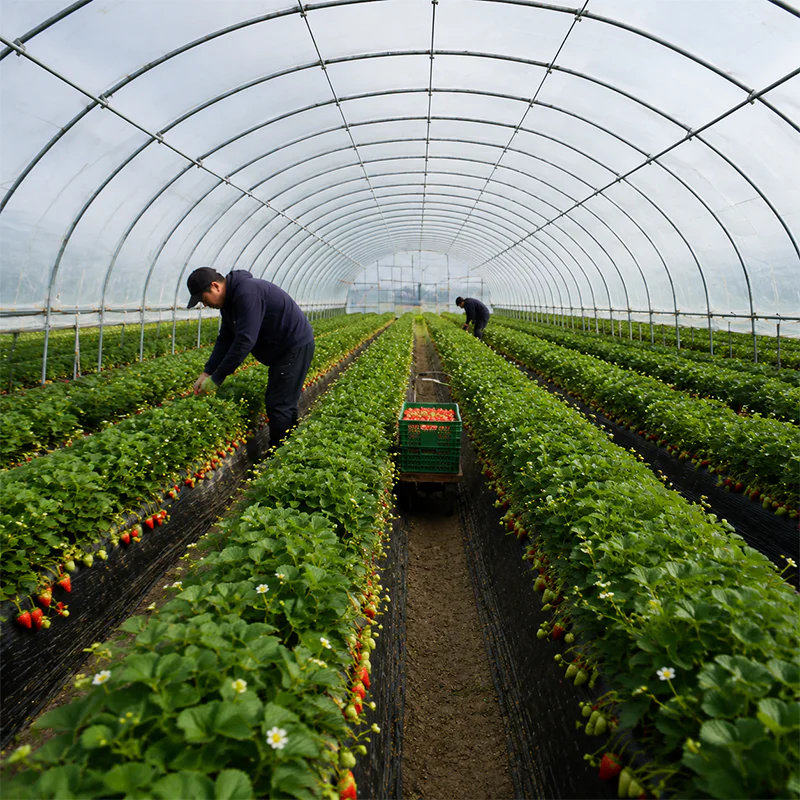
- Working paths
- Harvesting areas
For small commercial growers, the greenhouse size should be calculated according to expected output instead of only current demand.
Large Commercial Greenhouse Sizes
Large commercial projects require more detailed planning.
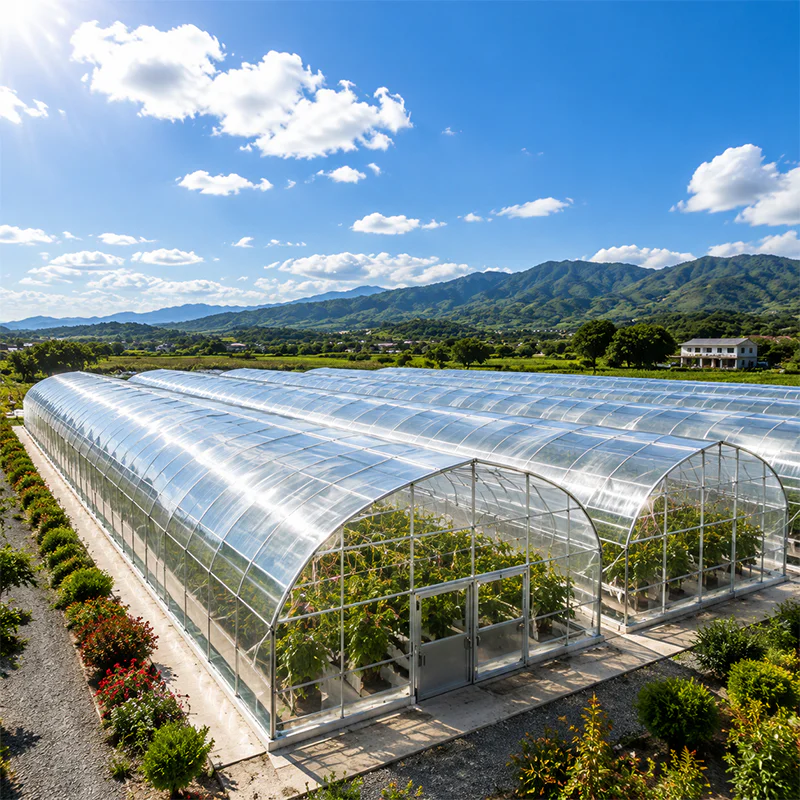
Commercial greenhouse sizes may range from:
- Several hundred square meters
- 1,000 sqm
- 5,000 sqm
- Large agricultural production parks
Large structures are usually designed around:
- Crop production volume
- Labor efficiency
- Climate control systems
- Market demand
For professional farms, greenhouse size is often customized according to production targets and operational requirements.
How Crop Selection Influences Greenhouse Size
Crop type is one of the most important factors affecting greenhouse dimensions.
Different crops require different growing space, height, and management areas.
Greenhouse Size for Vegetable Production
Leafy vegetables usually have higher planting density.
Crops such as:
- Lettuce
- Spinach
- Herbs
- Bok choy
can use space efficiently.
However, fruit vegetables require different planning.
Tomatoes, cucumbers, and peppers usually need:
- Higher structures
- Trellis systems
- Wider working aisles
- Better airflow space
Therefore, the best greenhouse size for vegetable production depends on the cultivation method and crop characteristics.
Greenhouse Size for Flowers and Nursery Production
Flower and nursery projects require additional operating space.
Important considerations include:
- Plant spacing
- Bench arrangement
- Propagation areas
- Storage zones
- Worker movement
A greenhouse designed only for maximum planting density may create problems during daily operation.
Efficient workflow is often more important than using every available square meter.
Greenhouse Size for Hydroponic Production
Hydroponic farming requires space beyond the growing area.
The greenhouse must also accommodate:
- Nutrient tanks
- Pumps
- Pipes
- Filtration systems
- Maintenance access
Different systems have different requirements:
- NFT systems
- DWC systems
- Vertical towers
- A-frame systems
Therefore, hydroponic projects should calculate greenhouse dimensions after confirming the cultivation system layout.
How Greenhouse Layout Affects Real Production Capacity
Greenhouse size is not only about length and width.
Internal planning has a direct impact on actual production efficiency.
A professional layout should consider:
Planting Area
The growing area determines potential production capacity.
Working Aisles
Adequate pathways improve:
- Harvesting efficiency
- Crop management
- Equipment access
Equipment Space
Modern greenhouses may include:
- Irrigation equipment
- Fertigation systems
- Climate control devices
- Storage areas
Ignoring these spaces can reduce operational efficiency.
Planning Greenhouse Width, Length and Height
A greenhouse’s three-dimensional design is important for commercial production.
Greenhouse Width Selection
Width affects:
- Ventilation efficiency
- Internal layout
- Structural design
Small structures may use narrower widths, while commercial farms often require wider layouts.
Greenhouse Length Planning
Longer greenhouses provide more cultivation space.
However, growers should also consider:
- Air movement
- Worker transportation
- Irrigation management
A longer structure is not always more efficient if workflow becomes difficult.
Greenhouse Height Requirements
Height is especially important for crops such as:
- Tomatoes
- Cucumbers
- Vertical growing systems
Higher structures can improve:
- Air volume
- Temperature stability
- Crop management flexibility
The suitable height depends on crop type and production method.

Standard Greenhouse Sizes vs Custom Greenhouse Design
Standard sizes provide several advantages:
- Easier planning
- Faster quotation
- Lower design complexity
They are suitable for:
- Simple vegetable production
- Small farms
- Common crop projects
However, commercial projects often require customized solutions.
A custom greenhouse design solution is more suitable when projects involve:
- Special crops
- Complex climate conditions
- Hydroponic systems
- Large-scale production
Aurlant provides customized greenhouse size planning solutions for commercial farming projects, helping growers select suitable structures according to crops, climate, and production goals.
How Future Expansion Should Influence Greenhouse Size
Many growers only consider current production needs.
However, agricultural projects often expand over time.
Future planning should consider:
- Available expansion space
- Additional equipment
- Increased production demand
- New crop varieties
A well-planned greenhouse layout can reduce future modification costs.
Common Mistakes When Choosing Greenhouse Sizes
Avoiding size selection mistakes can improve project efficiency.
Choosing a Greenhouse That Is Too Small
A smaller structure may reduce initial investment.
However, it can limit:
- Production capacity
- Equipment installation
- Worker efficiency
Ignoring Climate Conditions
Climate affects:
- Structure requirements
- Ventilation needs
- Covering materials
Greenhouse size should always match local environmental conditions.
Focusing Only on Construction Price
The cheapest greenhouse is not always the most economical option.
Long-term factors such as:
- Production efficiency
- Maintenance cost
- Energy consumption
should also be considered.
Alternative Solutions for Limited Space Projects
Not every agricultural project has enough land for a traditional greenhouse.
For urban farming, remote locations, or limited land areas, growers may consider alternative systems.
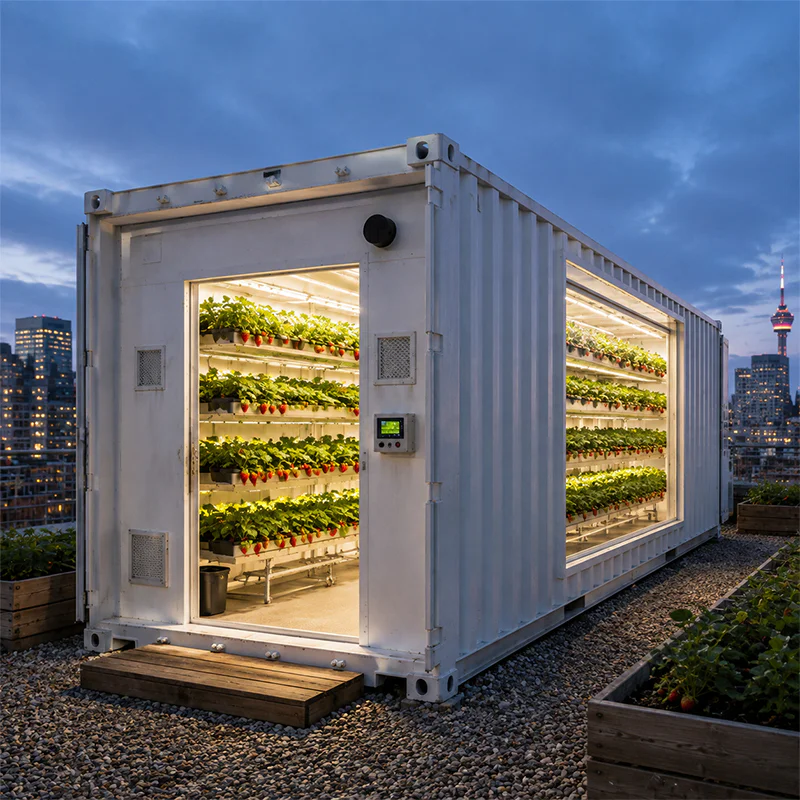
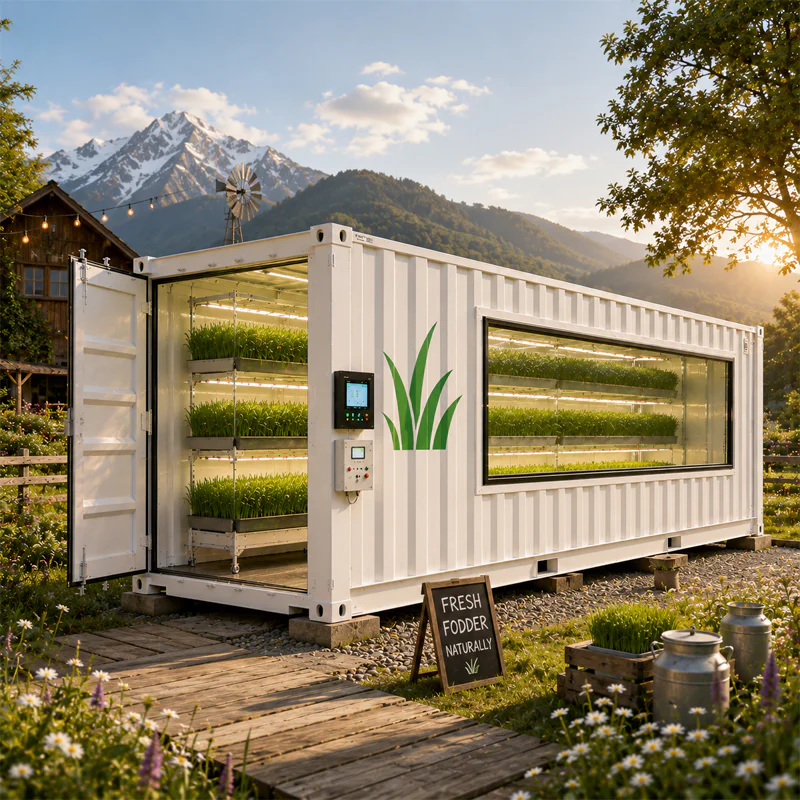
A container farm solution for space limited agricultural production provides an option for controlled growing where traditional greenhouse installation is difficult.
The choice depends on:
- Land availability
- Crop requirements
- Production goals
How Aurlant Helps Select the Right Greenhouse Size
Choosing greenhouse dimensions requires professional evaluation.
Aurlant helps growers analyze:
- Crop requirements
- Local climate
- Available land
- Production targets
- Equipment configuration
The goal is not simply to provide a greenhouse structure, but to create a practical production solution.
Conclusion
Selecting the right greenhouse size requires more than choosing a standard dimension.
A successful project should balance:
- Crop requirements
- Production goals
- Climate conditions
- Equipment layout
- Future expansion
Standard greenhouse sizes provide a useful starting point for planning.
However, commercial growers often achieve better results through customized design based on their specific farming objectives.
A properly planned greenhouse creates a stronger foundation for efficient operation, stable production, and long-term agricultural development.
FAQ
What are the most common standard greenhouse sizes?
Common greenhouse dimensions include small structures such as 6 × 8 ft and 10 × 12 ft, medium structures such as 20 × 30 ft, and commercial greenhouses from several hundred square meters to thousands of square meters.
How do I choose the right greenhouse size for my crops?
The right size depends on crop type, planting density, cultivation method, equipment requirements, and expected production volume.
Is a larger greenhouse always better?
Not necessarily. A larger greenhouse may increase investment and operating costs if the production plan does not require additional space.
Should I choose a standard greenhouse size or a custom design?
Standard sizes work well for simple projects, while custom designs are recommended for commercial farms, special crops, and complex growing systems.
How does greenhouse height affect production efficiency?
Greenhouse height influences airflow, climate stability, crop support systems, and the ability to grow taller crops such as tomatoes and cucumbers.