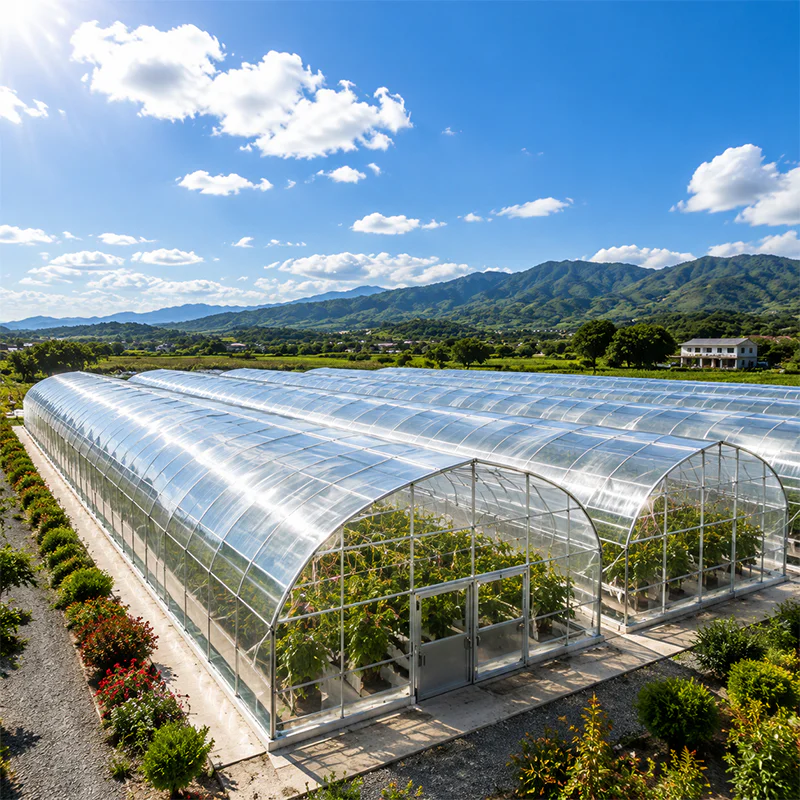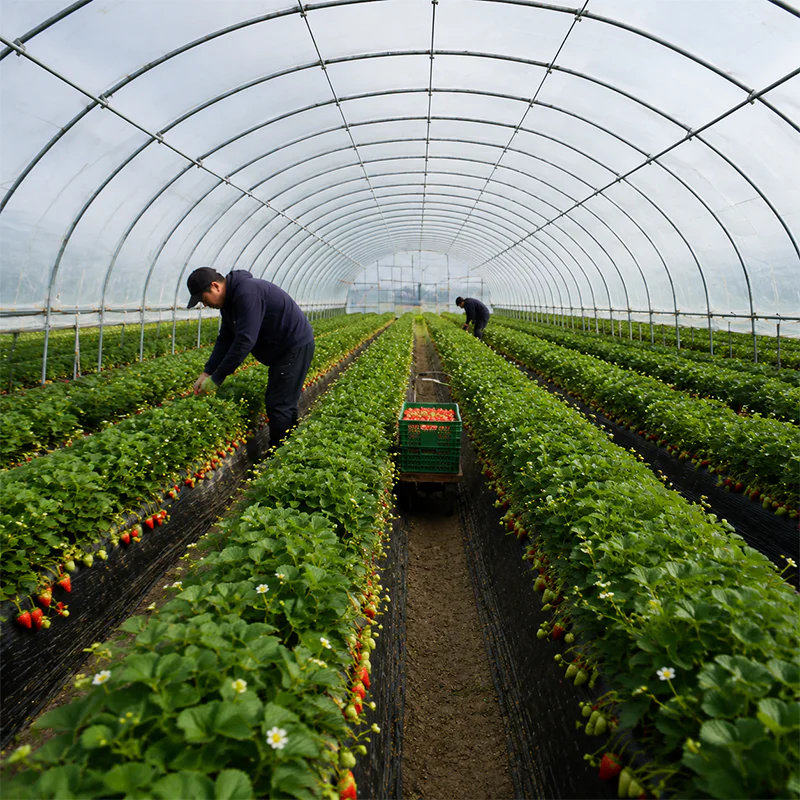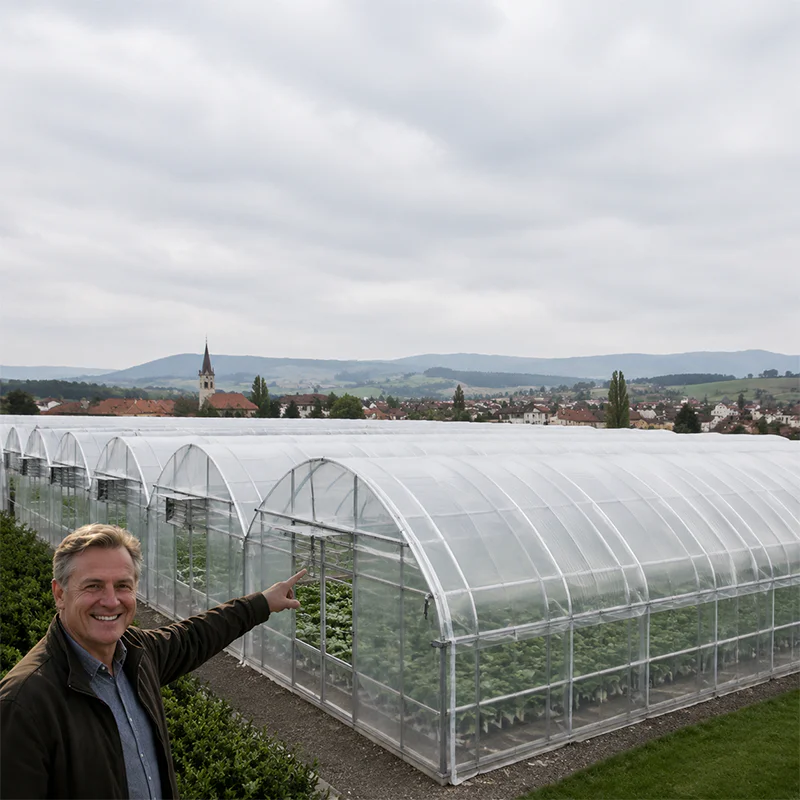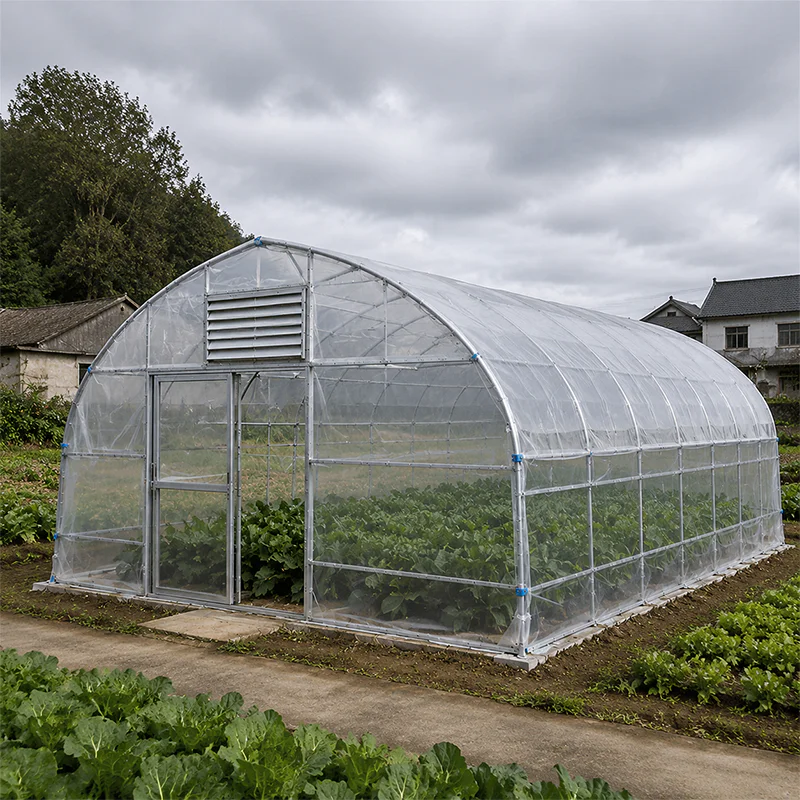






Tunnel film greenhouses are widely used in vegetable farming, nurseries, and commercial agriculture because they provide a relatively low-cost way to protect crops and extend growing seasons.
Compared with glass greenhouses, tunnel greenhouses are easier to install, require lower upfront investment, and work well for crops such as tomatoes, cucumbers, leafy greens, strawberries, and herbs.
With proper ventilation and climate management, tunnel film greenhouses can improve crop consistency while reducing weather-related risks.
Tunnel film greenhouses are commonly used in vegetable farming because they provide lower installation costs and flexible growing structures compared with glass greenhouses.
Main Advantages of Tunnel Film Greenhouses
1. Lower Upfront Investment Compared With Glass Greenhouses
Compared with glass or polycarbonate greenhouses, tunnel film greenhouses are generally require lower upfront investment. They require fewer construction materials, are relatively easy to install, and can cover large growing areas with lower upfront investment compared with glass greenhouses.
2. Strong Structure, Resistant to Wind & Weather
Our tunnel greenhouses are built with galvanized steel frames, providing strong resistance against wind, rain, and snow. Combined with UV-resistant plastic film, the structure ensures stable internal temperature and humidity,helping maintain more stable growing conditions throughout different seasons.
3. Ventilation and Airflow Management
Proper ventilation is essential for maintaining a stable growing environment. Tunnel greenhouses can be equipped with:
- Manual or electric roll-up ventilation
- Side-wall film lifting systems
- Roof ventilation systems
This ensures better airflow, reduces humidity, and lowers the risk of plant diseases. Proper tunnel greenhouse ventilation is important for controlling humidity, improving airflow, and reducing plant disease risk in tunnel film greenhouses. Poor ventilation can increase humidity levels and lead to fungal diseases, especially in hot or humid climates. Proper airflow management is one of the most important factors in tunnel greenhouse performance.
4. Flexible Size & Easy Installation
Tunnel greenhouses are highly customizable:
- Width: 6–12 m
- Height: 2.5–4 m
- Length: 20–100 m or more
Tunnel greenhouses are relatively simple to install, and proper structural planning can help improve ventilation, durability, and long-term maintenance efficiency. Tunnel greenhouse installation requirements may vary depending on structure size, local climate conditions, and ventilation system configuration.

How Much Does a Tunnel Film Greenhouse Cost?
Tunnel film greenhouse costs vary depending on width, length, steel structure thickness, ventilation systems, and covering materials.
Small tunnel greenhouses for family farms are generally more affordable, while larger tunnel film greenhouse structures with automated ventilation and irrigation systems require higher upfront investment.
Long-term operating costs may also include plastic film replacement, irrigation maintenance, and climate management systems.

Tunnel Film Greenhouse vs. Glass Greenhouse
Tunnel film greenhouses generally require lower upfront investment and are easier to install than glass greenhouses. Glass greenhouses often provide longer structural lifespan and stronger insulation performance, but construction and maintenance costs are typically higher. The best option depends on climate conditions, crop requirements, and long-term production goals.
Applications of Tunnel Film Greenhouses
Tunnel film greenhouses are commonly used for:
- Leafy vegetables (lettuce, spinach, cabbage)
- Cucumbers, tomatoes, peppers, beans
- Strawberries, melons
- Flowers & ornamental plants
- Seedlings & nurseries
- Organic farms & commercial crop production
Whether for small family farms or large-scale commercial agriculture, tunnel greenhouses help improve seasonal crop consistency and environmental protection.
Best Crops for Tunnel Film Greenhouses
Tunnel film greenhouses are commonly used for crops that benefit from stable temperature and humidity conditions. Popular choices include:
- Tomatoes
- Cucumbers
- Leafy greens
- Peppers
- Strawberries
- Herbs and nursery plants
Crop selection often depends on local climate conditions, market demand, and seasonal growing requirements. Tunnel film greenhouses are widely used for tomato production because they help protect crops from heavy rain, strong sunlight, and sudden temperature changes. Cucumbers are also commonly grown in tunnel greenhouses because they grow well under controlled humidity and temperature conditions.
Common Problems With Tunnel Film Greenhouses
Low-quality plastic film may degrade quickly under strong UV exposure.
Inadequate ventilation can increase humidity and create conditions for fungal diseases.
In regions with heavy snow or strong winds, additional structural reinforcement may be necessary to improve durability and safety.
Regular tunnel greenhouse maintenance is necessary to extend plastic film lifespan and maintain stable growing conditions.
Important Factors When Choosing a Greenhouse Supplier
When selecting a greenhouse supplier, growers should consider frame quality, galvanized steel thickness, ventilation design, technical support, and long-term maintenance requirements. Proper greenhouse design can significantly affect airflow, humidity management, structural durability, and long-term operating costs.
Is a Tunnel Film Greenhouse Right for Your Farm?
Tunnel film greenhouses are often suitable for growers looking for lower installation costs, flexible structures, and seasonal crop protection. However, climate conditions, crop selection, ventilation design, and long-term maintenance should all be considered before starting a tunnel film greenhouse project. Proper greenhouse planning and structural design can help improve airflow, durability, and long-term growing efficiency.