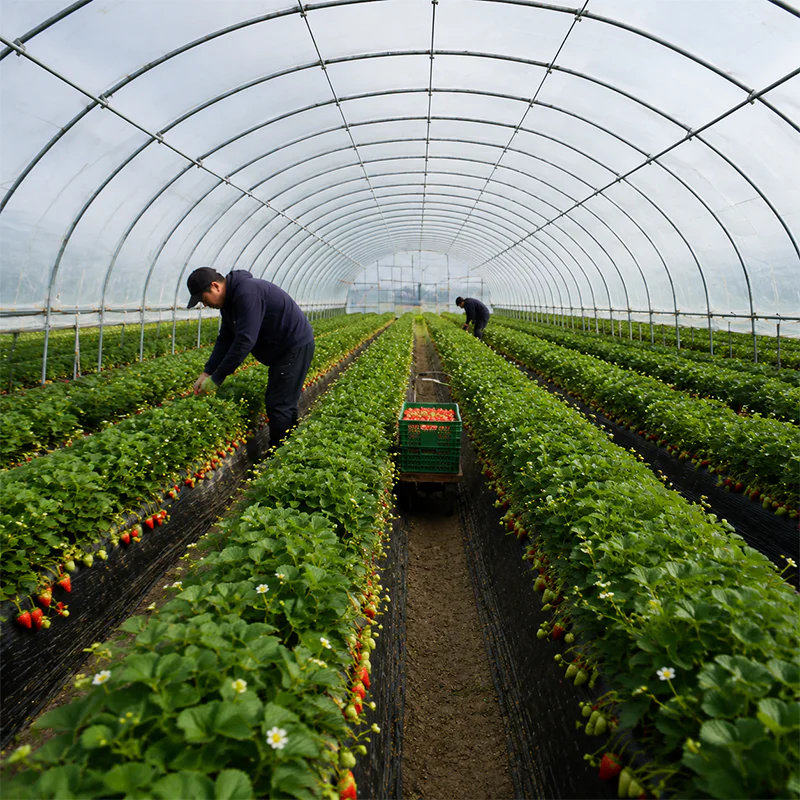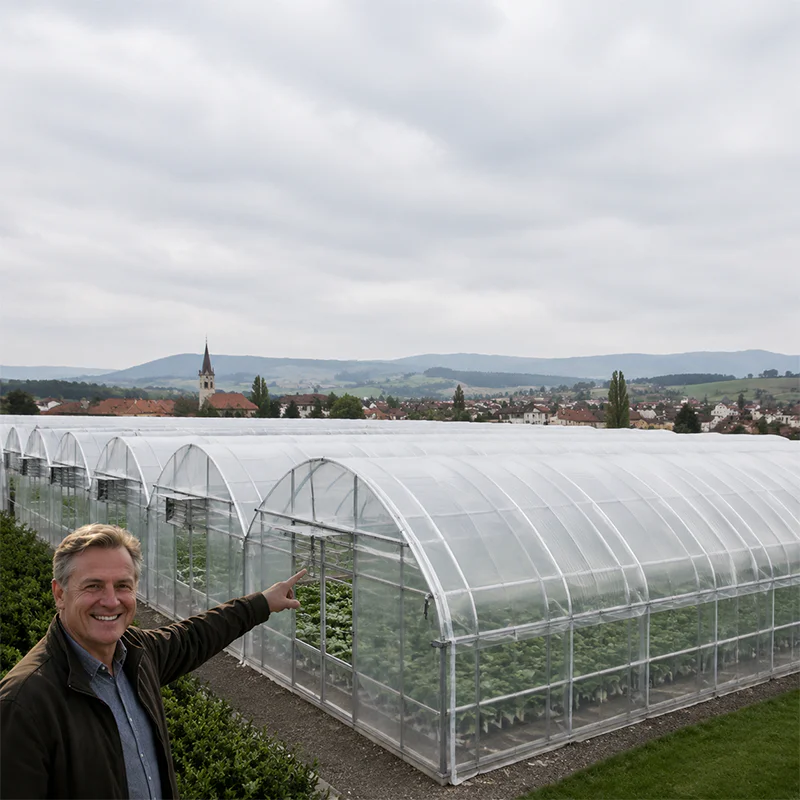






A commercial greenhouse is not just a crop shelter. It is a production system that connects structure, climate control, irrigation, growing systems, labor flow, and long-term operating cost.
Before investing in a greenhouse project, growers should not only ask about the structure price. A better question is: how should the whole commercial greenhouse be planned to support crop production, cost control, and future expansion?
This guide explains how to plan a commercial greenhouse from site selection to structure design, growing systems, automation, and cost evaluation.
Why Commercial Greenhouse Planning Matters
A commercial greenhouse project requires more planning than a small garden greenhouse. Poor planning can increase daily operation costs and limit future growth.
How Greenhouse Design Affects Long-Term Cost
The design stage affects both construction cost and operating cost. Structure height, covering material, ventilation, irrigation, and automation all influence future expenses.
A cheaper greenhouse may save money at the beginning. However, if it lacks proper ventilation, working space, or system layout, it may create higher labor and maintenance costs later.
Why Upfront Cost Is Not the Only Factor
Growers often compare greenhouse prices by square meter or square foot. This method is useful, but it is not enough.
A complete budget should include structure, covering material, site preparation, installation, irrigation, climate systems, utilities, labor, and maintenance.
Why Expansion Should Be Planned Early
Future expansion is easier when roads, water pipes, power lines, drainage, and utility areas are planned from the start.
If the first greenhouse blocks future expansion, the farm may need expensive redesign later.
How Should You Select a Commercial Greenhouse Site?
Site selection is one of the most important early decisions. A poor site can increase construction cost and daily operating pressure.
Water Supply and Utility Access
Commercial crops need stable water supply. Irrigation, cooling pads, fertigation, and cleaning all require water.
Before purchasing land or confirming a site, growers should check water availability, water pressure, water quality, power access, road access, and drainage conditions.
Land Slope and Drainage
A slight slope can help natural drainage. Flat land may need drainage channels or pumping systems. Rough land may require more grading work before installation.
Poor drainage can create standing water, foundation problems, and working difficulty.
Greenhouse Orientation
Greenhouse orientation should match local climate and light conditions.
In colder regions, growers often consider winter sunlight and heat gain. In hotter regions, airflow and heat reduction may be more important.
Orientation should be confirmed based on local weather, crop type, greenhouse structure, and ventilation design.
Space for Future Expansion
A commercial greenhouse should not be placed only for today’s needs. Growers should reserve land for future spans, access roads, water tanks, packing areas, and equipment rooms.
What Commercial Greenhouse Structure Should You Choose?
The greenhouse structure should match crop type, climate, budget, and operation goals.
Multi-Span Greenhouse
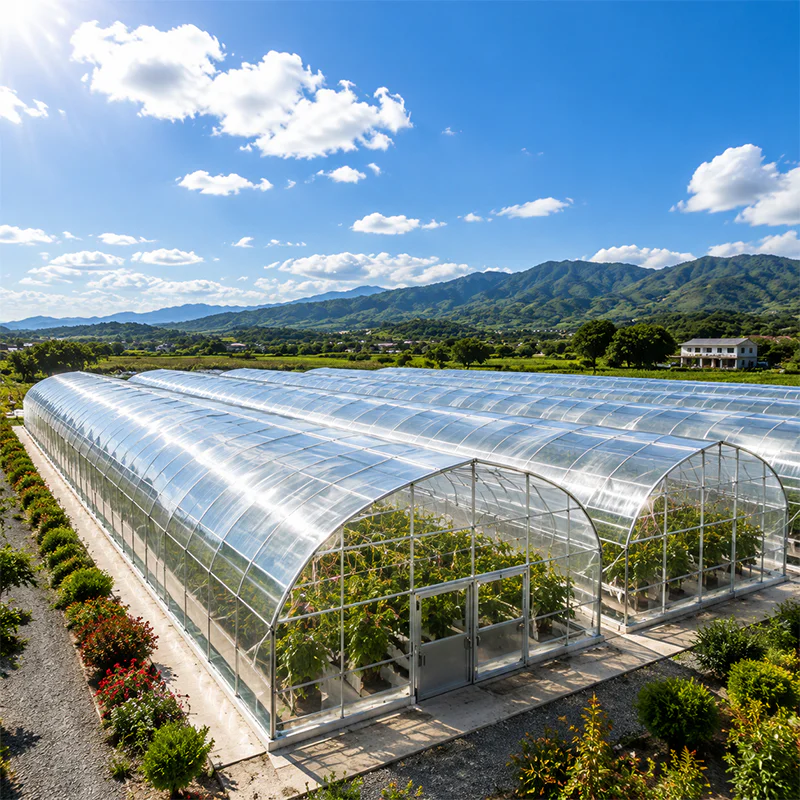
A multi-span greenhouse is often used for commercial production. It connects several spans into one large growing area.
This structure can improve land use, centralize climate control, and support organized workflow. It is suitable for vegetables, flowers, nursery plants, and hydroponic systems.
Venlo Greenhouse
A Venlo greenhouse is often used for professional commercial projects. It usually uses glass or rigid covering materials and supports advanced climate control.
It is suitable for high-value crops and long-term production, but the initial investment is usually higher.
Single-Span Greenhouse
A single-span greenhouse can be useful for smaller farms, crop trials, or separated growing zones.
It is easier to isolate crops, but it may be less efficient for large-scale logistics and centralized systems.
High Tunnel Greenhouse
High tunnels are usually simpler and more cost-effective. They can support seasonal production, soil crops, and starter commercial projects.
They may not provide the same climate control level as advanced commercial greenhouse structures.

How Do Covering Materials Affect Commercial Greenhouse Performance?
Covering material affects light, insulation, cost, durability, and crop environment.
Glass Covering
Glass offers high light transmission and long service life. It is often used in high-end commercial greenhouse projects.
However, glass requires a strong structure and higher initial investment.
Polycarbonate Covering
Polycarbonate sheets offer good insulation and impact resistance. They are suitable for regions that need better temperature control or stronger covering material.
Polycarbonate is often used in commercial projects that need balance between cost and performance.
Polyethylene Film Covering
PE or PO film is common in commercial film greenhouses. It has a lower initial cost and is suitable for many vegetable and flower projects.
However, film covering may need replacement after several years, depending on material quality and local conditions.
How Should Growing Systems Be Integrated?
A commercial greenhouse should be planned as a production line. Growing systems should not be added after the structure is already fixed.
Soil-Based Growing
Soil-based growing is simple and cost-effective. It is suitable for many vegetables, flowers, and seasonal crops.
Growers still need to plan irrigation, drainage, crop rows, and access paths.
Substrate Growing
Substrate systems use grow bags, pots, slabs, or containers. They are common for tomatoes, cucumbers, peppers, and strawberries.
This method allows better control than field soil and works well with drip irrigation and fertigation.
Hydroponic Growing Systems
Hydroponic systems can help improve water and nutrient control. NFT systems are suitable for leafy greens and herbs.
Dutch bucket systems are often more suitable for tomatoes and cucumbers because these crops need more root space and support.
DWC systems, hydroponic towers, and growing racks can also be used depending on crop type and project scale.
Benches and Rolling Benches
Benching systems are important for nursery plants, flowers, seedlings, and potted crops.
Rolling benches can improve usable growing area because they reduce fixed aisle space. However, they require higher initial investment.
What Climate Control Systems Are Needed?
Climate control is central to commercial greenhouse farming. The system should match local climate and crop needs.
Ventilation System
Ventilation helps control heat, humidity, and airflow. Roof vents, side vents, exhaust fans, and circulation fans can all be used.
Poor airflow can create hot areas and increase disease pressure.
Cooling System
In hot regions, cooling pads and exhaust fans are common. Shading systems can also reduce heat load.
Cooling design should consider greenhouse length, local humidity, crop type, and summer temperature.
Heating System
Cold regions may need heating systems. Options include hot water pipes, air heaters, boilers, or heating fans.
Heating should be planned based on crop requirements and winter climate data.
Airflow Management
Airflow should reach the crop canopy, not only the upper greenhouse space. Circulation fans can help reduce stagnant air and improve uniformity.

How Should Irrigation and Fertigation Be Planned?
Water and nutrient systems directly affect crop health and yield.
Water Tanks and Pumps
Tank size and pump capacity should match greenhouse area, crop water demand, and irrigation frequency.
A system that is too small may cause uneven irrigation.
Filtration System
Filters protect drip lines, emitters, pumps, and hydroponic channels. They are important for long-term system stability.
Fertigation System
Fertigation helps deliver nutrients through irrigation water. It can improve nutrient control for soil, substrate, and hydroponic systems.
Growers should plan fertilizer tanks, injectors, mixing systems, pipes, and maintenance access.
Drainage and Water Recycling
Drainage should be planned before construction. Some projects may recycle drain water after treatment.
This depends on crop type, water quality, and management ability.
How Much Does a Commercial Greenhouse Cost?
Commercial greenhouse cost depends on structure, covering, systems, site conditions, shipping, installation, and automation level.
Structure Cost
Structure cost depends on span width, height, steel quantity, load requirements, roof design, and material standards.
A stronger frame may cost more but can provide better safety in wind or snow regions.
Covering Material Cost
Film, polycarbonate, and glass have different costs and service lives. Growers should compare initial cost and replacement cost.
Site Preparation Cost
Land grading, drainage, road access, foundation work, and utility connection can add major cost.
This part is often underestimated in early budgets.
Installation Cost
Installation cost depends on project size, local labor, structure complexity, and site conditions.
It should be listed clearly in the quotation or project plan.
System Cost
Ventilation, cooling, heating, irrigation, fertigation, shading, hydroponics, sensors, and automation can become a large part of the investment.
Growers should choose systems based on crop value and production goals.
Is Automation Worth It for a Commercial Greenhouse?
Automation can improve control and reduce labor, but it should match project scale.
When Automation Makes Sense
Automation is useful for large greenhouses, high-value crops, labor-limited farms, and projects that need stable climate control.
It can control vents, fans, cooling pads, shading, heating, irrigation, fertigation, and alarms.
Why Full Automation Is Not Always Necessary
Small or starter projects may not need full automation at the beginning. Semi-automatic systems can reduce investment and remain easier to manage.
Growers can also add advanced systems later if the structure and wiring are planned early.
Training and Maintenance
Automation requires trained operators. Sensors, controllers, pumps, motors, and climate systems need regular maintenance.
Without training, advanced equipment may not deliver expected value.
What Mistakes Should Growers Avoid?
Many commercial greenhouse problems come from poor early planning.
Choosing Structure Before Crop Planning
Crop type should guide greenhouse height, layout, irrigation, and climate systems.
A lettuce greenhouse and a tomato greenhouse should not be planned the same way.
Ignoring Site Conditions
Water, drainage, slope, power, road access, and climate all affect project cost.
Ignoring site conditions can create expensive problems during construction.
Underestimating Labor Flow
Workers need space for planting, pruning, harvesting, cleaning, and transport.
A poor layout increases daily labor cost.
Comparing Only Initial Price
The lowest quotation may not include site preparation, installation, equipment, maintenance, or future expansion needs.
A good comparison should include total project cost and long-term operation.

How Can Aurlant Support Commercial Greenhouse Projects?
Aurlant supports commercial greenhouse projects with structure design, system matching, hydroponic integration, and layout planning.
Greenhouse Structure Recommendations
Greenhouse structures can be recommended based on crop type, land size, local climate, budget, and expansion plan.
Growing System Integration
Hydroponic systems, drip irrigation, fertigation, benches, and crop layouts can be planned together with the greenhouse structure.
Climate System Planning
Ventilation, cooling, heating, shading, and automation options can be matched with local weather and crop needs.
Overseas Project Support
For overseas projects, Aurlant can provide layout suggestions, system configuration, quotation support, and technical communication.
FAQ About Commercial Greenhouse Planning
What is a commercial greenhouse?
A commercial greenhouse is a protected growing structure designed for crop production and sales. It usually includes systems for ventilation, irrigation, climate control, and daily operation.
What is the best structure for a commercial greenhouse?
The best structure depends on crop type, climate, budget, and project scale. Multi-span greenhouses are common for large commercial farms.
How much does a commercial greenhouse cost?
Cost depends on size, structure, covering material, site preparation, systems, shipping, and installation. A reliable quotation should list these items clearly.
Can a commercial greenhouse use hydroponic systems?
Yes. Commercial greenhouses can use NFT, Dutch bucket, DWC, hydroponic towers, growing racks, and drip irrigation systems.
Is glass better than polycarbonate or film?
Glass offers high light transmission and long service life. Polycarbonate offers insulation and impact resistance. Film has a lower initial cost. The best choice depends on climate, crop, and budget.
Should a commercial greenhouse be fully automated?
Not always. Full automation suits large or high-value projects. Small farms may start with semi-automatic systems and upgrade later.
How do I start planning a commercial greenhouse?
Start with crop type, market demand, land conditions, climate, water supply, budget, and future expansion. Then select structure, systems, and layout.
Conclusion
A commercial greenhouse should be planned as a complete production system. Structure, site selection, covering material, growing systems, irrigation, climate control, automation, and cost all affect the final result.
The best greenhouse is not always the cheapest or the most advanced. It is the one that matches the crop, climate, budget, operation ability, and long-term business plan.
For growers planning commercial production, a clear design and cost review can reduce risk and improve long-term value. Aurlant can help growers evaluate greenhouse structure, growing systems, layout, and optional equipment for different farming projects.