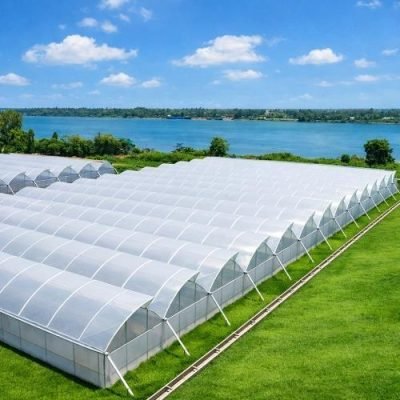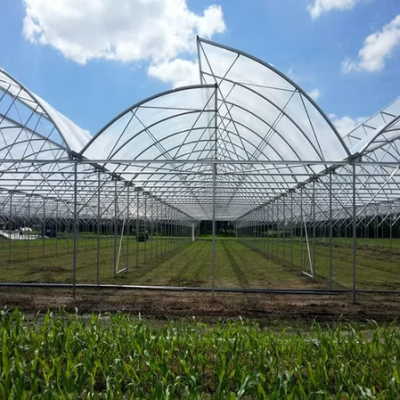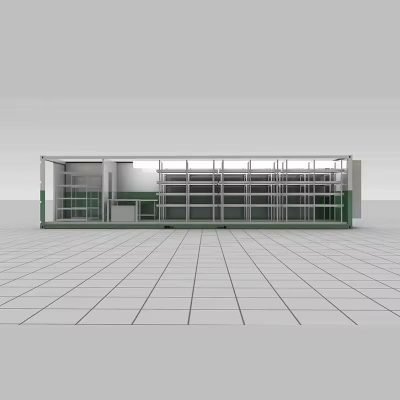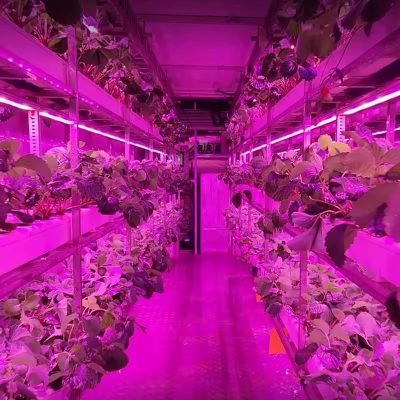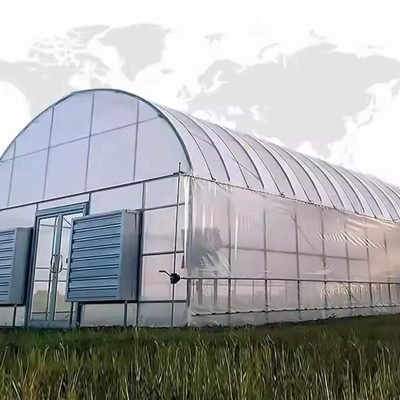







A Sawtooth Greenhouse is widely used in hot and dry regions because it improves natural ventilation and reduces heat buildup. In climates where high temperature and low humidity affect crop growth, this greenhouse design offers a practical solution. It allows farmers to manage heat without relying heavily on mechanical cooling systems.
Understanding the Climate Challenges in Hot and Dry Regions
Hot and dry regions present specific challenges for greenhouse farming. High solar radiation can increase internal temperature quickly. Low humidity can stress plants and reduce productivity. Water loss through evaporation is also a concern.
In traditional greenhouse structures, heat often accumulates inside. Without proper airflow, crops may suffer from heat stress. This is why greenhouse design plays a critical role in these environments.
How a Sawtooth Greenhouse Improves Natural Ventilation
The main advantage of a Sawtooth Greenhouse is its roof structure. The vertical roof section allows hot air to escape naturally. As warm air rises, it exits through the roof vents. Cooler air enters from lower openings.
This creates a continuous airflow cycle. Unlike standard greenhouses, this design does not rely only on fans. It uses natural air movement to regulate temperature.
For farmers in hot climates, this reduces the need for energy-intensive cooling systems.

Why It Reduces Cooling Costs
Cooling systems can be expensive to operate, especially in large commercial farms. A Serre commerciale Sawtooth helps reduce these costs by improving passive ventilation.
Less reliance on mechanical cooling means lower electricity use. Over time, this can reduce operating costs. For large-scale projects, this makes the greenhouse more cost-efficient.
This is one reason why many growers consider it an Serre économique Sawtooth option.
Stable Temperature and Crop Protection
Temperature stability is important for plant health. A Sawtooth Greenhouse helps prevent extreme heat buildup. It reduces temperature fluctuations during the day.
This creates a more stable growing environment. Crops such as tomatoes, cucumbers, and peppers benefit from consistent conditions. Reduced stress leads to better growth and yield.
Suitable for Different Scales of Farming
A Sawtooth Greenhouse can be adapted for different project sizes.
A Serre en dents de scie à travée unique is suitable for small farms or pilot projects. It offers basic ventilation benefits with lower initial investment.
A Serre en dents de scie à plusieurs travées is designed for large-scale farming. It connects multiple spans to create a continuous growing area. This is often used in export-oriented agriculture.
Both options support efficient production in hot climates.
Integration with Agricultural Systems
Un Agricultural Sawtooth Greenhouse can be combined with different systems to improve performance.
Irrigation systems help manage water supply in dry regions. Cooling pads and shading systems can be added when needed. Climate control systems allow better monitoring of temperature and humidity.
These systems work together with the greenhouse structure. The goal is to create a balanced environment for crop growth.
Comparison with Other Greenhouse Types
Compared to tunnel greenhouses, a Sawtooth Greenhouse offers better airflow. Tunnel structures often trap heat, especially in hot climates.
Compared to glass greenhouses, the Sawtooth design is more cost-effective. Glass structures provide high light transmission but require higher investment and cooling costs.
Compared to standard multi-span structures, the Sawtooth design focuses more on ventilation efficiency.
Each greenhouse type has its own advantages. The best choice depends on climate, crop type, and budget.

Practical Considerations Before Choosing a Sawtooth Greenhouse
Before selecting a Sawtooth Greenhouse, several factors should be evaluated.
Climate is the first factor. This design performs best in warm and dry regions. In colder climates, heat retention may be more important.
Crop type is also important. Some crops require more controlled environments. Others benefit from natural airflow.
Project scale and budget should be considered. Large projects benefit more from this design due to long-term cost savings.
It is also important to work with experienced suppliers. Proper design and installation affect long-term performance.
Potential Limitations
While a Sawtooth Greenhouse offers many benefits, it is not suitable for all conditions.
In regions with heavy rainfall or snow, the roof design may require reinforcement. In cold climates, additional heating systems may be needed.
For small-scale farms, the investment may not always be justified. Simpler greenhouse types may be more practical.
Understanding these limitations helps avoid design mistakes.
Real-World Application Scenarios
In many hot regions, farmers use Sawtooth Greenhouse systems for vegetable production. Crops like tomatoes and cucumbers benefit from improved airflow.
Fruit cultivation, such as strawberries and blueberries, can also be supported. However, in some cases, a standard Multi Span Greenhouse for Growing Strawberries or Multi Span Greenhouse for Growing Blueberries may be selected depending on humidity requirements.
Flower production is another application. Stable airflow helps maintain plant quality and reduces disease risk.
Why It Is a Practical Choice for Commercial Farming
A Sawtooth Greenhouse combines structural design with natural climate control. It reduces energy use and supports stable production.
For commercial farming projects in hot and dry regions, this can improve efficiency and reduce risk. It allows farmers to focus on crop management instead of constant climate adjustment.
Réflexions finales
A Sawtooth Greenhouse is a practical solution for farming in hot and dry regions. It improves ventilation, reduces cooling costs, and supports stable crop growth.
However, it is important to evaluate climate, crop type, and project scale before making a decision. In the right conditions, this greenhouse design can support long-term agricultural success.
If you are planning a farming project in a hot region, consider how a Sawtooth Greenhouse can improve airflow and reduce operational costs. A well-designed system can make a significant difference in productivity and efficiency.